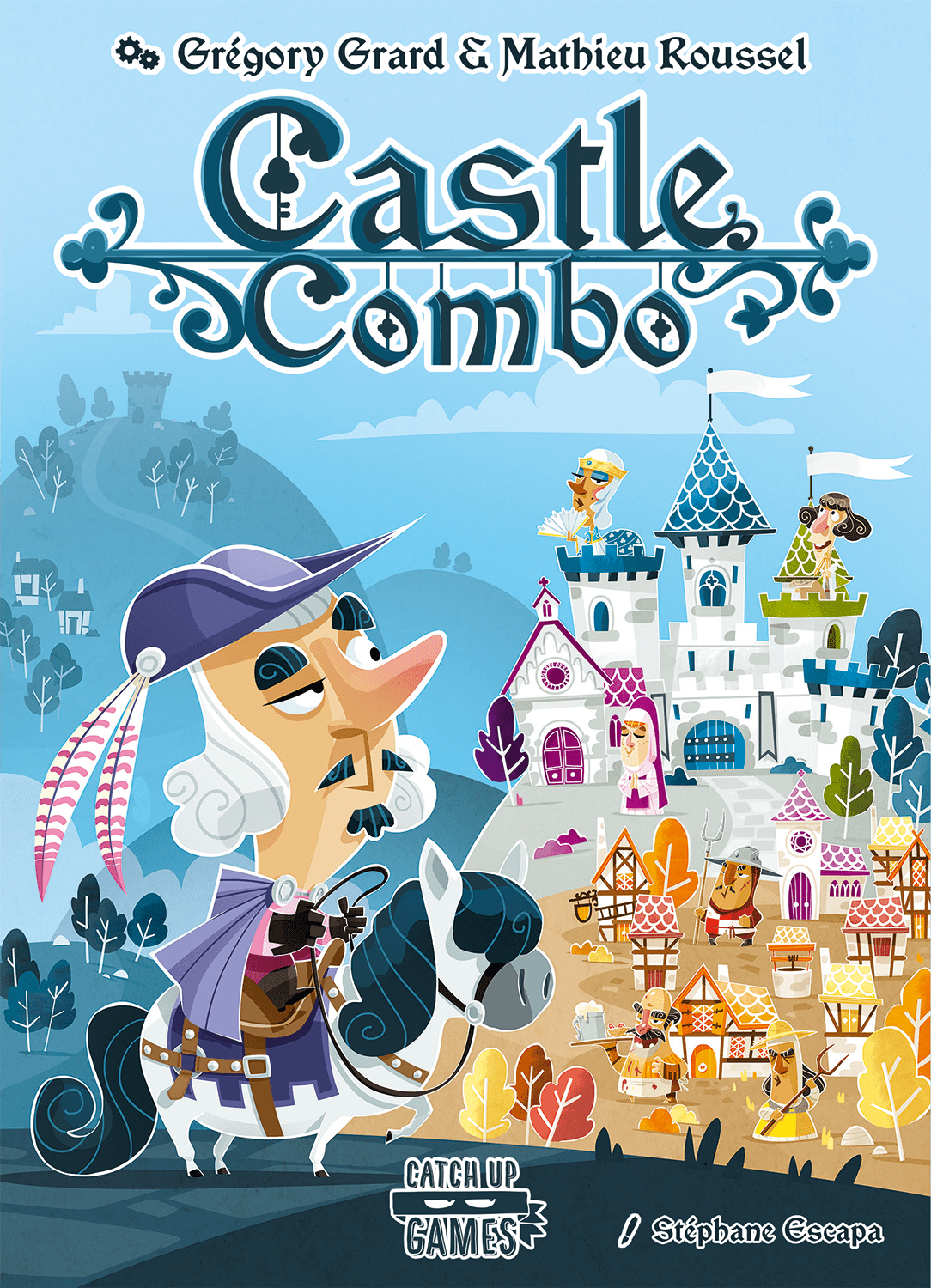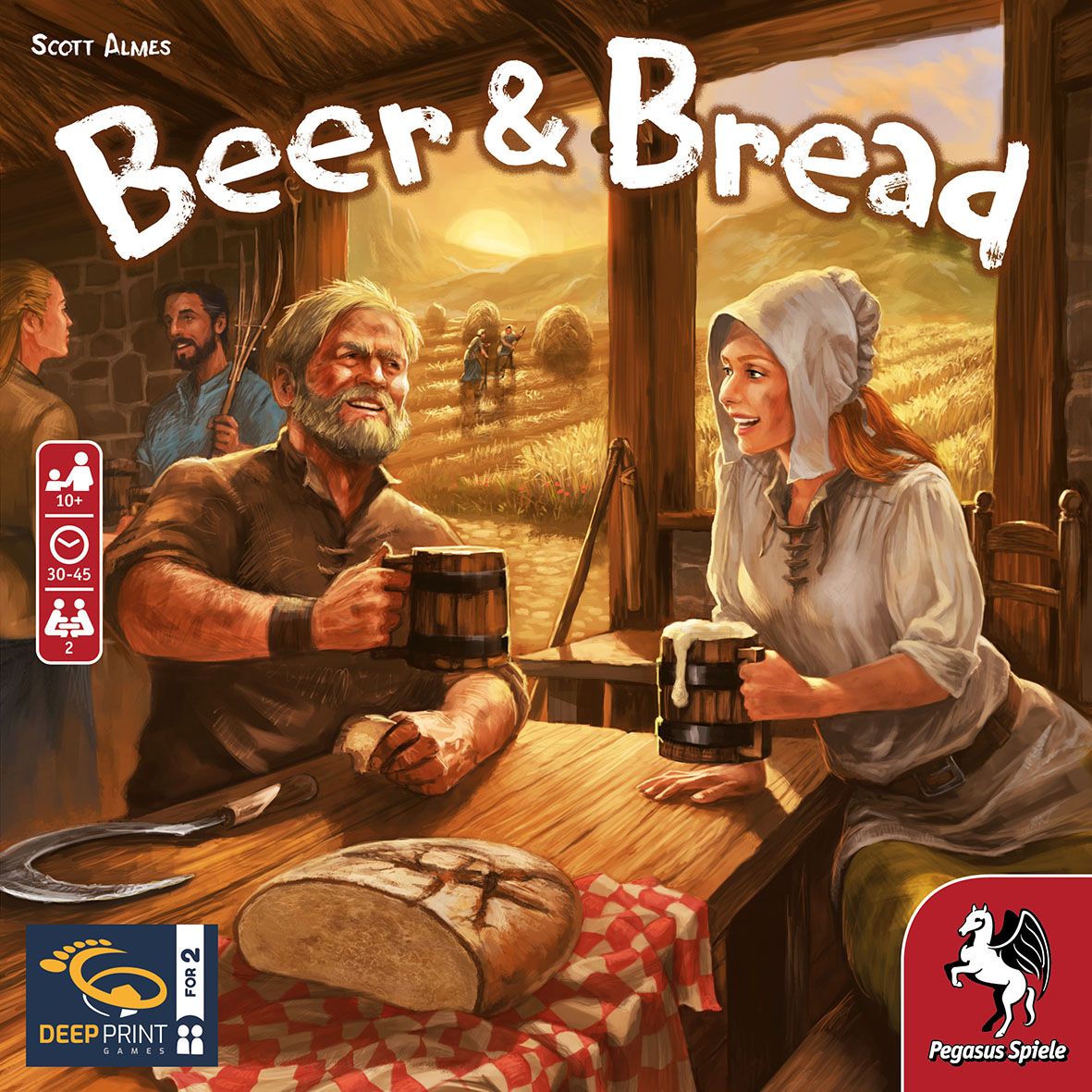
Beer & Bread
Deep Print Games, 999 Games, Albi · Board game · 2022
2 · best 2
30–45 min
Weight 2.4/5
Buy · from US$ 25.28
8.0
rating
Ludopedia
7.3
rating
BGG
Our Verdict
RECOMMENDED
Perfect for couples or friends looking for a fast tactical duel with a clever scoring twist.
Highlights
- Very original balance mechanic
- Multi-use cards create tough choices
- Fast and dynamic gameplay
- Cozy and charming theme
Keep in mind
- Strictly for two players
- Moderate language dependence
Rules manual not indexed yet
Upload the PDF rulebook to ask questions about this game with AI.
About the game
What you do in a play session
Imagine that you and your rival lead two neighboring villages, founded on the fertile lands of an ancient monastery. Local tradition is clear: to prosper, you must master the art of baking bread and brewing beer. But here's the catch: while you share resources and fields, the rivalry is fierce. Who can produce the finest goods?
In Beer & Bread, you will face six years of management, where the weather is either your greatest ally or your worst enemy, alternating between years of abundant harvests and periods of severe drought. The heart of the game lies in the multi-use cards; every decision on how to use a card directly impacts your efficiency. You'll need to balance harvesting, storing supplies, producing and selling your goods for coins, and upgrading your facilities to stay competitive.
But be careful! It's no use being the king of beer if you're a disaster at baking. The scoring mechanic is cruel and clever: at the end of the sixth year, your final score is based only on the type of product (beer or bread) that earned you FEWER coins. This forces players to maintain a constant balance, preventing anyone from focusing solely on a single strategy. If you ignore one side of production, your rival could win even if they produce less overall, as long as they are more balanced than you. It's a tactical duel of hand management and resource control where efficiency and caution go hand in hand.
In Beer & Bread, you will face six years of management, where the weather is either your greatest ally or your worst enemy, alternating between years of abundant harvests and periods of severe drought. The heart of the game lies in the multi-use cards; every decision on how to use a card directly impacts your efficiency. You'll need to balance harvesting, storing supplies, producing and selling your goods for coins, and upgrading your facilities to stay competitive.
But be careful! It's no use being the king of beer if you're a disaster at baking. The scoring mechanic is cruel and clever: at the end of the sixth year, your final score is based only on the type of product (beer or bread) that earned you FEWER coins. This forces players to maintain a constant balance, preventing anyone from focusing solely on a single strategy. If you ignore one side of production, your rival could win even if they produce less overall, as long as they are more balanced than you. It's a tactical duel of hand management and resource control where efficiency and caution go hand in hand.
Gallery
Box and component photos
Tap any photo to open fullscreen. Photos submitted by the community or publisher.
Rules videos
Learn by watching before you open the box
In English
-
 Beer & Bread - How to Play
-
 Beer and Bread - How to Play Board Game
-
 Beer & Bread - Playthrough with Friends!
-
 How to Play BEER & BREAD in UNDER 10 Minutes
-
 Beer & Bread - How To Play - I Play Red
-
 Beer & Bread - How to Play
-
 All the Games with Steph: Beer & Bread
-
 How to Play - Beer and Bread
-
 Refocused Beer & Bread Play Through & Tutorial
-
 How to Setup and Play Beer and Bread
Best player count
BGG community vote
2
BEST
Soundtrack
Ambience suggested by Melodice
Loading playlist...
Where to Buy
Prices monitored daily
Finding best prices...
Prices unavailable at this time.
Price history — last 6 months (lowest new offer)
Alert enabled!
Join the BoardGamesBot deals group
Get the best board game deals every day — without message spam.
Join the WhatsApp groupGame details
Mechanics, categories, families and credits
Mechanics
Categories
Families
Publisher
Deep Print Games, 999 Games, Albi, Capstone Games, CoolPlay, Fantasmagoria, Games7Days, Ghenos Games, Gigamic, Hachette Boardgames Benelux, Hobby Japan, Maldito Games, Pegasus Spiele, Vagabund
Designer
Scott Almes
Artist
Michael Menzel
Community
Data from BoardGameGeek
14,824owners
2,983wishlist
277want to play
Frequently Asked Questions
Quick answers before you buy
Does the game work with more than two players?
No, Beer & Bread is designed exclusively for 2 players.
How long does a game last?
Games are quick, usually lasting between 30 and 45 minutes.
Is the game complex? Can beginners play?
It has a low-to-medium complexity (weight 2.35). The rules are accessible, but the balance strategy requires focus.
What are multi-use cards?
These are cards that can serve different functions (such as a resource or an action), forcing you to choose the best utility for the moment.
Is it language dependent?
There is moderate language dependence; some cards and the scoring sheet may require translation for those who don't speak English.
Other Games You'll Like
Based on mechanics and theme