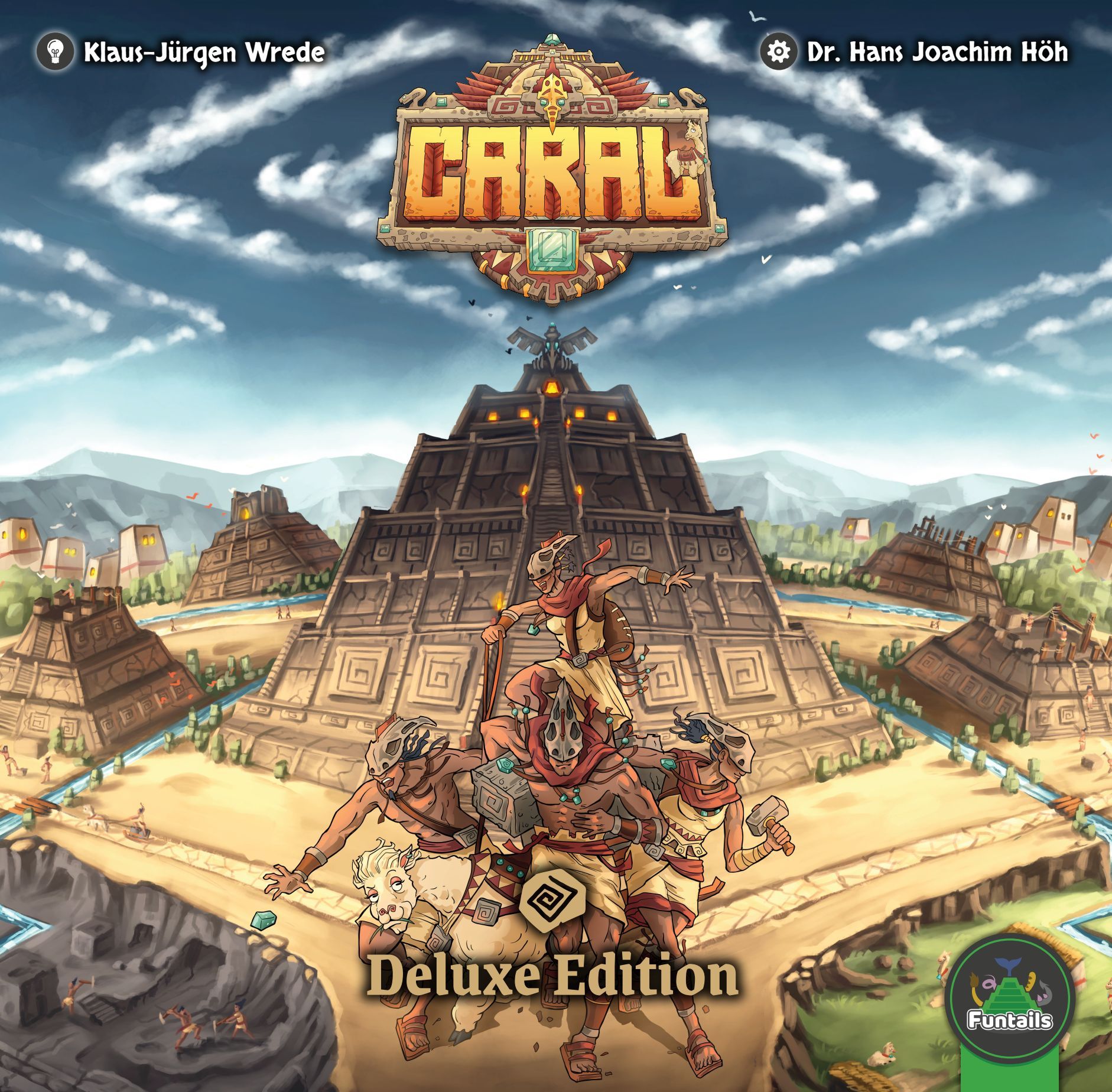
Caral is a civilization-building game that transports you to ancient Peru, featuring auction and race mechanics that ensure tension and strategy. If you enjoy games with a historical touch and a learning curve that adapts to your group, you'll love it!
thumb_up
Highlights
check_circle
Interlocking and tactical mechanics
check_circle
Well-explored historical theme
check_circle
Adjustable complexity with modules
check_circle
Strategic player interaction
warning_amber
Keep in mind
report_problem
Initial learning curve
report_problem
Can be a bit slow
report_problem
Auctions can be tense
upload_file
Rules manual not indexed yetUpload the PDF rulebook to ask questions about this game with AI.
info
About the game
What you do in a play session
In Caral, you step into the shoes of a master builder in the ancient Peruvian civilization, over 4500 years ago. Your goal? To erect majestic pyramids and influence the rhythm of the annual construction cycles. Prepare for an experience that starts simply but soon reveals itself to be surprisingly complex and tactical. The game challenges you to master well-interlocked mechanics, where every decision counts. You'll need strategy to use resources like Alpacas and supply cards, which offer flexibility on your spiral path. But beware, sacrificing valuable cards in the annual ceremony can give you a crucial advantage over other players. It's a race against time and your opponents to leave your mark on Caral's history. The game's beauty lies in its progression: it adapts to your group. With optional modules, you can gradually increase complexity, making Caral perfect for playing with family and for challenging more experienced gamers alike. Player interaction is constant, with an auction system that allows you to pressure opponents and set the game's pace. Get ready to dive into a historical and strategic journey, where building pyramids is just the beginning. Are you ready to build your legacy in Caral?
photo_library
Gallery
Box and component photos
11 photos · from the community
01 / 11
Tap any photo to open fullscreen. Photos submitted by the community or publisher.
groups
Best player count
BGG community vote
2–4 players
2
OK
3
BEST
4
REC
BestRecommendedWorks
music_note
Soundtrack
Ambience suggested by Melodice
music_noteLoading playlist...
sell
Where to Buy
Prices monitored daily
shopping_cartFinding best prices...
US$
infoPrices unavailable at this time.
Price history — last 6 months (lowest new offer)
As an Amazon Associate I earn from qualifying purchases. Prices and availability subject to change.
notifications_active
Alert enabled!
Join the BoardGamesBot deals group
Get the best board game deals every day — without message spam.
Constructions: PyramidsCountry: PeruCrowdfunding: KickstarterMisc: LongPack GamesTheme: Construction
businessPublisherFuntails, Blue Cocker Games
editDesignerKlaus-Jürgen Wrede
paletteArtistHendrik Noack
groups_2
Community
Data from BoardGameGeek
622owners
130wishlist
15want to play
quiz
Frequently Asked Questions
Quick answers before you buy
6 questions
What is the average playtime for Caral? expand_more
A game of Caral typically lasts between 60 and 120 minutes, depending on the number of players and their familiarity with the rules.
Is Caral a good game for beginners? expand_more
It starts simple, but complexity increases with the modules. It's great for families and experienced gamers, but beginners might need a little help initially.
How many players does Caral support? expand_more
Caral is designed for 2 to 4 players.
Is the ancient city-building theme well-represented? expand_more
Yes, the game is set over 4500 years ago in Peru and focuses on pyramid construction, integrating the theme into the mechanics in an interesting way.
Do I need to know anything about the Caral civilization to play? expand_more
No prior knowledge is necessary. The game introduces you to the theme engagingly, but doesn't require prior research.
Are the complexity modules easy to add? expand_more
Yes, the modules are designed to be introduced gradually, allowing players to increase complexity as they become more comfortable.