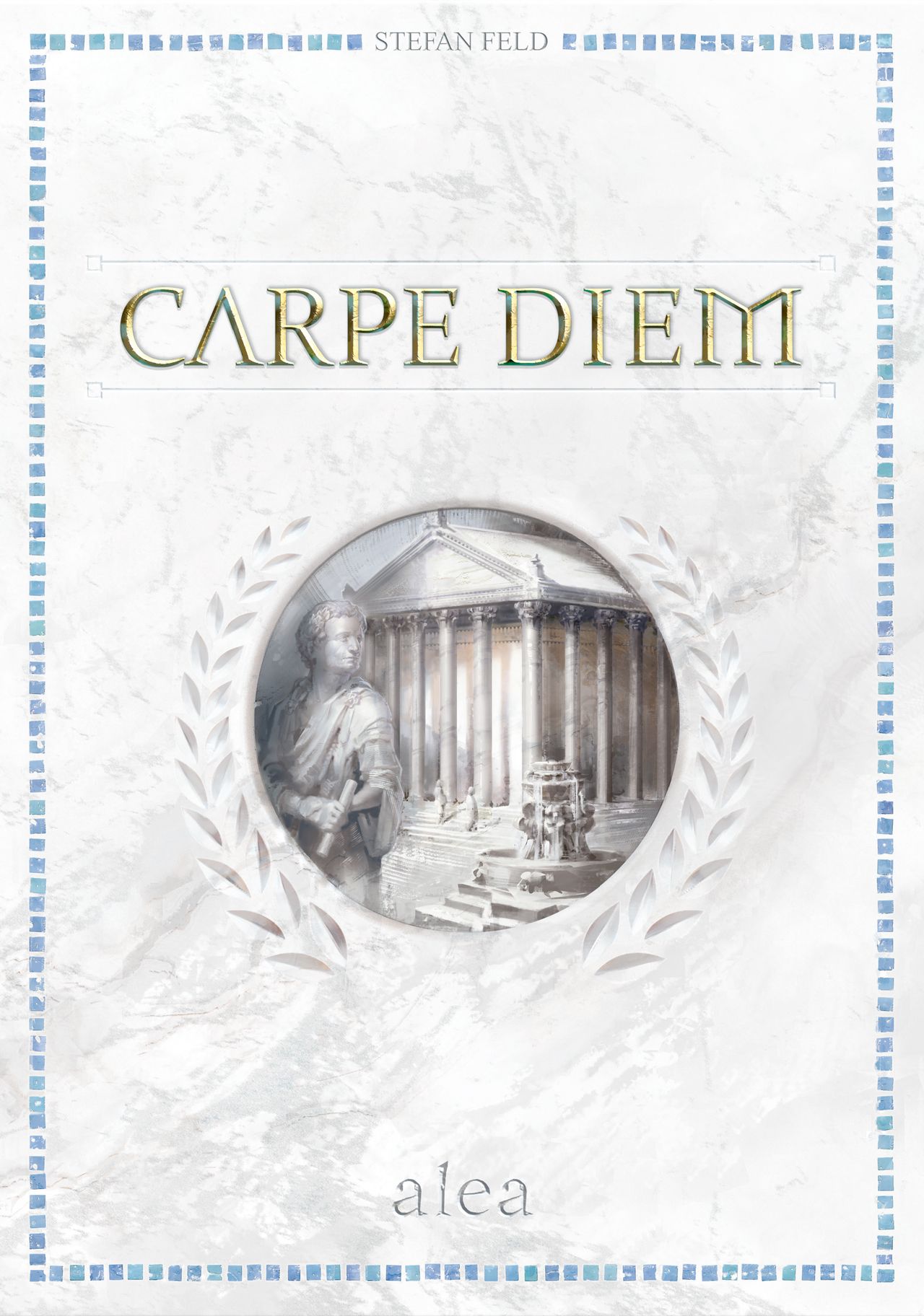
Carpe Diem — Prices
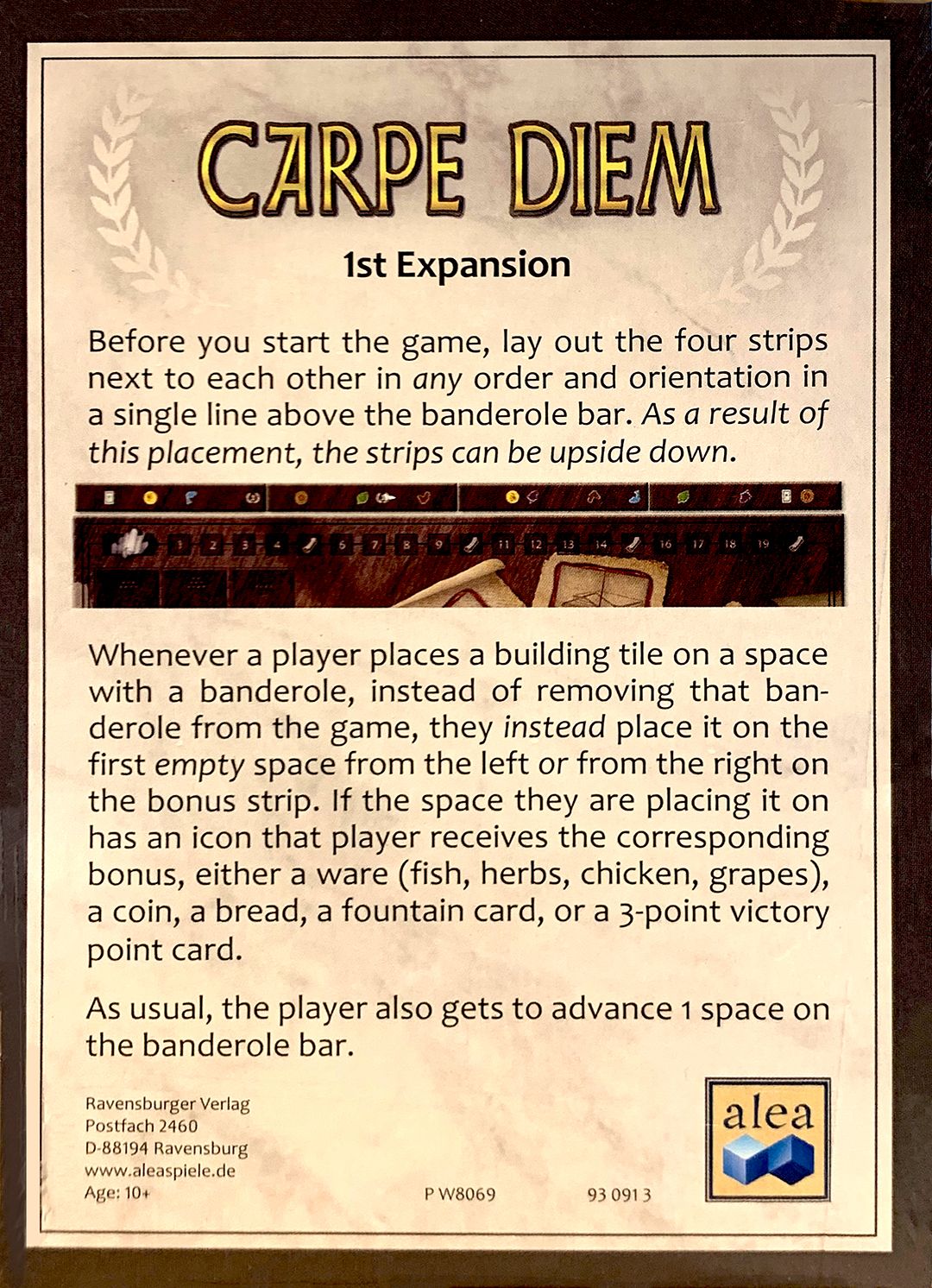
alea, Broadway Toys LTD, Maldito Games · Board game · 2018
2–4 · best 3
45–75 min
Weight 2.5/5
Buy · from US$ 20.75
8.1
rating
Ludopedia
7.5
rating
BGG
Our Verdict
RECOMMENDED
Perfect for those who love dense Euros and want a strategic challenge with a Roman theme. Its strength lies in the depth of scoring combinations.
Highlights
- Many paths to victory
- Smart area movement
- High replayability via cards
- Solid Stefan Feld design
Keep in mind
- Initial learning curve
- Can be slow for beginners
Rules manual not indexed yet
Upload the PDF rulebook to ask questions about this game with AI.
About the game
What you do in a play session
Ever wondered what it's like to be a powerful patrician in Ancient Rome? In Carpe Diem, that's exactly your role. The goal is simple on paper but challenging in practice: build the most lucrative and prestigious urban district in the city. However, it's not just about placing tiles on the board; the game features an interesting movement dynamic. To build your buildings, you must navigate the map, and how you move directly impacts what you can achieve.
Master designer Stefan Feld, known for creating games with deep strategic layers, has implemented a system where the variety of scoring cards ensures that no two games are the same. You won't just follow a fixed recipe; you'll need to adapt your strategy as opportunities arise and opponents try to thwart your plans. The time management and progressive turn order add a layer of tension: sometimes, making the strongest move now might mean you'll take longer to act again, giving others a chance to overtake you.
The game balances tile placement with contract fulfillment, creating a logistical puzzle where you strive to maximize end-game bonuses. It's a classic 'euro' experience: heavy management, long-term planning, and the satisfaction of seeing your district grow while you accumulate prestige. If you enjoy games where every decision carries weight and the strategy shifts based on the scenario, Carpe Diem is a perfect fit. Put on your toga, organize your plans, and try to dominate the capital of the empire!
Master designer Stefan Feld, known for creating games with deep strategic layers, has implemented a system where the variety of scoring cards ensures that no two games are the same. You won't just follow a fixed recipe; you'll need to adapt your strategy as opportunities arise and opponents try to thwart your plans. The time management and progressive turn order add a layer of tension: sometimes, making the strongest move now might mean you'll take longer to act again, giving others a chance to overtake you.
The game balances tile placement with contract fulfillment, creating a logistical puzzle where you strive to maximize end-game bonuses. It's a classic 'euro' experience: heavy management, long-term planning, and the satisfaction of seeing your district grow while you accumulate prestige. If you enjoy games where every decision carries weight and the strategy shifts based on the scenario, Carpe Diem is a perfect fit. Put on your toga, organize your plans, and try to dominate the capital of the empire!
Expansions
Published additional content
Gallery
Box and component photos
Tap any photo to open fullscreen. Photos submitted by the community or publisher.
Rules videos
Learn by watching before you open the box
In English
-
 Carpe Diem - How To Play
-
 Pit Stop: Carpe Diem
-
 Carpe Diem Board Game – How to Play (Clear & Concise, First & Second Printing)
-
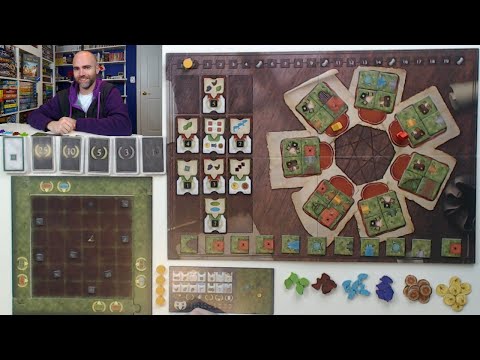 Carpe Diem - Gameplay Runthrough
-
 LIVE - Carpe Diem (2020 Ed.) Board Game - Playthrough & (Almost) Worldwide Giveaway
-
 Carpe Diem - Learn how to score cards using bread and how to move your meeple | Rules Review
-
 Carpe Diem Gamesplained - Part 1
Best player count
BGG community vote
2
REC
3
BEST
4
REC
Soundtrack
Ambience suggested by Melodice
Loading playlist...
Where to Buy
Prices monitored daily
Finding best prices...
Prices unavailable at this time.
Price history — last 6 months (lowest new offer)
Alert enabled!
Join the BoardGamesBot deals group
Get the best board game deals every day — without message spam.
Join the WhatsApp groupGame details
Mechanics, categories, families and credits
Mechanics
Categories
Families
Publisher
alea, Broadway Toys LTD, Maldito Games, Ravensburger AG
Designer
Stefan Feld
Artist
Eric Elwell, Lalanda Hruschka
Community
Data from BoardGameGeek
14,221owners
1,862wishlist
285want to play
Frequently Asked Questions
Quick answers before you buy
Is the game too hard for beginners?
It's considered an 'expert' game (weight 2.5), so it has several layers. It's not impossible, but it requires focus on the rules and some patience during the first session.
How long does a game last?
Usually between 45 and 75 minutes, though the first game might take longer while everyone gets a grip on the dynamics.
Does it work well with 2 players or is 4 better?
It works great in any configuration from 2 to 4 players, maintaining strategic tension regardless of the group size.
Is the game language dependent?
No. The game is practically language-independent, making it easy to play versions in different languages.
What is the overall feel of the game?
It's a planning game. You feel like you're solving a puzzle, balancing map movement with final scoring goals.
Other Games You'll Like
Based on mechanics and theme