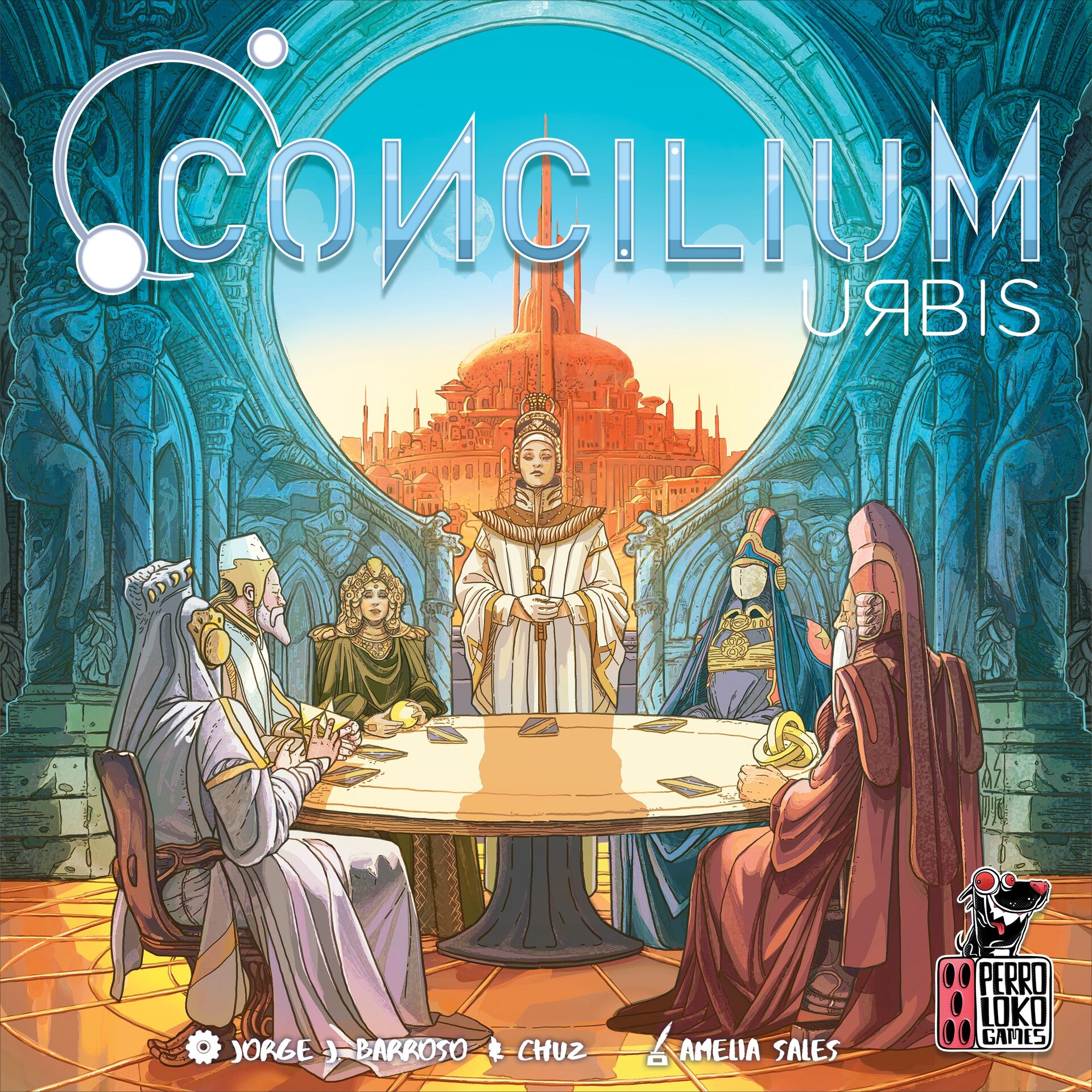
If you enjoy city-building games with a dash of interaction and plenty of strategy, Concilium Urbis might just be your next obsession! It blends the satisfaction of watching your city grow with the tension of votes that can turn the game around. It's a very engaging experience where every construction decision and every vote counts significantly towards your success in the council.
- Strategic city building
- Engaging voting mechanic
- Dynamic simultaneous phases
- High replayability guaranteed
- Well-implemented solo mode
- Interaction can be intense
- Initial learning curve
- Moderate language dependency
About the game
What you do in a play session
Concilium Urbis is a city-building game where scoring is determined by Law cards. At the end of the game, all pieces in your city yield points according to these Laws, but the trick is that you can (and should!) influence these scores through a voting system. For each Law, there are cards that increase or decrease the point value, and two of them are removed at the beginning of the game, adding a layer of mystery and strategy. Knowing how to manage this information and use your votes wisely is crucial for victory.
The game unfolds over 7 rounds, each with 4 phases: Reveal, Construction, Production, and Voting. Most phases happen simultaneously, making the game dynamic and fast-paced. In the Construction phase, you draw four tiles from a bag, divide them into two groups of two, and pass them to a neighbor, who will do the same. You choose one group, and the remaining two tiles return to you, allowing you to build in your city. Managing alliances, mineral energy, and tile placement are key elements to dominating the Concilium and becoming the most influential kingdom!
Gallery
Box and component photos
Tap any photo to open fullscreen. Photos submitted by the community or publisher.
Best player count
BGG community vote
Soundtrack
Ambience suggested by Melodice
Where to Buy
Prices monitored daily
Price history — last 6 months (lowest new offer)
As an Amazon Associate I earn from qualifying purchases. Prices and availability subject to change.
Alert enabled!
Join the BoardGamesBot deals group
Get the best board game deals every day — without message spam.
Join the WhatsApp groupGame details
Mechanics, categories, families and credits
Mechanics
Categories
Families
Community
Data from BoardGameGeek
Frequently Asked Questions
Quick answers before you buy
What is the average playtime for Concilium Urbis?
How many players can participate?
What is the complexity level of the game?
Who is Concilium Urbis recommended for?
Are the components language dependent?
What makes the solo mode interesting?
Other Games You'll Like
Based on mechanics and theme