Detroit-Cleveland Grand Prix — Prices
Mayfair Games · Board game · 1996
2–6 · best 6
60 min
Weight 1.7/5
Buy · from US$ 20.00
7.1
rating
Ludopedia
6.8
rating
BGG
Our Verdict
RECOMMENDED
If you enjoy racing games with a touch of strategy and bluffing, Detroit-Cleveland Grand Prix is a sure bet! The auction and hand management mechanics are the main engine here.
Highlights
- Strategic car auction
- Clever hand management
- Player interaction
- Racing with bluffing
- Simple rules, tactical depth
Keep in mind
- Can have some card luck
- Not everyone controls a car
- Blockages can be frustrating
Rules manual not indexed yet
Upload the PDF rulebook to ask questions about this game with AI.
About the game
What you do in a play session
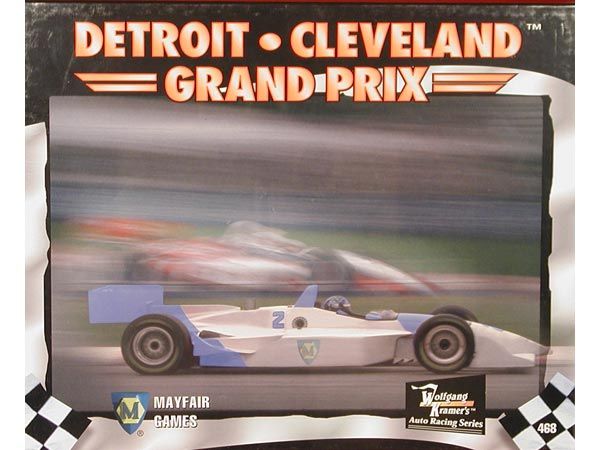
Hey speed enthusiasts! Ready to hit the gas in Detroit-Cleveland Grand Prix? This Wolfgang Kramer classic puts you in the driver's seat, but in a very unique way. Forget direct control of a single car; here, you'll manage a hand of cards that move multiple vehicles on the track. Think of a racing game where strategy isn't just about being fast, but being clever with how you use your cards.
At the start of the game, the cars are auctioned off among the players, which immediately adds a layer of decision-making: which car will you bet your chips (and your money) on? Then, each player receives cards that show movement numbers for one or more cars. When you play a card, all indicated movements on it must be executed in order, from top to bottom. But here's the catch: if a car that's supposed to move is blocked on the track, that movement is simply lost. This means you need to think ahead and, sometimes, even help an opponent with a movement they won't be able to take advantage of, saving your best plays for when they truly matter.
The big challenge is to use your cards intelligently. You'll have cards that can benefit your opponents, and the art is in playing them when the impact is minimal for them or maximal for you. In the end, cars that cross the finish line in better positions secure cash prizes. And, of course, like any good racing game with betting, the player who accumulates the most money by the end of the race is the grand champion. It's a racing experience with lots of interaction and a touch of bluffing, perfect for those who enjoy a tactical card challenge!
At the start of the game, the cars are auctioned off among the players, which immediately adds a layer of decision-making: which car will you bet your chips (and your money) on? Then, each player receives cards that show movement numbers for one or more cars. When you play a card, all indicated movements on it must be executed in order, from top to bottom. But here's the catch: if a car that's supposed to move is blocked on the track, that movement is simply lost. This means you need to think ahead and, sometimes, even help an opponent with a movement they won't be able to take advantage of, saving your best plays for when they truly matter.
The big challenge is to use your cards intelligently. You'll have cards that can benefit your opponents, and the art is in playing them when the impact is minimal for them or maximal for you. In the end, cars that cross the finish line in better positions secure cash prizes. And, of course, like any good racing game with betting, the player who accumulates the most money by the end of the race is the grand champion. It's a racing experience with lots of interaction and a touch of bluffing, perfect for those who enjoy a tactical card challenge!
Gallery
Box and component photos
Tap any photo to open fullscreen. Photos submitted by the community or publisher.
Best player count
BGG community vote
2
REC
3
REC
4
REC
5
REC
6
BEST
Soundtrack
Ambience suggested by Melodice
Loading playlist...
Where to Buy
Prices monitored daily
Finding best prices...
Prices unavailable at this time.
Price history — last 6 months (lowest new offer)
Alert enabled!
Join the BoardGamesBot deals group
Get the best board game deals every day — without message spam.
Join the WhatsApp groupGame details
Mechanics, categories, families and credits
Mechanics
Categories
Families
Publisher
Mayfair Games
Designer
Wolfgang Kramer
Artist
Ramon Mascarenas, Seth Schwartz
Community
Data from BoardGameGeek
1,398owners
80wishlist
25want to play
Frequently Asked Questions
Quick answers before you buy
How many players can play Detroit-Cleveland Grand Prix?
The game is designed for 2 to 6 players, making it versatile for different group sizes.
What is the average game duration?
A game typically takes between 60 and 60 minutes, making it a great option for a shorter gaming session.
Is it a very complex game for beginners?
No, it has a complexity weight of 1.713/5 on BGG, classifying it as a light to medium game. The rules are easy to learn, but the strategy has depth.
Is the game language dependent?
No, the game is language independent. The components are iconic and the numbers on the cards are universal, so anyone can play.
Who is Detroit-Cleveland Grand Prix recommended for?
It's ideal for those who enjoy racing games with a touch of card strategy and auction, and for fans of Wolfgang Kramer's games. If you like interacting and bluffing with other players, you'll love it!
What are the main components of the game?
Components include a track board, movement cards, car tokens, and money for auctions and prizes. Everything you need for an exciting race!
Other Games You'll Like
Based on mechanics and theme