Egizia — Prices
Hans im Glück, Bard Centrum Gier, IELLO · Board game · 2009
2–4 · best 4
90 min
Weight 2.8/5
Buy · from US$ 26.76
8.1
rating
Ludopedia
7.4
rating
BGG
Our Verdict
RECOMMENDED
Perfect for those who love Eurogames with a strategic twist; the unidirectional movement system is brilliant.
Highlights
- Innovative placement mechanic
- Great Egyptian theme integration
- Challenging resource management
- Pleasing visual components
Keep in mind
- Moderate language dependency
- Initial learning curve
Rules manual not indexed yet
Upload the PDF rulebook to ask questions about this game with AI.
About the game
What you do in a play session
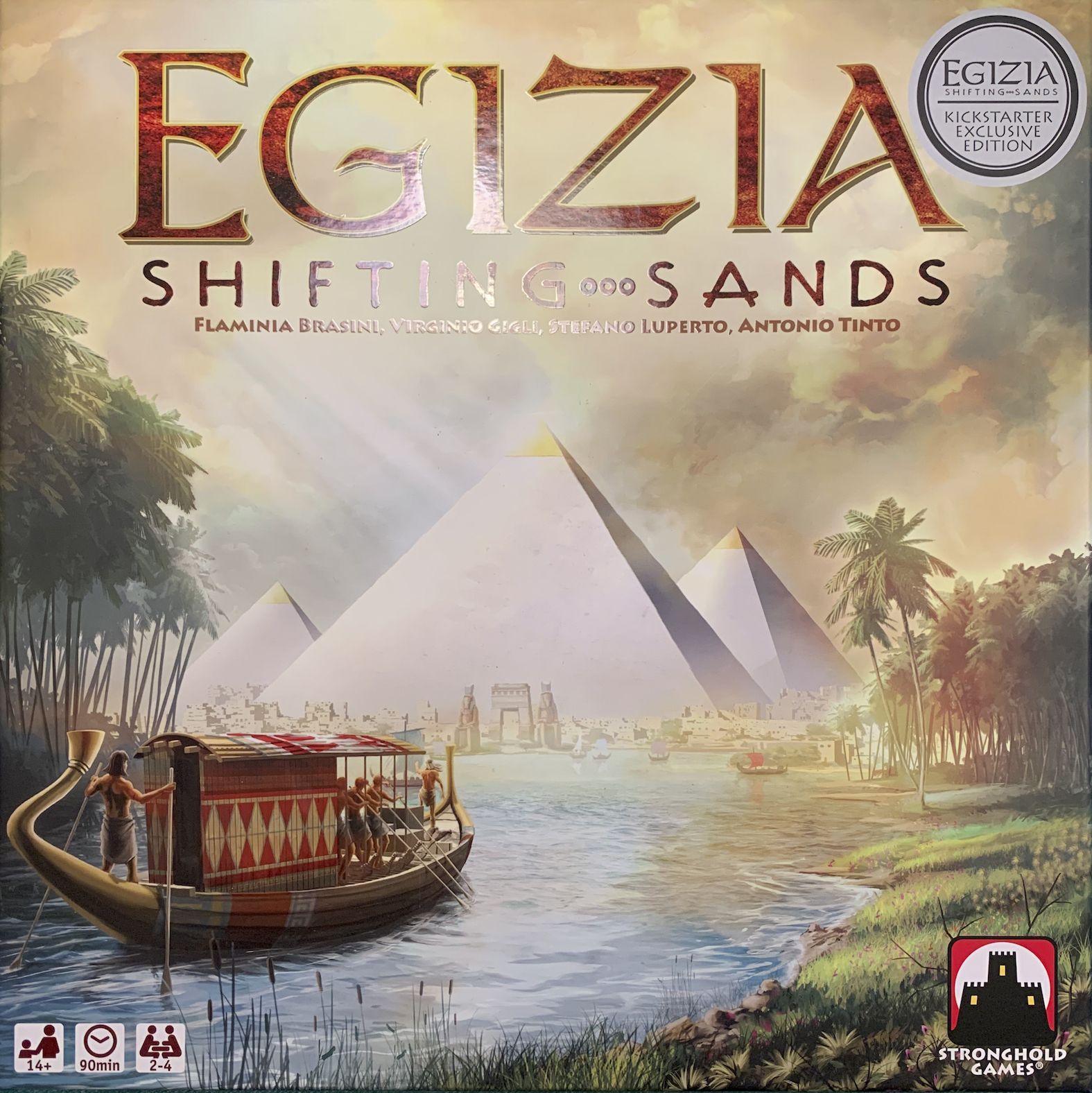
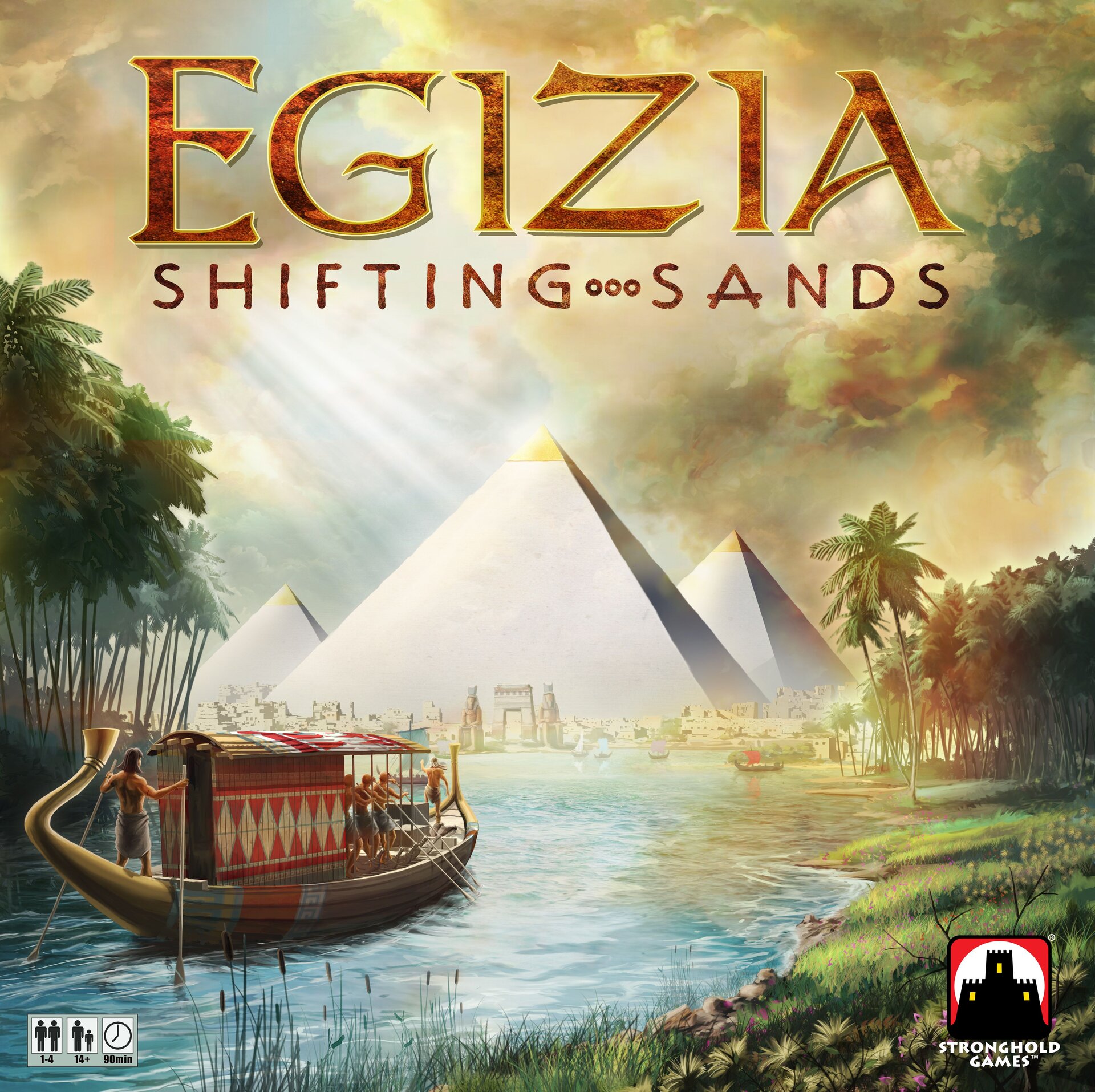
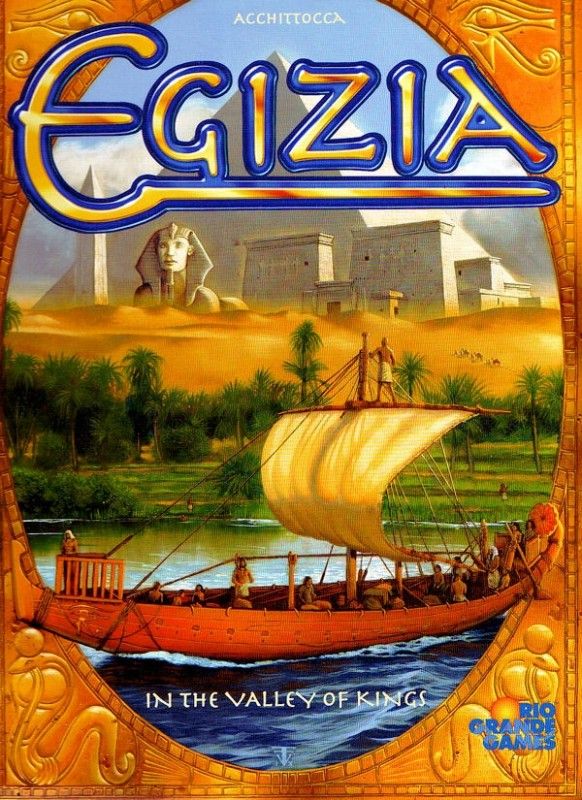
Get ready to navigate the banks of the Nile! In Egizia, you step into the shoes of a master builder in Ancient Egypt, striving for eternal fame by erecting grand monuments for the Pharaoh. The goal is straightforward: the player who scores the most points by building the Sphinx, the Obelisk, the Temple, and the Pyramid wins. But don't think it's just about placing workers; there's a crucial twist that changes everything.
The game spans 5 rounds, and the worker placement mechanic has a special flavor: you must place your boats following the river's course, always moving north (from the top to the bottom of the board). This means that by choosing an action, you automatically block all the options left behind. Planning is everything! On the right bank, you handle the logistics: hiring labor, improving your trade capabilities, influencing the river floods, or reserving your right to build the monuments.
On the left bank, luck and strategy blend with card drafting. Some cards provide immediate benefits and are discarded, while others, such as stone quarries and cultivable fields, stay with you until the end of the game. But be careful: having a large workforce is great for building, but they must be fed. If the grain harvest (which depends on the Nile's floods) is insufficient, you'll have to pay for food using your precious victory points. At the end, in addition to the constructions, Sphinx cards can provide a final boost to your score. It's a tense resource management game where every move on the river can be the difference between eternal glory and starvation!
The game spans 5 rounds, and the worker placement mechanic has a special flavor: you must place your boats following the river's course, always moving north (from the top to the bottom of the board). This means that by choosing an action, you automatically block all the options left behind. Planning is everything! On the right bank, you handle the logistics: hiring labor, improving your trade capabilities, influencing the river floods, or reserving your right to build the monuments.
On the left bank, luck and strategy blend with card drafting. Some cards provide immediate benefits and are discarded, while others, such as stone quarries and cultivable fields, stay with you until the end of the game. But be careful: having a large workforce is great for building, but they must be fed. If the grain harvest (which depends on the Nile's floods) is insufficient, you'll have to pay for food using your precious victory points. At the end, in addition to the constructions, Sphinx cards can provide a final boost to your score. It's a tense resource management game where every move on the river can be the difference between eternal glory and starvation!
Gallery
Box and component photos
Tap any photo to open fullscreen. Photos submitted by the community or publisher.
Best player count
BGG community vote
2
REC
3
REC
4
BEST
Soundtrack
Ambience suggested by Melodice
Loading playlist...
Where to Buy
Prices monitored daily
Finding best prices...
Prices unavailable at this time.
Price history — last 6 months (lowest new offer)
As an Amazon Associate I earn from qualifying purchases. Prices and availability subject to change.
Alert enabled!
Join the BoardGamesBot deals group
Get the best board game deals every day — without message spam.
Join the WhatsApp groupGame details
Mechanics, categories, families and credits
Mechanics
Categories
Families
Publisher
Hans im Glück, Bard Centrum Gier, IELLO, MINDOK, Rio Grande Games, Stupor Mundi
Designer
Acchittocca, Antonio Tinto, Flaminia Brasini, Stefano Luperto, Virginio Gigli
Artist
Franz Vohwinkel
Community
Data from BoardGameGeek
4,627owners
1,165wishlist
323want to play
Frequently Asked Questions
Quick answers before you buy
Is the game too complex?
It has a medium weight (2.83 on BGG). It's not a gateway game, but those familiar with Eurogames will grasp the logic quickly.
How long does a game last?
It usually takes about 90 minutes, depending on the group's experience.
Do I need a translation to play?
Yes, there is moderate language dependency, mainly on the cards. A translation sheet helps a lot.
Does it work well with 2 players?
Yes, the game is balanced for 2 to 4 players, maintaining the tension of the space competition.
What's the main difference from other worker placement games?
The mandatory northward movement. You cannot go back, making the order of placement vital.
Who do you recommend it for?
For those who enjoy planning several moves ahead and don't mind tight resource management.
Other Games You'll Like
Based on mechanics and theme