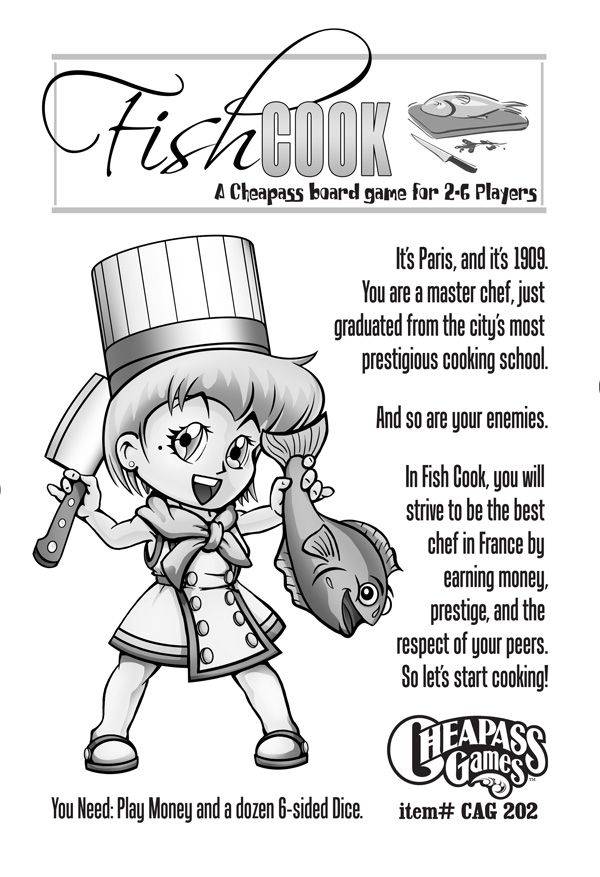
If you enjoy economic games with a dash of interaction and market strategy, Fish Cook might just be your next favorite dish! It's a light Eurogame, perfect for those looking for a fun and quick experience, but with important decisions every round. The feeling of assembling the perfect recipe with the right ingredients and even 'stealing' an idea from friends is super satisfying. A game that makes you think and laugh at the same time!
thumb_up
Highlights
check_circle
Clever hand management
check_circle
Fun player interaction
check_circle
Dynamic market strategy
check_circle
Engaging culinary theme
check_circle
Easy to learn rules
warning_amber
Keep in mind
report_problem
Can have dice luck
report_problem
For light game seekers
report_problem
Limited strategic depth
upload_file
Rules manual not indexed yetUpload the PDF rulebook to ask questions about this game with AI.
info
About the game
What you do in a play session
In Fish Cook, you step into the shoes of a chef in a Euro-style game where strategy and cleverness are the main ingredients. The gastronomic adventure unfolds over a series of 'days,' each divided into two crucial phases: Morning and Evening. In the morning, it's market madness! You visit both the fish market and the farmer's market, searching for the freshest ingredients and, of course, the best prices. The goal is to be as efficient as possible when buying, ensuring you have everything you need without breaking the bank. This is where hand management and open drafting come into play, as you need to decide which ingredients to grab and which to leave for others, always keeping an eye on what your competitors are doing.
When evening arrives, it's time to get your hands dirty – or rather, into the pots! Chefs dedicate themselves to cooking the recipes they've planned, using the ingredients they acquired. Each completed recipe earns money, which is essential for continuing to buy and expand your culinary empire. But don't think it's just about cooking and selling! The strategy goes beyond simple buying and selling. You need to pay attention to your fellow chefs' 'good ideas,' which might mean 'borrowing' a buying tactic or an ingredient combination they are using. Dice rolling can add a touch of unpredictability to these purchases and sales, while set collection of ingredients is crucial for completing the most valuable recipes. Ultimately, Fish Cook is a full plate for anyone who enjoys an economic challenge with a touch of player interaction.
photo_library
Gallery
Box and component photos
11 photos · from the community
01 / 11
Tap any photo to open fullscreen. Photos submitted by the community or publisher.
What is the main objective in Fish Cook? expand_more
The main objective is to be the most successful chef, earning money by efficiently buying ingredients from the markets and then cooking recipes for your customers. The player with the most money at the end of the game wins!
How many players can participate and what is the average game duration? expand_more
Fish Cook can be played by 2 to 6 players, and a game typically takes about 45 minutes. It's great for a quick session with friends!
Is it a complex game? Who is it suitable for? expand_more
No, Fish Cook is considered a light complexity game (BGG weight of 1.86/5). It's ideal for those new to board games or for groups looking for something relaxing and fun, but with a touch of economic strategy.
What are the main components of the game? expand_more
As a Print & Play game, components vary, but generally include ingredient cards, recipe cards, dice to determine actions or prices, and perhaps some money or victory point tokens. The beauty is you can customize it!
Does dice luck heavily influence the game? expand_more
Dice rolling does add an element of luck, especially in the market phase, but hand management and buying/selling strategy are still crucial. Good chefs know how to adapt and minimize risks!
Are there any expansions for Fish Cook? expand_more
Currently, there are no official expansions listed for Fish Cook. The base game offers a complete and enjoyable experience on its own.
How does 'player interaction' work? expand_more
Interaction mainly occurs in the market phase, where you can 'steal' or be inspired by other chefs' good buying ideas, or even grab an ingredient your opponent was eyeing. It's a healthy competition for the best bargain!