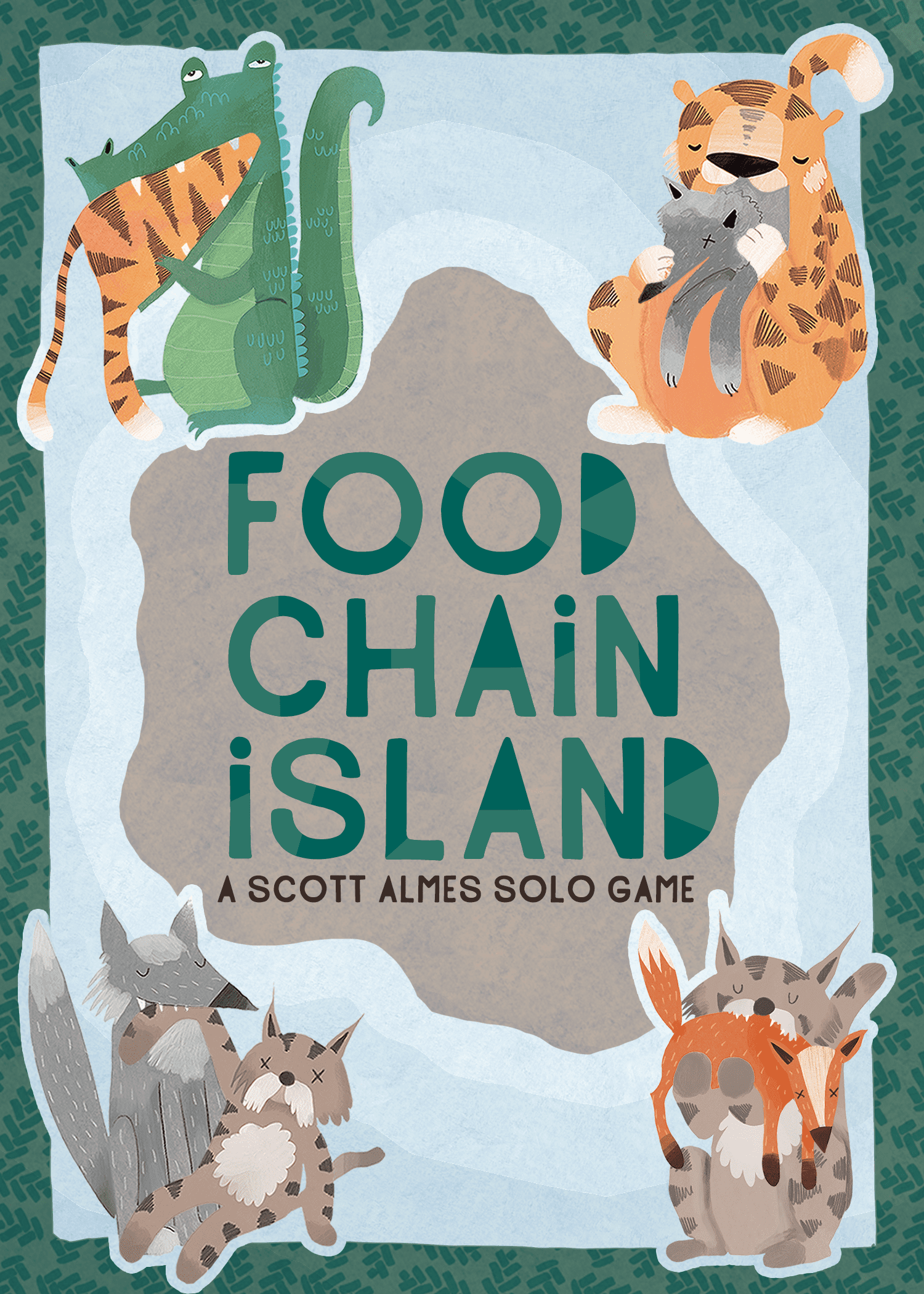
Food Chain Island — Prices
Button Shy, Across the Board, Banana Games · Board game · 2020
1 · best 1
Solo
15 min
Weight 1.3/5
Buy · from US$ 15.00
7.4
rating
Ludopedia
7.2
rating
BGG
Our Verdict
FOR GENRE FANS
Perfect for logic puzzle lovers looking for a quick solo challenge. Its strength lies in its deep simplicity.
Highlights
- Stimulating logical challenge
- Extremely portable and compact
- Simple and direct rules
- High replayability via setup
Keep in mind
- Language barrier for some
- Can be frustrating for beginners
Rules manual not indexed yet
Upload the PDF rulebook to ask questions about this game with AI.
About the game
What you do in a play session
Imagine landing on a remote island in a forgotten corner of the ocean where the law of the jungle reigns supreme: the big eat the small. In Food Chain Island, you act as the puppet master of the wildlife, but instead of conservation, your goal is to orchestrate a massive feast. The objective is straightforward yet tricky: you start with a grid of 16 animal cards and must manipulate their movements until only one single survivor remains on the table.
The gameplay is a pure logic puzzle. On each turn, you select an animal and move it into the space of a smaller, adjacent animal. By doing so, the larger animal 'eats' the smaller one, removing that card from the board. The real challenge lies in the sequencing: if you consume the animals in the wrong order, you might end up with isolated creatures that no one can eat, causing the game to stall. If you reach a point where no valid moves are left, the game ends immediately, and you've failed your mission.
It's the perfect experience for those who love thinking several steps ahead, similar to solving a Sudoku or a sliding puzzle, but with a food chain twist. Because of its minimalist design, there's no complex setup, making it ideal for carrying in your bag or playing during a quick break. The depth comes from the variable setup and the constant need to analyze the grid before every move. Can you clear the island and leave only the king of the food chain standing? Plan your moves carefully and try not to leave anyone behind (or rather, try to leave everyone behind, except one)!
The gameplay is a pure logic puzzle. On each turn, you select an animal and move it into the space of a smaller, adjacent animal. By doing so, the larger animal 'eats' the smaller one, removing that card from the board. The real challenge lies in the sequencing: if you consume the animals in the wrong order, you might end up with isolated creatures that no one can eat, causing the game to stall. If you reach a point where no valid moves are left, the game ends immediately, and you've failed your mission.
It's the perfect experience for those who love thinking several steps ahead, similar to solving a Sudoku or a sliding puzzle, but with a food chain twist. Because of its minimalist design, there's no complex setup, making it ideal for carrying in your bag or playing during a quick break. The depth comes from the variable setup and the constant need to analyze the grid before every move. Can you clear the island and leave only the king of the food chain standing? Plan your moves carefully and try not to leave anyone behind (or rather, try to leave everyone behind, except one)!
Expansions
Published additional content
Gallery
Box and component photos
Tap any photo to open fullscreen. Photos submitted by the community or publisher.
Rules videos
Learn by watching before you open the box
In English
-
 Purple Moose Plays Food Chain Island
-
 A Turn or Two of Food Chain Island & Ugly Gryphon Inn | Kickstarter Games by Scott Almes
-
 Solo Playthrough | Food Chain Island (Button Shy Games on Kickstarter)
-
 Food Chain Island with ALL EXPANSIONS | Solo-Only Micro Board Game Playthrough and Tutorial
-
 Come Play With E! Food Chain Island Edition
-
 Food Chain Island Solo Play Through
-
 Food Chain Island | How To Play & Playthrough
Best player count
BGG community vote
1
BEST
Soundtrack
Ambience suggested by Melodice
Loading playlist...
Where to Buy
Prices monitored daily
Finding best prices...
Prices unavailable at this time.
Price history — last 6 months (lowest new offer)
Alert enabled!
Join the BoardGamesBot deals group
Get the best board game deals every day — without message spam.
Join the WhatsApp groupGame details
Mechanics, categories, families and credits
Mechanics
Categories
Families
Publisher
Button Shy, Across the Board, Banana Games, Even Toys and Games, Frosted Games, Matagot, Pendragon Game Studio, Salt & Pepper Games
Designer
Scott Almes
Artist
Annie Wilkinson
Community
Data from BoardGameGeek
9,266owners
940wishlist
86want to play
Frequently Asked Questions
Quick answers before you buy
Is the game really only for one person?
Yes, it is specifically designed as a solo (solitaire) experience.
How long does a game take?
It's very fast! On average, you can solve the puzzle in about 15 minutes.
Is it hard to learn?
The rules are very simple, but winning the game requires significant logical reasoning.
What's in the box?
Since it's a micro game, it comes with a small set of cards, usually in a compact wallet.
Do I need a translation to play?
Language dependency is moderate; some players prefer a translated sheet to better understand the references.
Other Games You'll Like
Based on mechanics and theme