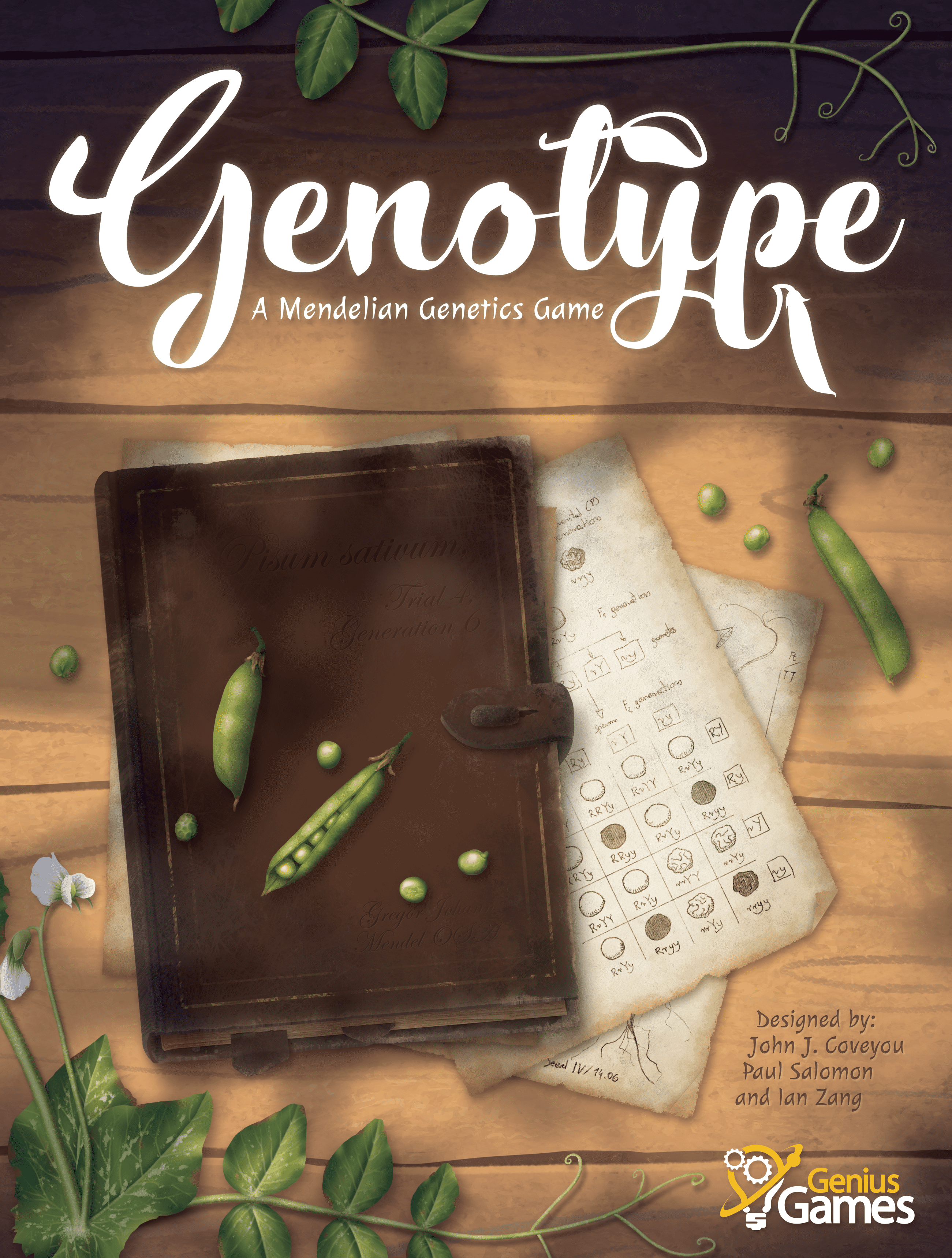
Genotype: A Mendelian Genetics Game — Prices
Genius Games, CrowD Games, Ediciones MasQueOca · Board game · 2021
1–5 · best 3
Solo
45–90 min
Weight 2.8/5
Buy · from US$ 47.86
8.2
rating
Ludopedia
7.4
rating
BGG
Our Verdict
RECOMMENDED
Perfect for those who love science-themed games and want to learn genetics while playing. The mix of worker placement and dice drafting works seamlessly.
Highlights
- Educational theme organically integrated
- Clever probability manipulation mechanics
- Intuitive icon-based components
- Solid strategic depth
Keep in mind
- Moderate initial learning curve
- Reliance on dice luck
Rules manual not indexed yet
Upload the PDF rulebook to ask questions about this game with AI.
About the game
What you do in a play session
Ever wondered what it's like to be the right-hand person of the father of genetics? In Genotype, you step into the shoes of Gregor Mendel's assistants in the 19th century. The goal is straightforward but scientifically driven: collect experimental data by breeding pea plants to achieve specific traits, such as flower color or plant height. The core of the game lies in the distinction between Genotype (the internal genetic makeup) and Phenotype (the observable traits).
The game unfolds over five rounds, each split into three distinct phases. First, the Worker Placement phase allows you to decide whether to acquire new plant cards, alter the genes of parent plants to manipulate future odds, or invest in research. Then comes the Dice Drafting phase, where the magic happens: dice are rolled to simulate Punnett Squares, and you draft the results that complete your objectives. You can even use 'De Novo' mutations to flip the traits of other dice or gain extra research points.
Finally, during the Upgrades phase, you spend your research to boost your efficiency, allowing you to manage more plant cards, draft more dice, or gain additional workers for the next round. If you're strategic and place phenotype markers on specific traits, you'll earn bonus points for every matching card completed. After five rounds of experimentation and genetic manipulation, the player with the most points is crowned the most brilliant assistant in Mendel's garden. It's a clever blend of dice luck and the strategic manipulation of probability.
The game unfolds over five rounds, each split into three distinct phases. First, the Worker Placement phase allows you to decide whether to acquire new plant cards, alter the genes of parent plants to manipulate future odds, or invest in research. Then comes the Dice Drafting phase, where the magic happens: dice are rolled to simulate Punnett Squares, and you draft the results that complete your objectives. You can even use 'De Novo' mutations to flip the traits of other dice or gain extra research points.
Finally, during the Upgrades phase, you spend your research to boost your efficiency, allowing you to manage more plant cards, draft more dice, or gain additional workers for the next round. If you're strategic and place phenotype markers on specific traits, you'll earn bonus points for every matching card completed. After five rounds of experimentation and genetic manipulation, the player with the most points is crowned the most brilliant assistant in Mendel's garden. It's a clever blend of dice luck and the strategic manipulation of probability.
Gallery
Box and component photos
Tap any photo to open fullscreen. Photos submitted by the community or publisher.
Rules videos
Learn by watching before you open the box


Best player count
BGG community vote
1
REC
2
REC
3
BEST
4
BEST
5
REC
Soundtrack
Ambience suggested by Melodice
Loading playlist...
Where to Buy
Prices monitored daily
Finding best prices...
Prices unavailable at this time.
Price history — last 6 months (lowest new offer)
Alert enabled!
Join the BoardGamesBot deals group
Get the best board game deals every day — without message spam.
Join the WhatsApp groupGame details
Mechanics, categories, families and credits
Mechanics
Categories
Families
Publisher
Genius Games, CrowD Games, Ediciones MasQueOca, Happy Meeple Games, One Moment Games, Schwerkraft-Verlag
Designer
Ian Zang, John Coveyou, Paul Salomon
Artist
Amelia Sales, Tomasz Bogusz
Community
Data from BoardGameGeek
6,500owners
2,020wishlist
230want to play
Frequently Asked Questions
Quick answers before you buy
Is the game too hard for someone with no biology background?
Not at all! The game teaches Mendel's logic as you play. You'll learn about genotype and phenotype naturally through the mechanics.
How long does a game take?
Usually between 45 and 90 minutes, depending on the player count and the group's experience.
Can I play it solo?
Yes, the game includes a Solo/Solitaire mode for those who want to test their genetic skills alone.
Is it a game of luck or strategy?
A blend of both. Dice provide randomness, but the strategy lies in altering parent genes to control the probability of the results.
How many players is it for?
1 to 5 players, making it quite versatile for different group sizes.
Is the game complex?
It has a medium weight (around 2.7 on BGG), so it's not a 'gateway' game, but it's far from impossible. It just requires attention to the round phases.
Other Games You'll Like
Based on mechanics and theme