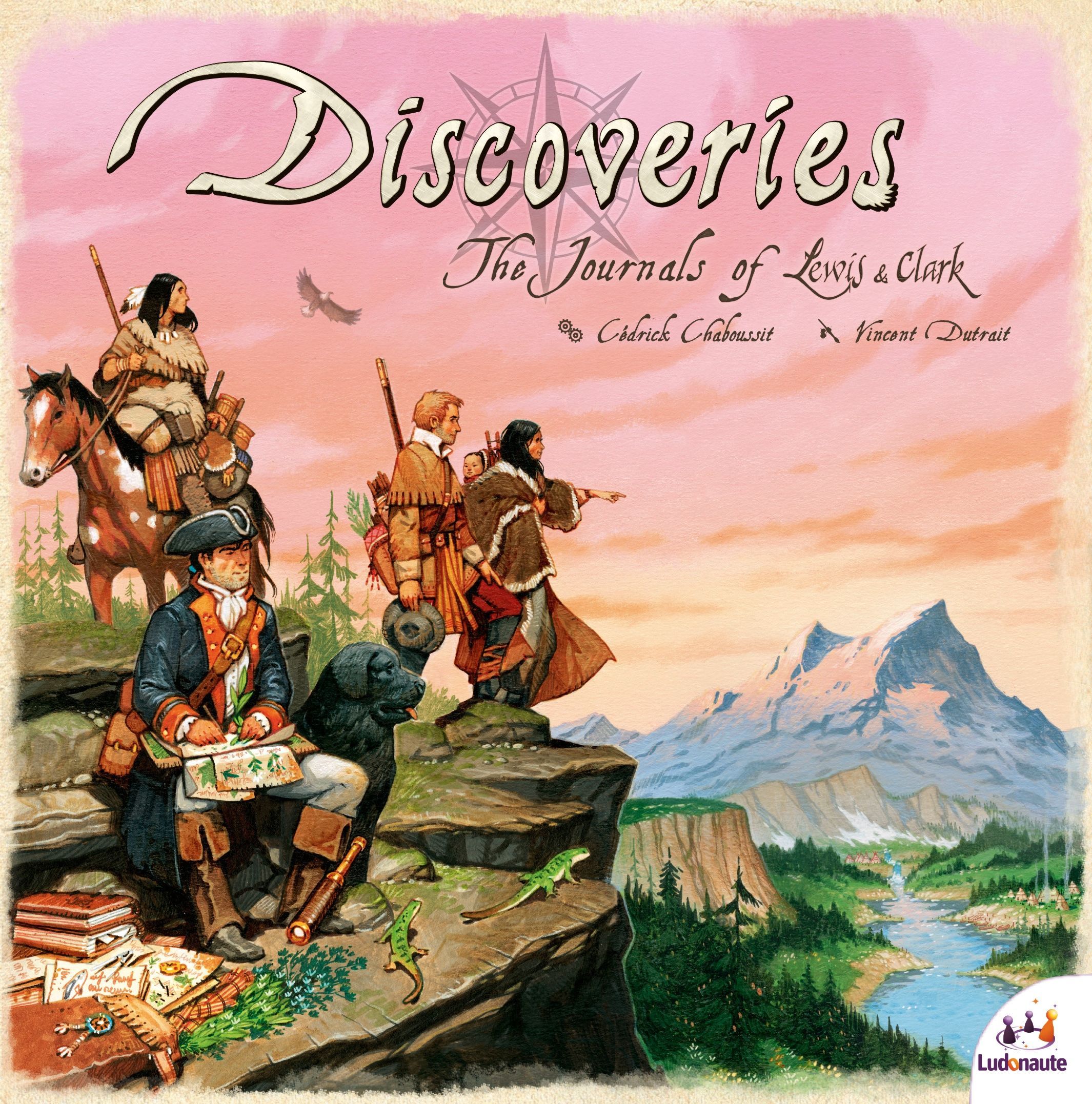
Discoveries: The Journals of Lewis & Clark — Prices
Ludonaute, Asterion Press, MeepleBR · Board game · 2015
2–4 · best 3
60 min
Weight 2.4/5
Buy · from US$ 23.69
7.7
rating
Ludopedia
7.0
rating
BGG
Our Verdict
RECOMMENDED
Perfect for history buffs looking for a worker placement game with a clever dice twist.
Highlights
- Great integration of historical theme
- Dynamic and tactical dice management
- Rewarding deck/pool building
- Pleasing visual components
Keep in mind
- Moderate initial learning curve
- Some reliance on dice luck
Rules manual not indexed yet
Upload the PDF rulebook to ask questions about this game with AI.
About the game
What you do in a play session
Ever wondered what it would be like to document the first great crossing of the North American continent? In Discoveries: The Journals of Lewis & Clark, you step into the boots of one of the legendary 1803 expedition members—choosing between Lewis, Clark, or Sergeants Gass and Ordway. Your goal is straightforward yet ambitious: fill your journal with as much knowledge as possible, cataloging new species of flora and fauna and mapping unknown territories to advance the cause of science.
The heart of the game beats to the rhythm of the dice. To explore and acquire Discovery or Tribe cards, you'll need to manage your dice with precision. The dynamics are clever: you can allocate dice to your own action area to prepare or place them directly on the board to execute exploration. The strategy lies in resource management; you can swap your dice for better actions or recover them from the board (or even from your opponents' action areas!).
As you progress, you build your resource pool, enhancing your exploration capabilities. The game blends the tension of worker placement with the satisfaction of set collection. In the end, the player who transformed the journey into the most scientific knowledge—translated into victory points via the collected cards—will be the winner. It's a perfect title for those who love historical themes and enjoy games where the luck of the dice is mitigated by strategic allocation and deck-building choices.
The heart of the game beats to the rhythm of the dice. To explore and acquire Discovery or Tribe cards, you'll need to manage your dice with precision. The dynamics are clever: you can allocate dice to your own action area to prepare or place them directly on the board to execute exploration. The strategy lies in resource management; you can swap your dice for better actions or recover them from the board (or even from your opponents' action areas!).
As you progress, you build your resource pool, enhancing your exploration capabilities. The game blends the tension of worker placement with the satisfaction of set collection. In the end, the player who transformed the journey into the most scientific knowledge—translated into victory points via the collected cards—will be the winner. It's a perfect title for those who love historical themes and enjoy games where the luck of the dice is mitigated by strategic allocation and deck-building choices.
Gallery
Box and component photos
Tap any photo to open fullscreen. Photos submitted by the community or publisher.
Rules videos
Learn by watching before you open the box


Best player count
BGG community vote
2
REC
3
BEST
4
REC
Soundtrack
Ambience suggested by Melodice
Loading playlist...
Where to Buy
Prices monitored daily
Finding best prices...
Prices unavailable at this time.
Price history — last 6 months (lowest new offer)
Alert enabled!
Join the BoardGamesBot deals group
Get the best board game deals every day — without message spam.
Join the WhatsApp groupGame details
Mechanics, categories, families and credits
Mechanics
Categories
Families
Publisher
Ludonaute, Asterion Press, MeepleBR, Rebel Sp. z o.o.
Designer
Cédrick Chaboussit
Artist
Vincent Dutrait
Community
Data from BoardGameGeek
7,220owners
926wishlist
140want to play
Frequently Asked Questions
Quick answers before you buy
Is the game too complex?
It has a medium weight (2.35 on BGG), so it's not an entry-level game, but it's far from impossible. If you're familiar with worker placement, you'll pick it up quickly.
Does dice luck determine the winner?
Dice bring randomness, but the game offers several ways to mitigate it, such as swapping dice and pool building, turning luck into strategy.
How many people can play?
2 to 4 players. It works well in any configuration, but the competition for board spaces gets more intense with more players.
How long does a game last?
Usually around 60 minutes, making it quite agile for the depth it provides.
Who do you recommend this game for?
For those who love exploration themes, history, and enjoy games where you feel your character evolving during the session.
Other Games You'll Like
Based on mechanics and theme