Hellapagos
999 Games, Albi, Gémklub · Board game · 2017
3–12 · best 8
20 min
Weight 1.3/5
Buy · from US$ 19.51
7.5
rating
Ludopedia
6.6
rating
BGG
Our Verdict
RECOMMENDED
If you love party games with bluffing and backstabbing, Hellapagos gives you that in a 20‑minute package.
Highlights
- High social interaction
- Fast rules
- Scales to 12 players
- Mixes cooperation and competition
Keep in mind
- Player elimination can sideline friends
- Heavy reliance on negotiation
- Some outcomes feel random
Rules manual not indexed yet
Upload the PDF rulebook to ask questions about this game with AI.
About the game
What you do in a play session
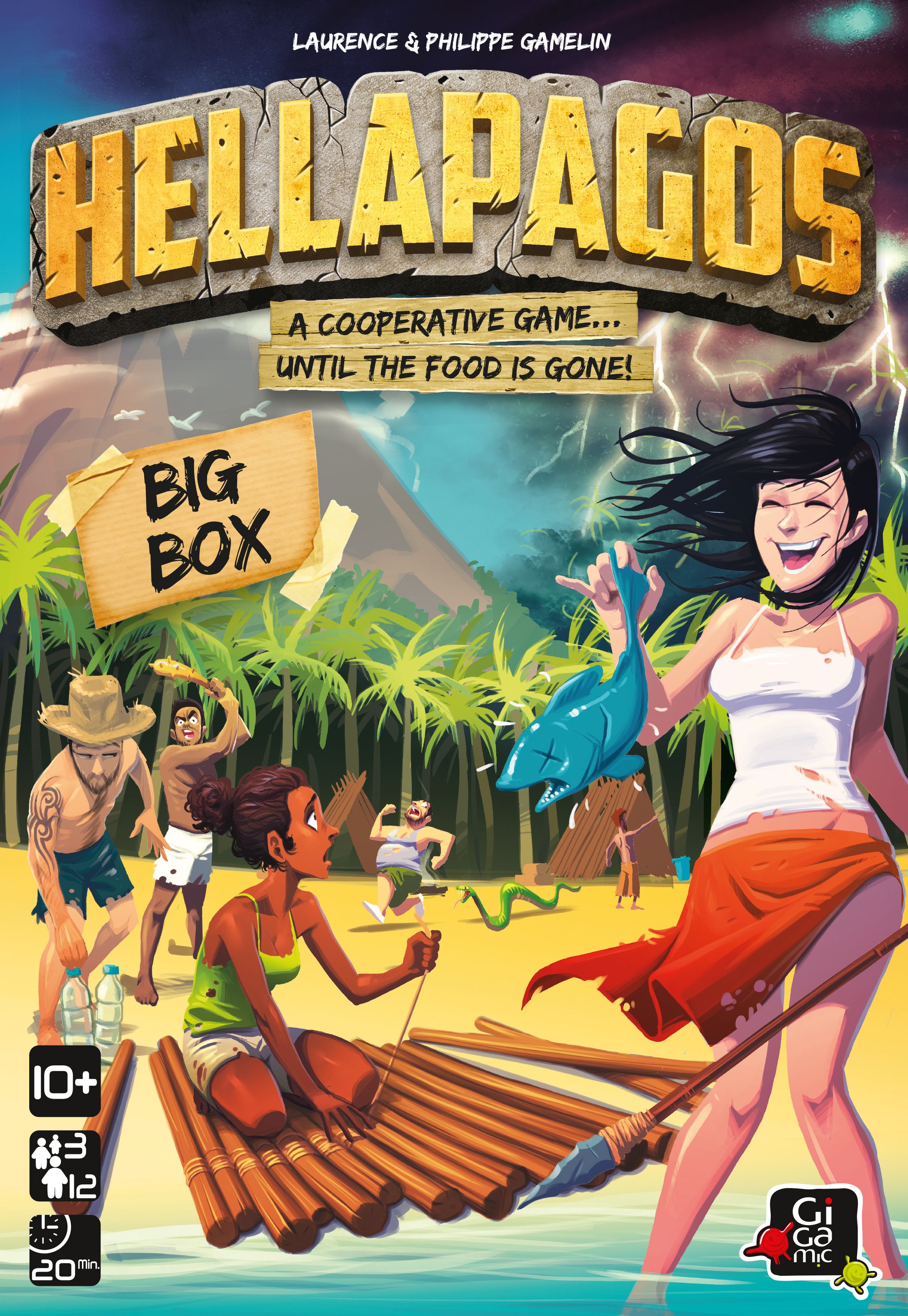
Hellapagos drops up to 12 castaways onto a seemingly tropical island that quickly turns into a battle for water, food, and trust. The main goal is to build a raft big enough to escape before a looming hurricane wipes everything out. Each round supplies limited resources—water, food, and wood—that the group must gather together, but the allocation is decided through voting and bluff‑filled negotiations. While everyone needs the raft, not everyone will make it; player elimination occurs when someone starves, drowns, or when the storm finally arrives.
The "Push Your Luck" element appears when the group decides how long to wait for more resources before starting construction; waiting too long risks dehydration, but leaving early may leave the raft incomplete. Turn order progresses, reflecting the mounting pressure of time. "Take That" cards let players sabotage opponents by stealing resources or forcing them to lose a turn.
Although cooperation is required to assemble the raft, the game is steeped in coopetition: alliances form, yet each player has a personal stake in being the last one off the island. The negotiation, bluffing, and voting dynamics generate tense and humorous moments, making it ideal for parties or large gatherings. In about 20 minutes the game ends, either with a few survivors sailing away or everyone stranded in the sand. Its low weight (1.34/5) keeps it beginner‑friendly, while the social tension can still surprise seasoned party‑game fans.
The "Push Your Luck" element appears when the group decides how long to wait for more resources before starting construction; waiting too long risks dehydration, but leaving early may leave the raft incomplete. Turn order progresses, reflecting the mounting pressure of time. "Take That" cards let players sabotage opponents by stealing resources or forcing them to lose a turn.
Although cooperation is required to assemble the raft, the game is steeped in coopetition: alliances form, yet each player has a personal stake in being the last one off the island. The negotiation, bluffing, and voting dynamics generate tense and humorous moments, making it ideal for parties or large gatherings. In about 20 minutes the game ends, either with a few survivors sailing away or everyone stranded in the sand. Its low weight (1.34/5) keeps it beginner‑friendly, while the social tension can still surprise seasoned party‑game fans.
Gallery
Box and component photos
Tap any photo to open fullscreen. Photos submitted by the community or publisher.
Rules videos
Learn by watching before you open the box


Best player count
BGG community vote
3
OK
4
OK
5
REC
6
REC
7
BEST
8
BEST
9
BEST
10
REC
11
REC
12
REC
Soundtrack
Ambience suggested by Melodice
Loading playlist...
Where to Buy
Prices monitored daily
Finding best prices...
Prices unavailable at this time.
Price history — last 6 months (lowest new offer)
As an Amazon Associate I earn from qualifying purchases. Prices and availability subject to change.
Alert enabled!
Join the BoardGamesBot deals group
Get the best board game deals every day — without message spam.
Join the WhatsApp groupGame details
Mechanics, categories, families and credits
Mechanics
Categories
Families
Publisher
999 Games, Albi, Gémklub, Ghenos Games, Gigamic, Hachette Boardgames UK, Kaissa Chess & Games, Lautapelit.fi, Lifestyle Boardgames Ltd, Paladium Games, WoodCat
Designer
Laurence Gamelin, Philippe Gamelin
Artist
Jonathan Aucomte
Community
Data from BoardGameGeek
8,639owners
939wishlist
67want to play
Frequently Asked Questions
Quick answers before you buy
How many players can join?
From 3 up to 12 players, perfect for large gatherings.
How long does a game take?
Roughly 20 minutes, varying with player count.
What is the game's complexity?
Weight 1.34/5 – easy rules, but the social dynamics add depth.
What components are included?
Resource cards, "Take That" cards, wooden raft pieces, water/food markers, and an island board.
Who should buy this game?
Fans of party games, bluffing/negotiation lovers, and groups that enjoy quick, chaotic sessions.
Other Games You'll Like
Based on mechanics and theme