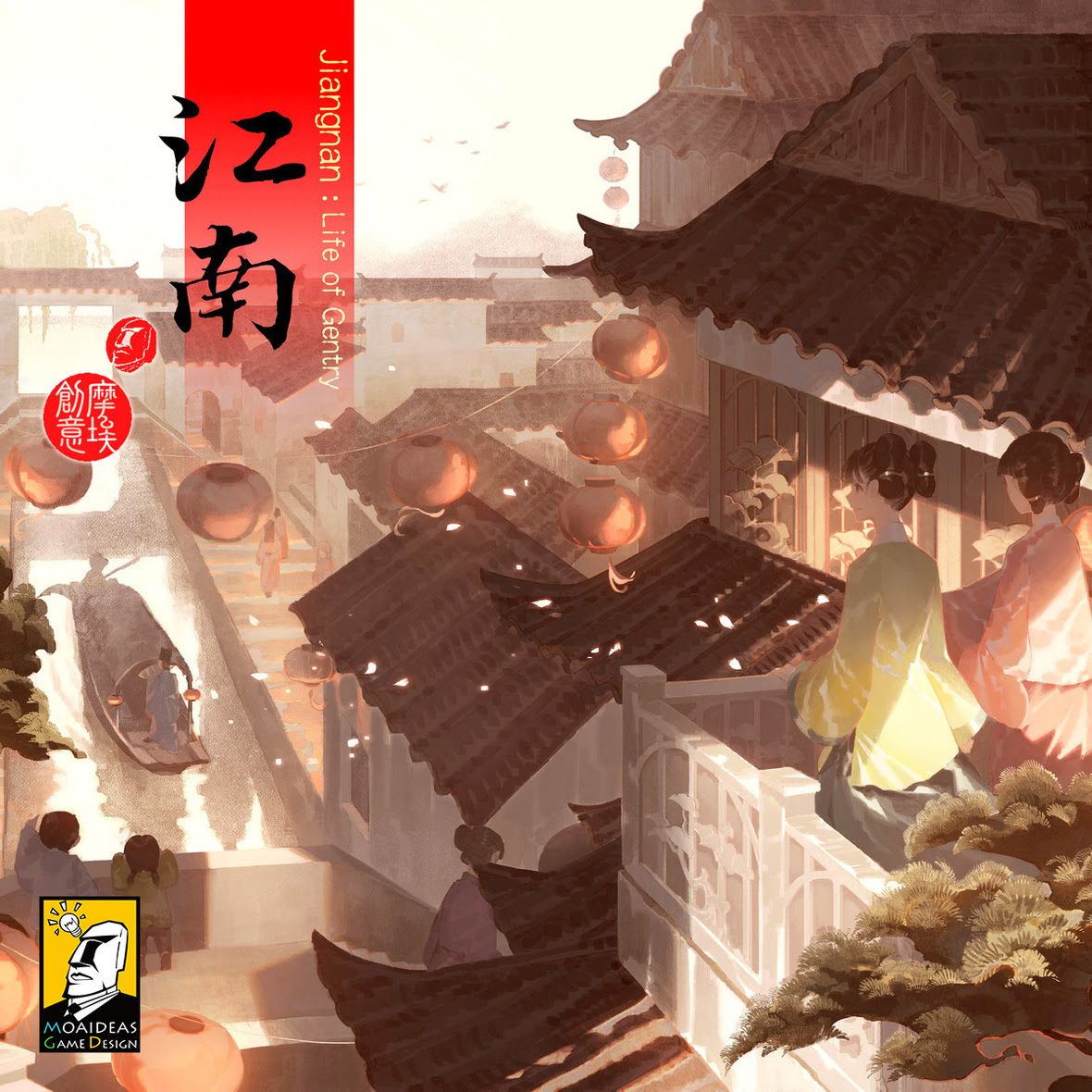
If you enjoy a eurogame with a distinct theme and a good dose of management, Jiangnan: Life of Gentry is a fantastic choice. It elegantly blends worker placement with action tile bag building, putting you in the shoes of a Ming Dynasty artist who needs to be clever to get their works recognized by the aristocracy. The experience is dense, strategic, and rewards good planning, offering interesting replayability in both single scenarios and campaigns.
thumb_up
Highlights
check_circle
Rich and immersive theme
check_circle
Well-integrated mechanics
check_circle
High-quality components
check_circle
Engaging solo mode
check_circle
Strategic depth
warning_amber
Keep in mind
report_problem
Steep learning curve
report_problem
Long play time possible
report_problem
Not for light game seekers
upload_file
Rules manual not indexed yetUpload the PDF rulebook to ask questions about this game with AI.
info
About the game
What you do in a play session
Embark on a fascinating journey through the Ming Dynasty, specifically in the prosperous Jiangnan region, south of the Qinhuai River, in Jiangnan: Life of Gentry. Here, you take on the role of a literati or artisan of the elite gentry, a master of literature, calligraphy, painting, and music. But make no mistake, the gentry life isn't just poetry; it's also about cunning and influence. Nankin's aristocracy is fickle, and your goal is to transform your works from fleeting trends into timeless classics, worthy of being remembered for millennia. Will you follow the wave or set the trend?
This is a robust worker placement and action tile bag-building game, designed for 1 to 4 players. Jiangnan offers the flexibility of being played as a single scenario, for a more direct experience, or through multiple campaigns, where your decisions and achievements unfold in an epic narrative. You'll need more than artistic talent; bureaucratic skills will be crucial to navigate the complexities of the court and guide the aristocracy to recognize the lasting value of your art. Prepare to manage your hand of cards, influence areas, and fulfill contracts, all while building a legacy that will transcend time. It's an engaging blend of economic and cultural strategy, where the beauty of art meets political shrewdness.
photo_library
Gallery
Box and component photos
11 photos · from the community
01 / 11
Tap any photo to open fullscreen. Photos submitted by the community or publisher.
Country: ChinaCrowdfunding: KickstarterDigital Implementations: TableTop Simulator Mod (TTS)
businessPublisherMoaideas Game Design, HUCH!
editDesignerDuGuWei
groups_2
Community
Data from BoardGameGeek
560owners
294wishlist
55want to play
quiz
Frequently Asked Questions
Quick answers before you buy
6 questions
How complex is Jiangnan: Life of Gentry? expand_more
It's considered a medium-heavy complexity game (BGG weight 3.6/5). Expect some rules to learn and deep strategies to master. It's not for absolute beginners, but rewarding for those who enjoy a good challenge.
How many players can play and what's the game duration? expand_more
Jiangnan can be played by 1 to 5 players. Game duration ranges from 90 to 120 minutes, depending on the number of participants and familiarity with the game.
Does the game have a good solo mode? expand_more
Yes! Jiangnan: Life of Gentry offers a very robust and engaging solo mode, allowing you to enjoy the full experience even without company. It's great for practice or when friends aren't available.
What are the main mechanics present in the game? expand_more
The core mechanics are worker placement and action tile bag building. Additionally, you'll find hand management, area majority, contracts, and end-game bonuses, all elegantly intertwined.
Is the Chinese theme well explored? expand_more
Absolutely! The Ming Dynasty theme and the life of literati and artisans in Jiangnan are very well integrated into the game, both in the art and mechanics, creating a rich and interesting cultural immersion.
Is there a lot of player interaction in this game? expand_more
Interaction is indirect, typical of eurogames. You compete for worker placement spots, area majority, and contract fulfillment, but without direct confrontation. It's more about optimizing your own moves and anticipating opponents'.