How to Play Kingdom Death: Monster
Kingdom Death · Board game · 2015What do you want to do now
Ask anything about Kingdom Death: Monster: rules, setup, components, complexity, price, or whether it fits your group.
Video: How to Play
Start here, then follow the written guide
Step by step
Objective of the Game
Welcome, brave survivors, to the brutal, beautiful, and utterly unforgiving world of Kingdom Death: Hunter! Forget grand empires or heroic quests; your objective here is simple: survive. This isn't just about killing monsters; it's about enduring the crushing darkness, building a legacy for your hunters, and telling a hell of a story along the way. You'll guide a core hunting party through a world where every triumph is hard-won and every death is a dramatic turning point. The game is a narrative sandbox, meaning the real win is the epic, blood-soaked tale you'll recount when the lantern dims. Keep your hunters alive, make tough choices, and see how long you can defy the encroaching nightmare!
Preparation (Setup)
Setting up for a journey into the darkness requires focus, but don't worry, we'll get you ready. While the manual doesn't detail a full component list for setup, it focuses on the crucial decisions and initial steps after a hunt. Here’s what you need to know to get started with the post-hunt phase:
- Choose a Destination: After a successful hunt, your first big decision is where to go.
- Return to your last settlement: This is the safe bet. You travel back without risk and can immediately start crafting, healing, and preparing.
- Travel to a new settlement: This is where the adventure truly begins! You'll embark on the Lantern Path, facing dangers but with the chance for better opportunities.
- Traveling the Lantern Path (if chosen): If you brave the path to a new settlement:
- Roll 1d5 to determine the number of Hunt Events you'll face. This is your "distance."
- Draw that many Hunt Event Cards and place them face-down along the Hunt Board.
- You'll advance one space at a time, resolving each event before moving on. Remember, you can turn back to your last settlement at any time before revealing a Hunt Event. Once revealed, it must be resolved!
- Discovering a New Settlement (if you reach one):
- Roll 1d10 to determine the Settlement Type (1-5 for Martial, 6-10 for Artisan).
- Roll another 1d10 for the Settlement Tier (1-2 for Tier 1, 3-6 for Tier 2, 7-10 for Tier 3).
- Important: You can only find Tier 3 settlements after successfully slaying a Node 3 monster. If you roll Tier 3 before this, treat it as Tier 2 instead.
- If you roll "Desolate Ruins" (1 on the Settlement Type roll), you must move on! You can return to your last settlement or restart the Travel Phase.
The Game Turn (Settlement Phase)
Once your hunters arrive at a settlement, the Settlement Phase begins. This is where you heal, craft, recruit, and prepare for the next terrifying hunt. Here’s a breakdown of the key steps:
- Arriving at a Settlement:
- Update the Timeline: Advance the timeline by one Lantern Year.
- Check for Nemesis or Story Events: If the new Lantern Year has a Nemesis Encounter, it happens at the end of the phase. If it's a Story Event, it happens at the beginning. No regular settlement event is rolled if one of these occurs.
- Roll for a Settlement Event: If no Nemesis or Story Event, roll 1d30 on the Settlement Event Table. Read it aloud, check it off, and resolve its effects.
- Gain Endeavors:
- Each hunter who successfully arrived at the settlement (meaning they weren't unconscious) gains 1 Endeavor.
- Endeavors are a group resource, used for crafting or healing, and any unused ones are discarded at the end of the phase.
- Rest and Recovery:
- Once per visit, each hunter can spend 1 Endeavor to try and recover from an injury or disorder.
- Roll 1d10: 1-2 (no effect), 3-6 (remove 1 Permanent Injury/Disorder, but set Survival to 0 for next hunt), 7-9 (remove 1 Permanent Injury/Disorder), 10 (remove all Injuries and Disorders!).
- If in an Artisan Settlement, add +1 to your roll!
- Recruit a New Hunter:
- Spend 1 Endeavor to recruit. Your party can only have 4 hunters (plus 1 scout if using the GCE). If you're full, someone must be banished!
- Roll 1d10 for their experience (e.g., Injured Survivor, Fresh Blood, Veteran Hunter). Martial Settlements add +1 to this roll.
- Settlement Reputation System:
- Returning to the same settlement gains +1 Reputation (max 5). Defending it from a Nemesis grants +2.
- Reputation 3: Gain +1 Endeavor each visit.
- Reputation 5: Gain +1 Endeavor AND 1 Crafting Discount (ignore one resource cost for an item, or craft a single-resource item for free!).
- Prepare a Travel Pack:
- If relocating, spend 1 Endeavor to pack a Travel Pack (1 space in a hunter's gear grid, holds up to 10 items). It's single-use and discarded on arrival.
- Prepare for the Hunt (Spend Endeavors for temporary bonuses):
- Each hunter can perform one preparation action per phase. Bonuses last for the next hunt.
- Fortify Armor (1 Endeavor): Roll 1d10. 3-9 (+1 Armor to all hit locations), 10 (+2 Armor).
- Maintain Weapon (1 Endeavor): Roll 1d10. 3-9 (+1 Strength for next hunt), 10 (+2 Strength).
- Refine Tactics (1 Endeavor): Roll 1d10. 3-9 (+1 Survival or +1 Insanity), 10 (+2 Survival or +2 Insanity).
- Prepare the Dreadspike:
- Spend 1 Endeavor, 1 bone, and 1 hide to build a Dreadspike. It's a heavy, single-use ballista.
- Optional upgrades: Martial Settlement (1 bone for +1 to result roll), Artisan Settlement (1 organ for -1 Evasion token on monster hit).
- Fired at the start of the Showdown Phase (if no Ambush). Roll 1d10 for effect (e.g., Miss, Direct Hit, Brutal Impact, Perfect Shot).
- Scout Preparations (if playing with a Scout from GCE):
- If the scout arrived successfully, spend 1 Scout Endeavor for one action:
- Scout the Wilds: Roll 1d10 for bonuses like rerolls, an Ambush Site (hunters place anywhere, go first, add terrain), Environmental Cache (2 random basic resources, discard 1), or a Tactical Map (each hunter chooses +1 Evasion, +1 Accuracy, or +1 Strength).
- Weave the Wilds: Roll 1d10 to craft Huntveils (camouflage gear).
- If the scout arrived successfully, spend 1 Scout Endeavor for one action:
- Hunter Progression & Survival:
- Hunters gain Hunt XP and resolve Age Milestones as in the core game. They don't retire from old age here, only death or being cast aside.
- Survival resets to 1 at the start of each Settlement Phase. It represents raw instinct and can be gained through various actions.
- Survival Actions (Dodge, Dash, Surge, Encourage, Endure) are available from the start, each usable once per round unless stated otherwise.
- Settlement Advancement:
- If you return to a Tier 1 or 2 settlement with 5 Reputation, after slaying a Node 3 monster or higher, you can give all Monster Resources (not Basic Resources) from the hunt to the settlement.
- This permanently increases the Settlement Tier by +1, unlocking new crafting locations!
End of Game and Scoring
Kingdom Death: Hunter isn't about a final score; it's about the journey and the stories you create. The campaign ends in one dramatic way:
- Total Party Kill: If all your hunters are killed during a hunt, the campaign ends. Game over.
- Consequences of Defeat (Partial Kill): If all surviving hunters were rendered unconscious during a hunt, a search party brings them back.
- All gathered hunt resources are lost.
- No Endeavors are gained.
- Each surviving hunter gains 1 random Disorder.
- Scout's Last Stand (Logistics of Death - GCE): If your scout is alive and conscious after a defeat, they can activate this special event to try and save the party, with varying outcomes for resources, disorders, and Endeavors. This can prevent a total campaign wipe!
- Lamplighter Event (GCE): This devastating scout story event can occur, resulting in your current settlement being lost and archived, forcing you to immediately travel the Lantern Path to find a new one. This is a narrative reset, not an end, but a significant setback!
The "score" is the richness of your narrative, the legendary hunts you survived, and the harrowing tales of those who fell. How many Lantern Years can your hunters endure?
Tips for Winning
The darkness is unforgiving, but with a few pointers, your hunters might just live to see another Lantern Year:
- Prioritize Endeavors and Recovery: Endeavors are your lifeblood in the settlement. Always consider spending them on Rest and Recovery to mend injuries and disorders. A healthy hunter is a useful hunter! Don't be afraid to spend Endeavors on Refine Tactics for extra Survival or Insanity, as these can be crucial in the next showdown. Remember, unused Endeavors are lost, so use them wisely!
- Leverage Settlement Reputation: Don't just chase new settlements blindly. Building Reputation with a familiar settlement (especially to 3 or 5) provides tangible benefits like extra Endeavors and Crafting Discounts. These bonuses can significantly ease the burden of survival and gear acquisition, making subsequent hunts much more manageable. Sometimes, the known evil is better than the unknown.
- Plan Your Travel (and know when to turn back): The Lantern Path to a new settlement is risky, but can offer better crafting opportunities. However, if the Hunt Events are looking particularly nasty, remember you can Turn Back to your last settlement at any time before revealing an event. Don't be too proud to retreat if it means saving your party from unnecessary damage or even death. Survival is key, and sometimes discretion is the better part of valor.
More videos
More rules explanations from the community
In English
-
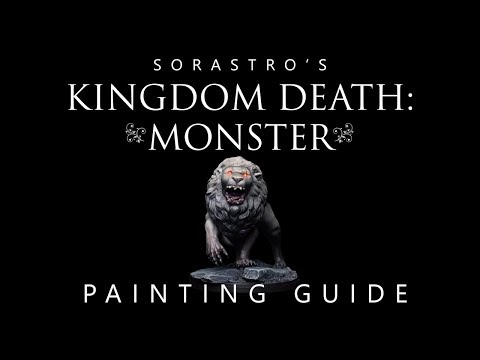 Sorastro's Kingdom Death: Monster Painting Guide Ep.2 - The White Lion
-
 How to Play Kingdom Death: Monster Part 1 - Survivors - Bored Online? Board Offline! 251
-
 Kingdom Death: Monster and the Gambler's Chest Introduction with Becca Scott
-
 Kingdom Death: Monster | How to Play | First Story: Setup & Monster Turn
-
 Sorastro's Kingdom Death: Monster Painting Guide Ep.4 - The Butcher
-
 How to Paint the Manhunter
-
 Kingdom death monster 1.5 tutorial
-
 Sorastro's Kingdom Death: Monster Painting Guide Ep.3 - The Screaming Antelope
-
 Assemble Kingdom Death Starting Survivors
-
 How to Organize and Unpack Kingdom Death: Monster and the Gambler's Chest with Becca Scott | KDM
-
 Kingdom Death: Monster | How to Play | First Story: Survivor Damage & Effects
Rules manual
Official PDF file
Frequently Asked Questions
Quick answers about the rules
What is the objective of Kingdom Death: Monster?
How do you set up Kingdom Death: Monster?
How does Kingdom Death: Monster end, and how do you score?
What are some tips for winning Kingdom Death: Monster?
Expansions
Published additional content
 Kingdom Death: Monster – A Strange Spot and Belt of Gender Swap Promos
 Kingdom Death: Monster – Abyssal Woods Expansion
 Kingdom Death: Monster – Black Knight Expansion
 Kingdom Death: Monster – Campaigns of Death Expansion
 Kingdom Death: Monster – Death Armor Expansion
 Kingdom Death: Monster – Dragon King Expansion
 Kingdom Death: Monster – Dung Beetle Knight Expansion
 Kingdom Death: Monster – False Messengers Promo
 Kingdom Death: Monster – First Hero Expansion
 Kingdom Death: Monster – Flower Knight Expansion
 Kingdom Death: Monster – Frogdog Expansion
 Kingdom Death: Monster – Gambler's Chest
 Kingdom Death: Monster – Gorm Expansion
 Kingdom Death: Monster – Green Knight Armor Expansion
 Kingdom Death: Monster – Gryphon Expansion
 Kingdom Death: Monster – Honeycomb Weaver Expansion
 Kingdom Death: Monster – Inverted Mountain Expansion
 Kingdom Death: Monster – Ivory Dragon Expansion
 Kingdom Death: Monster – Legendary Card Pack
 Kingdom Death: Monster – Lion God Expansion
 Kingdom Death: Monster – Lion Knight Expansion
 Kingdom Death: Monster – Lonely Tree Expansion
 Kingdom Death: Monster – Manhunter Expansion
 Kingdom Death: Monster – Oblivion Mosquito Expansion
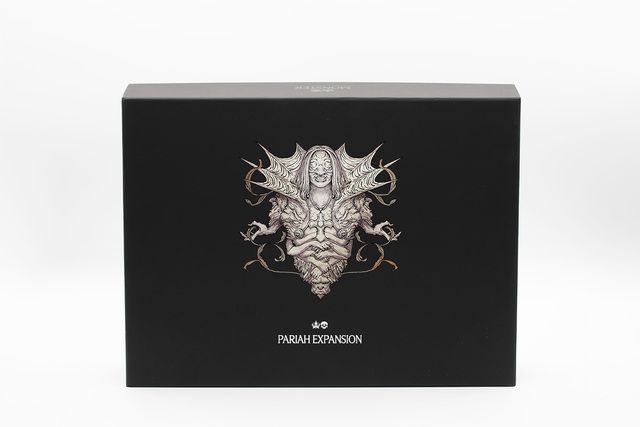 Kingdom Death: Monster – Pariah Expansion
 Kingdom Death: Monster – Red Witches Expansion
 Kingdom Death: Monster – Screaming God Expansion
 Kingdom Death: Monster – Slenderman Expansion
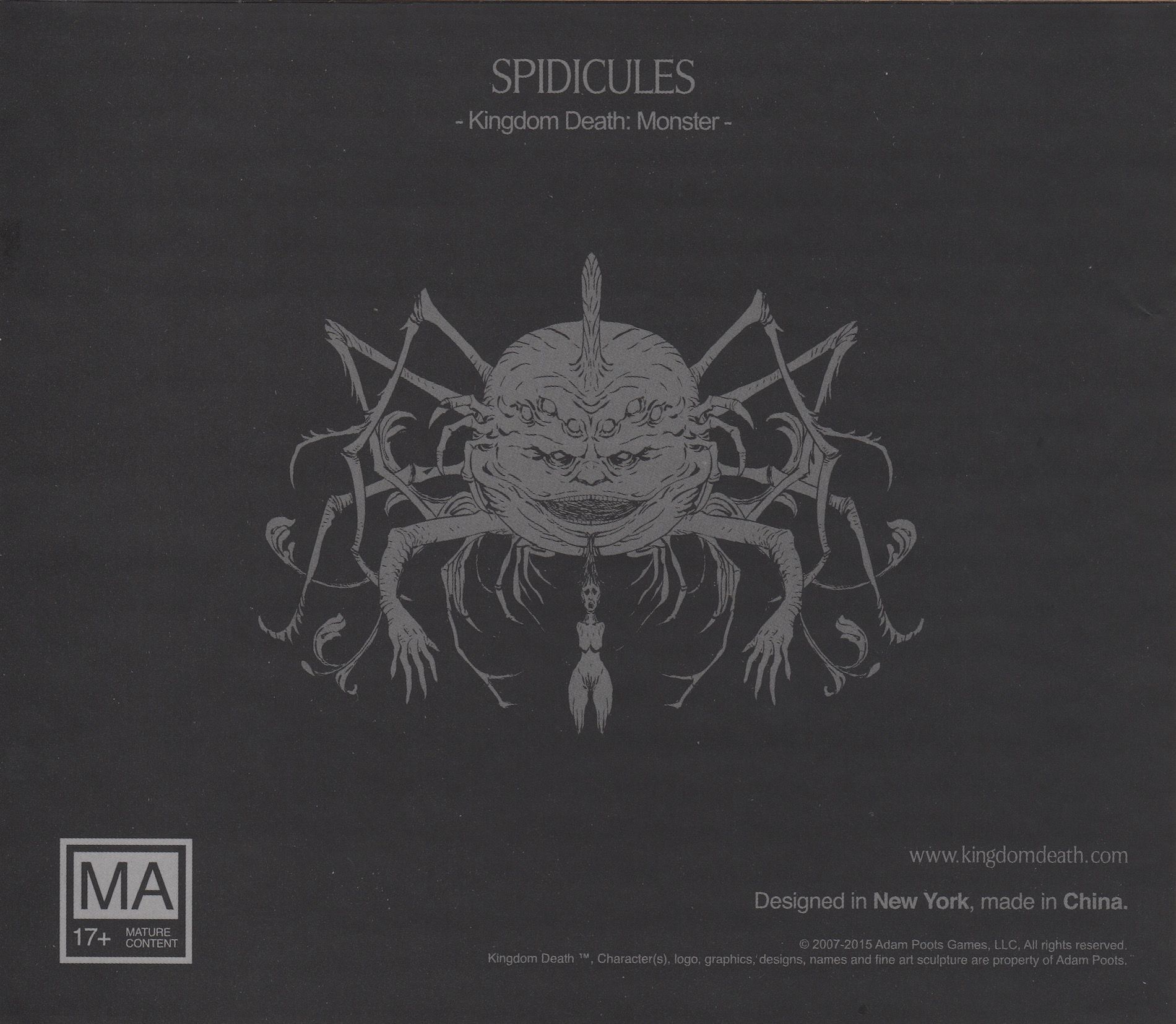 Kingdom Death: Monster – Spidicules Expansion
 Kingdom Death: Monster – Story in the Snow Promo
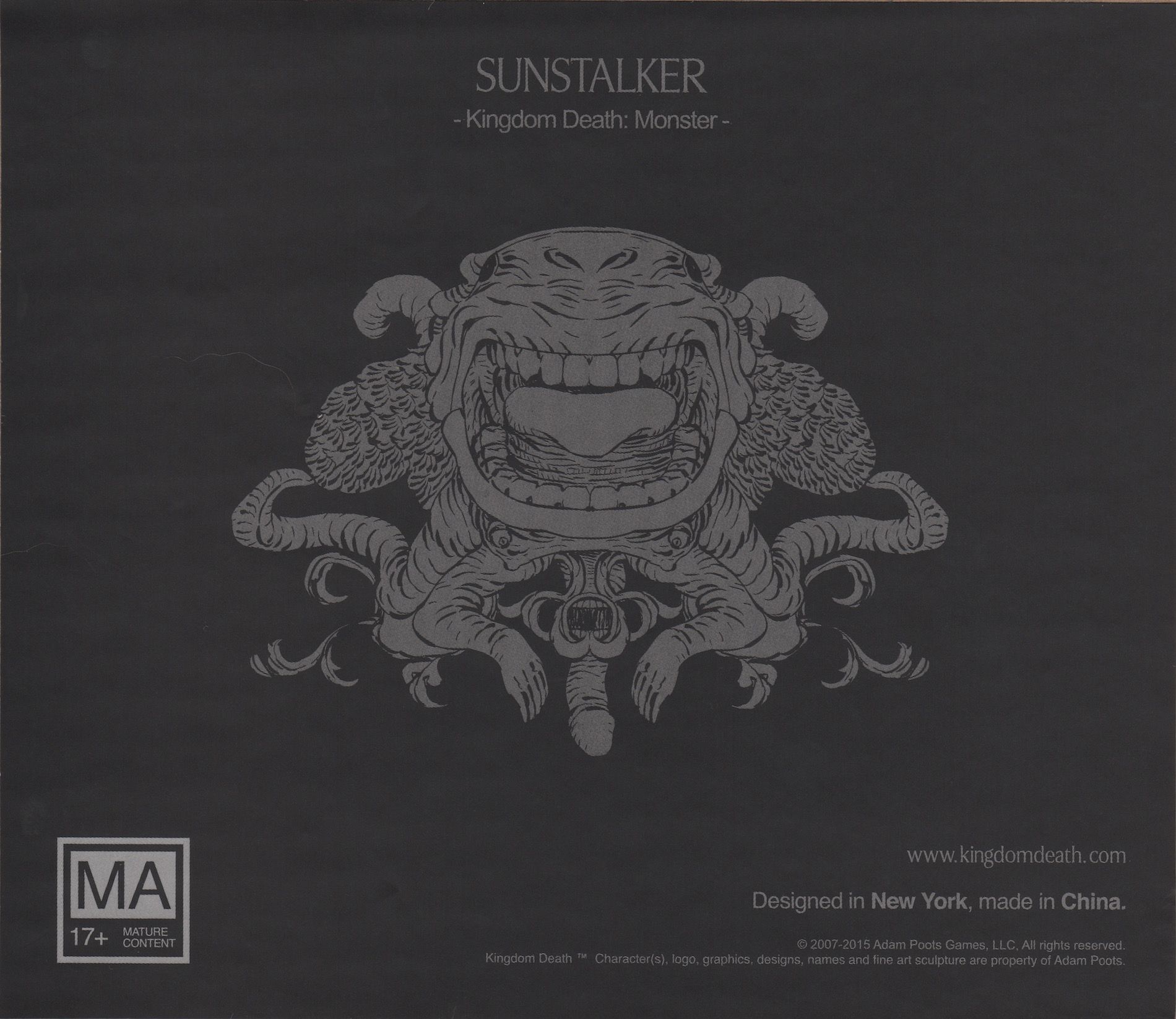 Kingdom Death: Monster – Sunstalker Expansion
 Kingdom Death: Monster – Super Survivors Promo Expansion
 Kingdom Death: Monster – The Silver City Expansion
 Kingdom Death: Monster – Vignette of Death: White Gigalion
Other Games You'll Like
Based on mechanics and theme