Lata — Prices
PYTHAGORAS, Across the Board, GaGa Games · Board game · 2023
1–4 · best 2, 3
Solo
20–45 min
Weight 2.3/5
Buy · from US$ 20.59
8.0
rating
Ludopedia
7.2
rating
BGG
Our Verdict
RECOMMENDED
Perfect for those who enjoy economic management with a strategic priority twist; the theme is incredibly charming.
Highlights
- Clever action auction mechanic
- Immersive and elegant historical theme
- Great balance between time and depth
Keep in mind
- Initial learning curve for newcomers
- Indirect interaction can be subtle
Rules manual not indexed yet
Upload the PDF rulebook to ask questions about this game with AI.
About the game
What you do in a play session
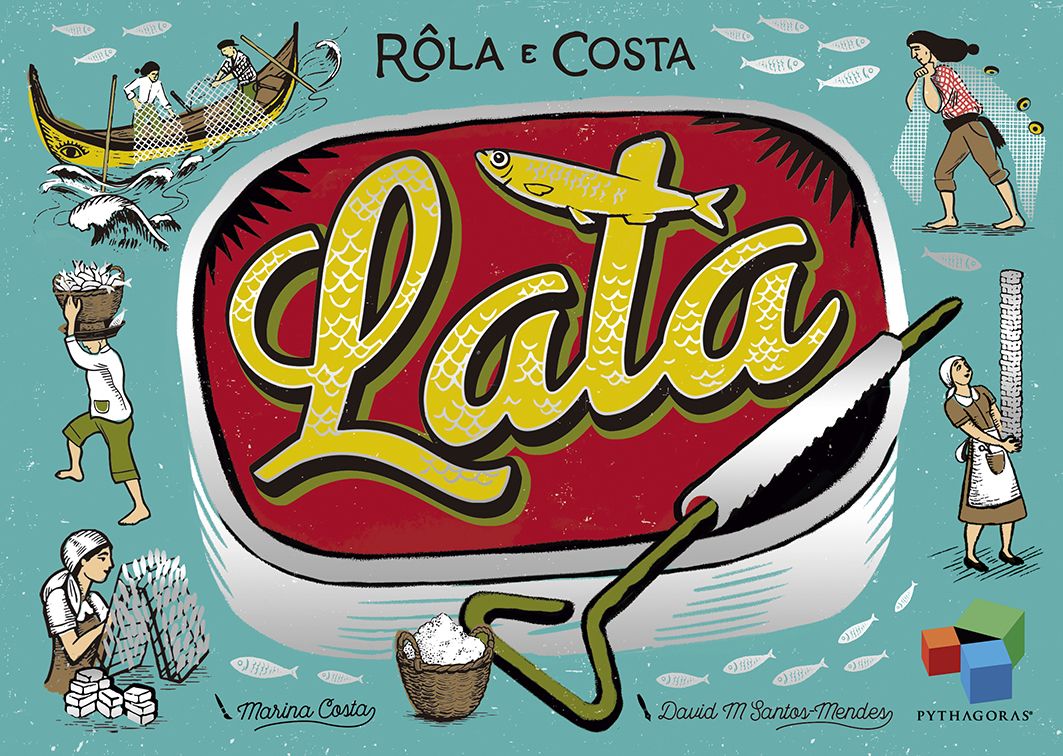
Ever thought about running a canning factory in the 1950s? In Lata, you dive into the golden age of the Portuguese canning industry, turning fresh fish into famous cans of sardines and mackerel. The goal is straightforward: produce efficiently, dominate the markets, and accumulate the highest score. But it's not just about mass production; you need a solid strategy to manage your resources and factory capacity.
The game dynamics revolve around six intense rounds. The real 'twist' lies in the struggle for raw materials. To secure the best batch of fish, tomato, or olive oil, you participate in a secret auction of action points. This creates a compelling dilemma: if you want total priority to grab the best resource, you must sacrifice action points during your turn. In other words, you get the top-tier raw material, but you'll have less momentum to produce and sell. It's a classic tug-of-war between 'who gets it first' and 'who does more'.
With the money earned from sales, you invest in your factory, increasing production capacity and purchasing scorecards that will determine the winner at the end. It's a game of smart management where every investment decision matters. If you enjoy economic games with a touch of influence struggle and want something with an elegant, historical theme, Lata is the perfect choice. Part of the Quinas Collection, following the success of Café, it brings the same level of quality and depth within a very dynamic playtime.
The game dynamics revolve around six intense rounds. The real 'twist' lies in the struggle for raw materials. To secure the best batch of fish, tomato, or olive oil, you participate in a secret auction of action points. This creates a compelling dilemma: if you want total priority to grab the best resource, you must sacrifice action points during your turn. In other words, you get the top-tier raw material, but you'll have less momentum to produce and sell. It's a classic tug-of-war between 'who gets it first' and 'who does more'.
With the money earned from sales, you invest in your factory, increasing production capacity and purchasing scorecards that will determine the winner at the end. It's a game of smart management where every investment decision matters. If you enjoy economic games with a touch of influence struggle and want something with an elegant, historical theme, Lata is the perfect choice. Part of the Quinas Collection, following the success of Café, it brings the same level of quality and depth within a very dynamic playtime.
Gallery
Box and component photos
Tap any photo to open fullscreen. Photos submitted by the community or publisher.
Rules videos
Learn by watching before you open the box


Best player count
BGG community vote
1
REC
2
REC
3
REC
4
REC
Soundtrack
Ambience suggested by Melodice
Loading playlist...
Where to Buy
Prices monitored daily
Finding best prices...
Prices unavailable at this time.
Price history — last 6 months (lowest new offer)
Alert enabled!
Join the BoardGamesBot deals group
Get the best board game deals every day — without message spam.
Join the WhatsApp groupGame details
Mechanics, categories, families and credits
Mechanics
Categories
Families
Publisher
PYTHAGORAS, Across the Board, GaGa Games, HOT Games, Korea Boardgames, Lord of Boards, Maldito Games, Mayfair Games, MS Edizioni, Reflexshop
Designer
Costa, Rôla
Artist
Marina Costa
Community
Data from BoardGameGeek
1,860owners
331wishlist
50want to play
Frequently Asked Questions
Quick answers before you buy
Is the game too complex?
It has a medium weight (2.25), so it's not a super simple gateway game, but nothing impossible. Eurogame fans will pick it up quickly.
How long does a game take?
Between 20 and 45 minutes. It's quite agile, ideal for those who want depth without spending 4 hours at the table.
Does it work well in solo mode?
Yes, the game supports 1 to 4 players, so you can test your strategies alone before facing your friends.
Do I need other games from the Quinas Collection to play?
No! Lata is a standalone game. The collection is just the designer's line, but each game has its own mechanics.
What is the main strategic focus?
The balance between purchase priority (auction) and execution capacity (action points). Those who spend everything to buy might not be able to produce.
Other Games You'll Like
Based on mechanics and theme