
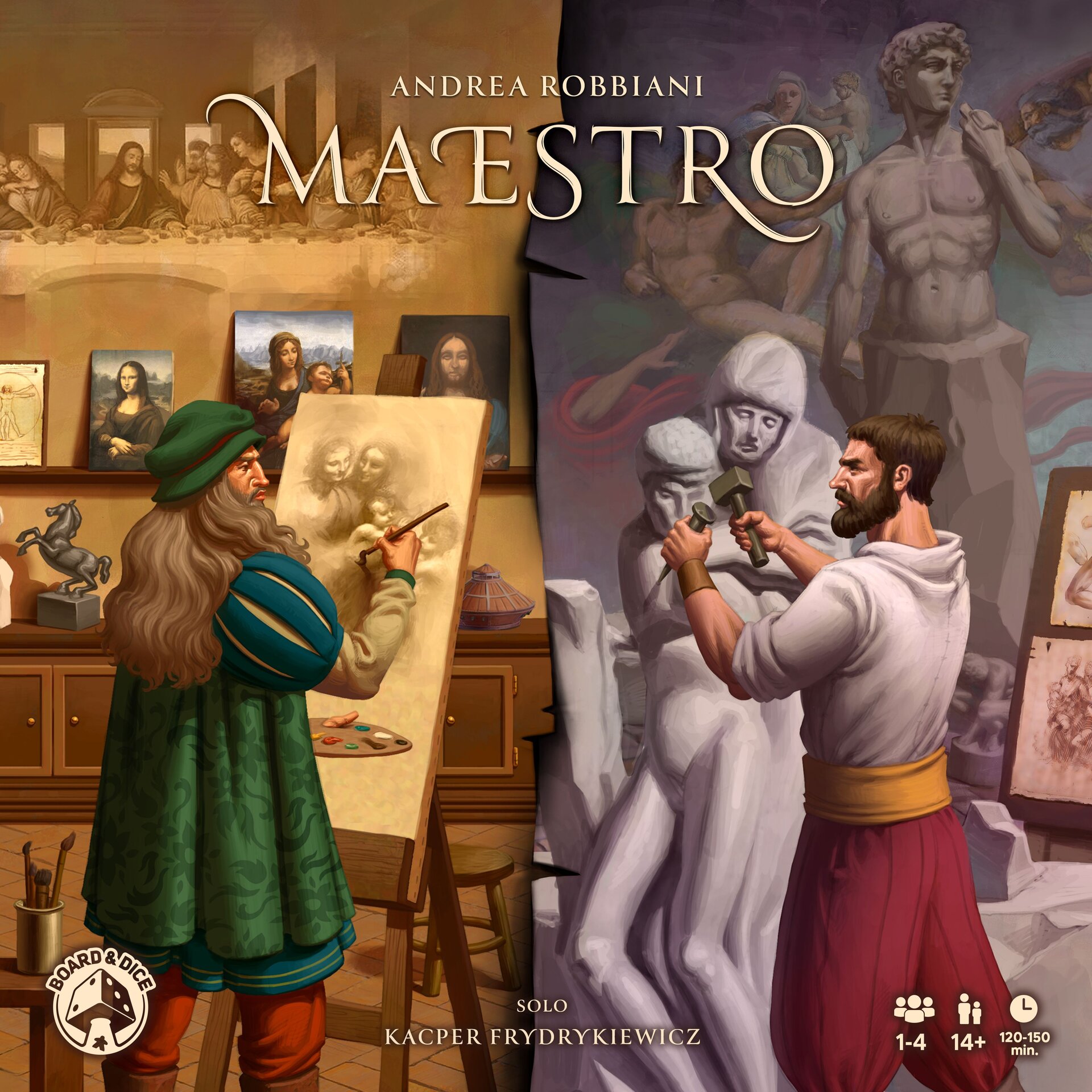
Maestro
Board&Dice, Board Bound, Giant Roc · Board game · 2026If you enjoy games with a Renaissance art theme and strategic mechanics like hand management and deck construction, "Maestro" is a must-have!
- Engaging art theme
- Deep strategic mechanics
- Solo and team modes
- Complexity can be daunting
- Initial learning curve
About the game
What you do in a play session
The game invites you to create masterpieces, from vibrant frescoes to imposing sculptures, and exhibit them across the Italian peninsula. But beware: talent alone isn't enough. You'll need cunning, charisma, and good marketing to attract the most coveted collectors and secure their lifelong support. You'll have to manage your resources (and your action deck!), use special abilities wisely, and influence the provinces to ensure your art gets the most buzz.
"Maestro" offers a rich experience with mechanics like hand management, deck construction, and area control, all set in a fascinating historical period. The option to play in teams or solo adds even more versatility. With variable setup to ensure each game is a new challenge, get ready for a 90 to 140-minute journey where only the most iconic artist of the Renaissance will prevail after four intense rounds. It's a game for those who enjoy strategy with a touch of history and plenty of artistic competition!
Gallery
Box and component photos
Tap any photo to open fullscreen. Photos submitted by the community or publisher.
Rules videos
Learn by watching before you open the box
In English

Best player count
BGG community vote
Soundtrack
Ambience suggested by Melodice
Where to Buy
Prices monitored daily
Price history — last 6 months (lowest new offer)
As an Amazon Associate I earn from qualifying purchases. Prices and availability subject to change.
Alert enabled!
Join the BoardGamesBot deals group
Get the best board game deals every day — without message spam.
Join the WhatsApp groupGame details
Mechanics, categories, families and credits
Mechanics
Categories
Families
Community
Data from BoardGameGeek
Frequently Asked Questions
Quick answers before you buy
How many players can participate in "Maestro"?
What is the average playtime for a game of "Maestro"?
Is the game difficult to learn?
What is the main objective of the game?
Are there different game modes?
Is the art theme well-represented in the mechanics?
Other Games You'll Like
Based on mechanics and theme



Related News & Articles
Releases and articles covering this game
/pic9354269.jpg)
