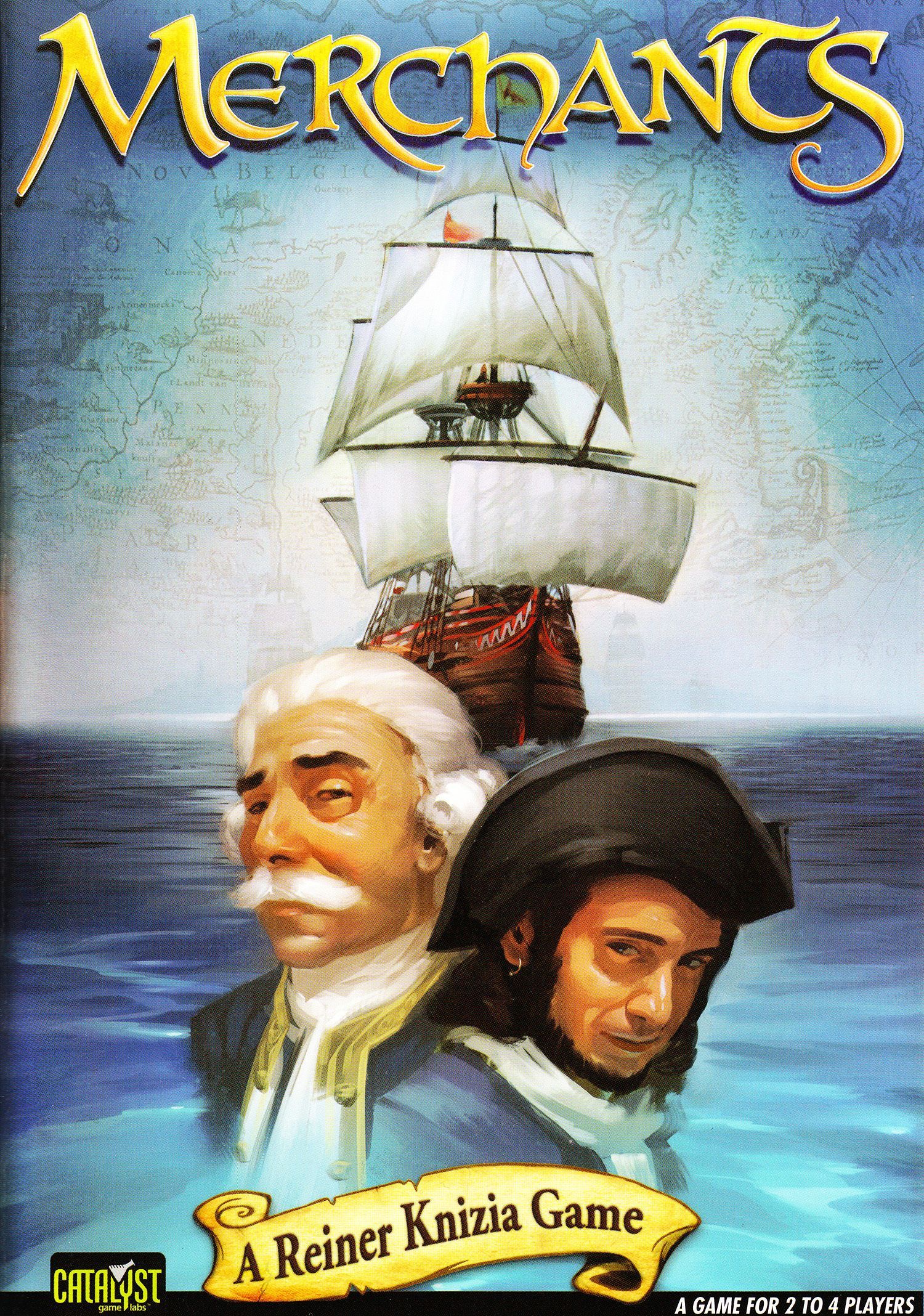
Merchants
Pegasus Spiele, Catalyst Game Labs, Game Harbor · Board game · 2007
2–4 · best 4
30 min
Weight 1.7/5
Buy · from US$ 16.85
8.9
rating
Ludopedia
6.6
rating
BGG
Our Verdict
If you love a card game that mixes trade, timing, and a dash of strategy, Merchants is for you.
Highlights
- Smart hand management
- Fun set collection
- Real‑time negotiation
- Renaissance themes
Keep in mind
- Short but demanding focus
- Requires good demand memory
Rules manual not indexed yet
Upload the PDF rulebook to ask questions about this game with AI.
About the game
What you do in a play session
Merchants places you at the heart of Renaissance trade, where the key to fortune is selling the right goods at the right time. The board opens with a demand line of six commodity cards, each color representing a type of product. The more cards of a color are exposed, the more valuable that commodity becomes. Each player starts with three commodity cards and two ship cards. On your turn you place a commodity cube on each ship, marking where your stock is. Turns are split into two actions: first, you can swap a cube on one of your ships for a different color (if still available in the reserve), buy a special card, or simply pass. Second, you play cards of a single color onto the demand row, covering the existing cards; this pays all players with cubes of that color, proportional to the number of visible cards and the number of cubes they hold. Then you draw two cards from the deck. The special cards, while not directly generating money, provide strategic advantages: the Ship lets you place an extra cube from the reserve; the Office gives an extra card per action; the Docker multiplies swaps; and the Trade Agreement boosts profits when someone earns coins in their second action. The game ends when the commodity deck is exhausted, and the player with the most coins wins. With hand‑management, set‑collection, and trading mechanics, Merchants delivers an engaging market‑simulation experience, perfect for fans of economic card games and timing decisions.
The pace is brisk, with 30‑minute games, but depth lies in balancing stock, picking the right cards, and seizing trade opportunities. Components are simple: colored commodity cards, commodity cubes, ship cards, and special cards, all on good‑quality paper. If you enjoy economic card games, maritime trade, or Renaissance themes, Merchants will give you the feeling of truly being on a trade ship.
The main tip is to watch the demand line and anticipate which colors will rise in value. Keeping cubes of colors that are not yet saturated in the market can give you an edge when demand shifts. Also, using special cards at the right time can turn the tide: an Office can swing the game when you need extra cards, and a Docker can give you more swaps when the market is hot.
In short, Merchants is a light yet strategic card game that blends hand management, set collection, and negotiation in a Renaissance trade setting. It’s ideal for 2‑to‑4 players looking for a fun, engaging economic experience.
The pace is brisk, with 30‑minute games, but depth lies in balancing stock, picking the right cards, and seizing trade opportunities. Components are simple: colored commodity cards, commodity cubes, ship cards, and special cards, all on good‑quality paper. If you enjoy economic card games, maritime trade, or Renaissance themes, Merchants will give you the feeling of truly being on a trade ship.
The main tip is to watch the demand line and anticipate which colors will rise in value. Keeping cubes of colors that are not yet saturated in the market can give you an edge when demand shifts. Also, using special cards at the right time can turn the tide: an Office can swing the game when you need extra cards, and a Docker can give you more swaps when the market is hot.
In short, Merchants is a light yet strategic card game that blends hand management, set collection, and negotiation in a Renaissance trade setting. It’s ideal for 2‑to‑4 players looking for a fun, engaging economic experience.
Gallery
Box and component photos
Tap any photo to open fullscreen. Photos submitted by the community or publisher.
Best player count
BGG community vote
2
REC
3
BEST
4
BEST
Soundtrack
Ambience suggested by Melodice
Loading playlist...
Where to Buy
Prices monitored daily
Finding best prices...
Prices unavailable at this time.
Price history — last 6 months (lowest new offer)
As an Amazon Associate I earn from qualifying purchases. Prices and availability subject to change.
Alert enabled!
Join the BoardGamesBot deals group
Get the best board game deals every day — without message spam.
Join the WhatsApp groupGame details
Mechanics, categories, families and credits
Mechanics
Categories
Families
Publisher
Pegasus Spiele, Catalyst Game Labs, Game Harbor, New Games Order, LLC, Trefl, TWOPLUS Games
Designer
Reiner Knizia
Artist
Harald Lieske, Piotr Sokołowski, Sascha Rost
Community
Data from BoardGameGeek
1,534owners
177wishlist
43want to play
Frequently Asked Questions
Quick answers before you buy
How long does a game of Merchants last?
On average, a game takes about 30 minutes, depending on player count and action speed.
What is the ideal number of players?
The game runs smoothly with 2 to 4 players, and more players can increase competition for stock.
Which skills are most important?
Good hand management, market awareness, and timing in trades are key to maximizing profits.
What components do I need?
Commodity cards, commodity cubes, ship cards, and special cards, all on quality paper.
Who is the game recommended for?
Perfect for fans of economic card games, maritime trade, and Renaissance themes, with a focus on quick decisions.
How does buying special cards work?
You pay a coin cost and acquire a special card, which can grant advantages like extra swaps or card draws.
What happens when the deck runs out?
The game ends immediately, and the player with the most coins wins.
Other Games You'll Like
Based on mechanics and theme