Merchants of Amsterdam
Jumbo, Rio Grande Games · Board game · 2000
3–5 · best 4
90 min
Weight 2.6/5
Buy · from US$ 26.75
6.7
rating
Ludopedia
6.7
rating
BGG
Our Verdict
RECOMMENDED
If you love a ticking auction clock and battling for zones in historic Amsterdam, you’ll enjoy the fast‑paced feel of Merchants of Amsterdam.
Highlights
- Innovative auction clock
- Mix of area control and auctions
- Short playtime
Keep in mind
- Requires quick reflexes
- Learning curve on auction rules
- Delicate components
Rules manual not indexed yet
Upload the PDF rulebook to ask questions about this game with AI.
About the game
What you do in a play session
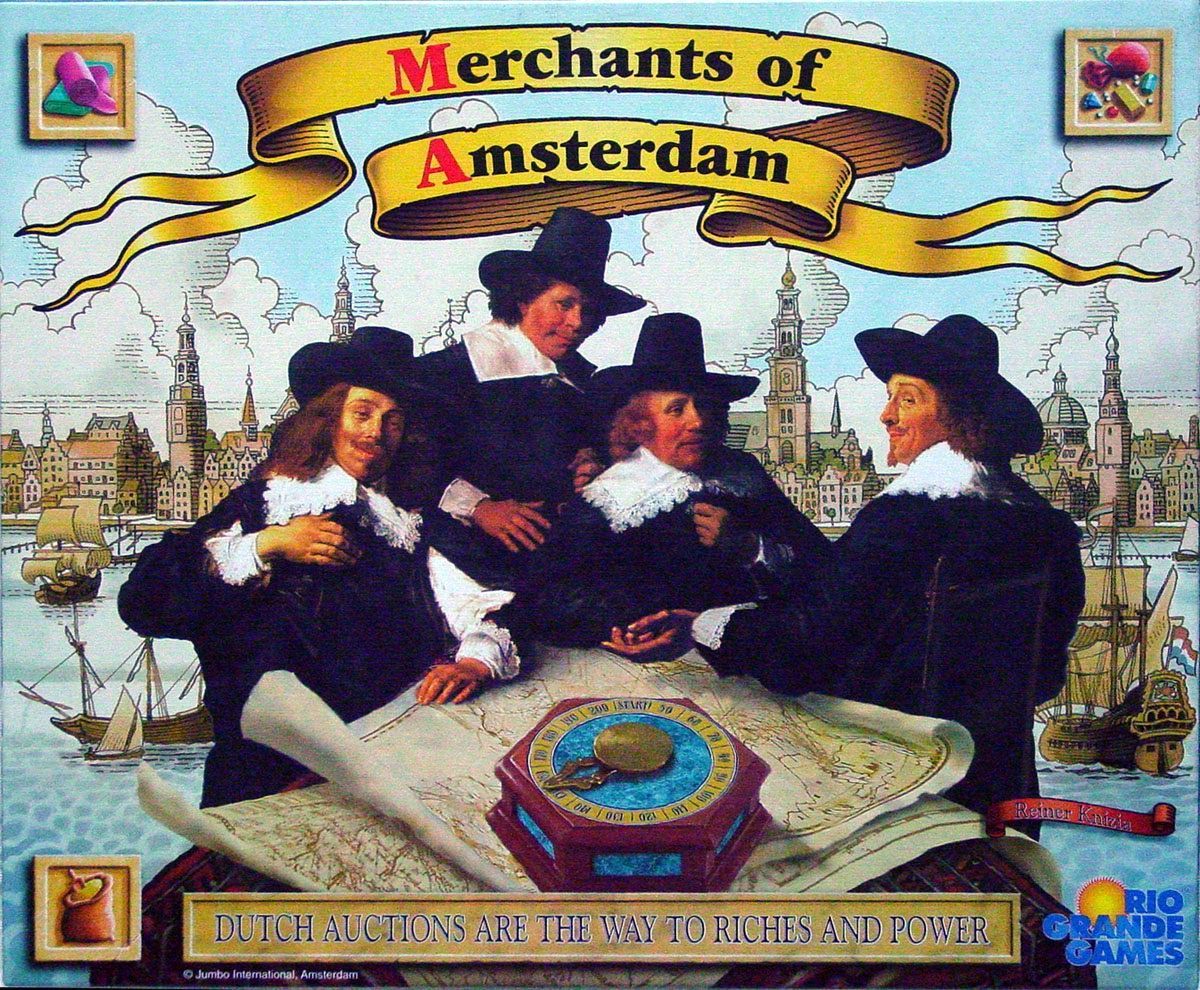
In Merchants of Amsterdam, each player takes on the role of a Dutch merchant striving to dominate the city’s markets in the early 1600s. The goal is to finish the game in the top two positions for majority control across several categories – commodity markets, trading colonies and Amsterdam warehouses. Each round starts with drawing three cards. A player may discard a card, keep it for later use, or put it up for auction. The cards let you advance markers in the various influence areas or place new markers, shifting the balance of power.
The standout feature is the spring‑driven auction clock that runs Dutch auctions. When an auction begins, the clock starts ticking; the card’s price drops steadily and the first player to slap the clock and stop it pays the current price. This real‑time tension forces quick reflexes and strategic timing.
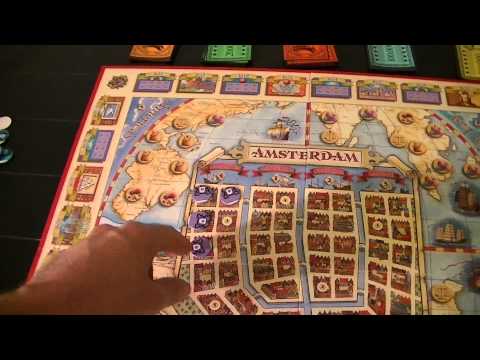
Time‑marker cards push the game through historical phases, each triggering different effects: extra scoring for certain categories, trade bonuses, or penalties when wars disrupt the market. The Amsterdam board is divided into zones where players place their markers, battling for area majority.
High‑quality components – illustrated cards, wooden markers and the auction clock – blend hand management, tile placement and several auction types (standard, dexterity and Dutch). A 90‑minute playtime for 3‑5 players and a light complexity (2.6/5 weight) make it accessible for fans of economic games who don’t want a rule‑heavy experience. If you enjoy fast decisions, area control and the charm of Renaissance Amsterdam, this game delivers all that with a ticking‑clock adrenaline boost.
The standout feature is the spring‑driven auction clock that runs Dutch auctions. When an auction begins, the clock starts ticking; the card’s price drops steadily and the first player to slap the clock and stop it pays the current price. This real‑time tension forces quick reflexes and strategic timing.
Time‑marker cards push the game through historical phases, each triggering different effects: extra scoring for certain categories, trade bonuses, or penalties when wars disrupt the market. The Amsterdam board is divided into zones where players place their markers, battling for area majority.
High‑quality components – illustrated cards, wooden markers and the auction clock – blend hand management, tile placement and several auction types (standard, dexterity and Dutch). A 90‑minute playtime for 3‑5 players and a light complexity (2.6/5 weight) make it accessible for fans of economic games who don’t want a rule‑heavy experience. If you enjoy fast decisions, area control and the charm of Renaissance Amsterdam, this game delivers all that with a ticking‑clock adrenaline boost.
Gallery
Box and component photos
Tap any photo to open fullscreen. Photos submitted by the community or publisher.
Rules videos
Learn by watching before you open the box

Best player count
BGG community vote
3
REC
4
BEST
5
BEST
Soundtrack
Ambience suggested by Melodice
Loading playlist...
Where to Buy
Prices monitored daily
Finding best prices...
Prices unavailable at this time.
Price history — last 6 months (lowest new offer)
As an Amazon Associate I earn from qualifying purchases. Prices and availability subject to change.
Alert enabled!
Join the BoardGamesBot deals group
Get the best board game deals every day — without message spam.
Join the WhatsApp groupGame details
Mechanics, categories, families and credits
Mechanics
Categories
Families
Publisher
Jumbo, Rio Grande Games
Designer
Reiner Knizia
Community
Data from BoardGameGeek
2,640owners
218wishlist
45want to play
Frequently Asked Questions
Quick answers before you buy
How many players can play?
3 to 5 players.
What is the typical playing time?
About 90 minutes.
How complex is the game?
Weight 2.6/5 – light to moderate, easy to learn.
What components are included?
Illustrated cards, wooden markers, the Amsterdam board, and the spring‑driven auction clock.
Do I need prior knowledge of Dutch auctions?
No, the clock mechanic teaches the auction process as you play.
Are there any expansions?
Currently there are no official expansions.
Who would enjoy this game?
Fans of economic, area‑control games who like quick decision‑making.
Other Games You'll Like
Based on mechanics and theme