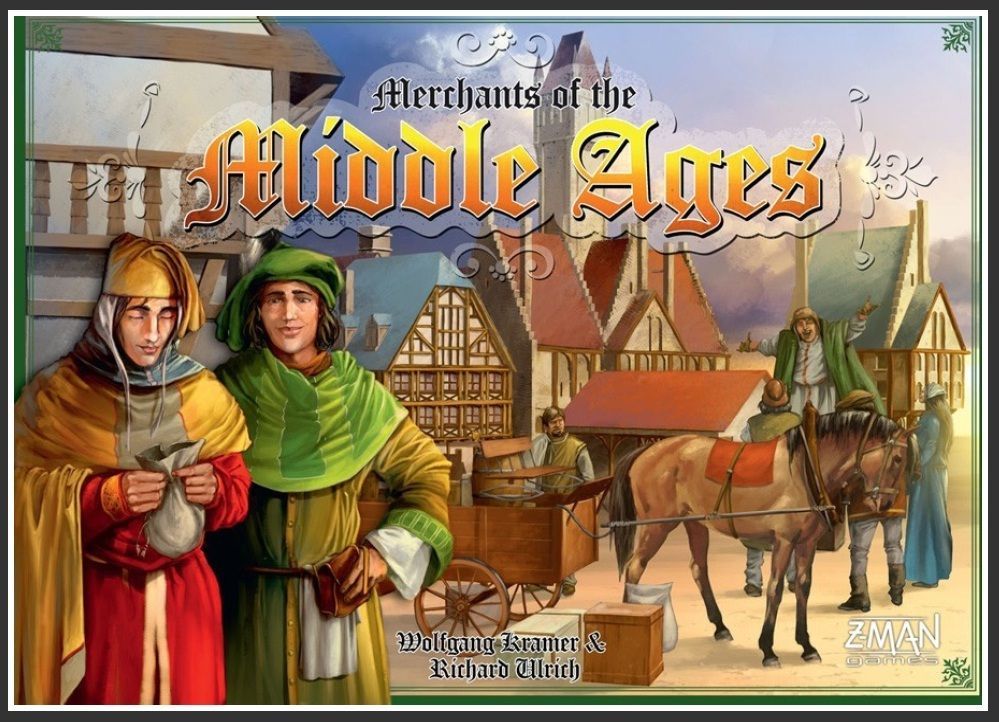
Merchants of the Middle Ages
eggertspiele, Filosofia Éditions, Queen Games · Board game · 1999
2–4 · best 4
120 min
Weight 3.0/5
Buy · from US$ 35.75
7.7
rating
Ludopedia
6.7
rating
BGG
Our Verdict
RECOMMENDED
If you love economic games with a dash of negotiation, Merchants of the Middle Ages is right up your alley. It's like a stock market game, but with medieval wagons and goods!
Highlights
- Immersive medieval atmosphere
- Strategic negotiation and bluffing
- Challenging logistics
- Beautiful thematic components
Keep in mind
- Can drag with indecisive players
- Relies on group interaction
Rules manual not indexed yet
Upload the PDF rulebook to ask questions about this game with AI.
About the game
What you do in a play session
Merchants of the Middle Ages puts you in the shoes of a medieval merchant trying to get rich by transporting goods between European cities. The gorgeous board features six cities (Paris, Cologne, Bruges, Ghent, Vienna, and Genoa) connected by roads, where three shared wagons carry salt, iron, wine, silk, cloth, and food from place to place. Gameplay is a mix of speculation (buy low, sell high), negotiation with other players, and smart logistics. No one controls the wagons alone, so you'll need to be clever about using available transports. The goal? Make money from deliveries and climb the social ladder. The game ends after a set number of deliveries, and the player with the highest status wins. The components are charming, with wooden pieces, cardboard coins, and a look that transports you straight to the Middle Ages. Get ready for hours of intense trade, temporary alliances, and of course, strategic backstabbing!
Gallery
Box and component photos
Tap any photo to open fullscreen. Photos submitted by the community or publisher.
Rules videos
Learn by watching before you open the box


Best player count
BGG community vote
2
OK
3
REC
4
BEST
Soundtrack
Ambience suggested by Melodice
Loading playlist...
Where to Buy
Prices monitored daily
Finding best prices...
Prices unavailable at this time.
Price history — last 6 months (lowest new offer)
Alert enabled!
Join the BoardGamesBot deals group
Get the best board game deals every day — without message spam.
Join the WhatsApp groupGame details
Mechanics, categories, families and credits
Mechanics
Categories
Families
Publisher
eggertspiele, Filosofia Éditions, Queen Games, Z-Man Games
Designer
Richard Ulrich, Wolfgang Kramer
Artist
Jo Hartwig, Stéphane Poinsot
Community
Data from BoardGameGeek
2,588owners
389wishlist
141want to play
Frequently Asked Questions
Quick answers before you buy
Best with how many players?
3-4 players is ideal for maximum negotiation and resource competition. With 2 it's more relaxed, almost a logistics puzzle.
Is it hard to learn?
Medium learning curve - rules aren't complex, but strategy takes a few games to master. Anyone who's played other economic games will pick it up fast.
How long does a game take?
The 2-hour box estimate is accurate, but it can stretch with new players or overthinkers.
Is heavy negotiation required?
Depends on the group! You can play more solitarily, but better negotiators have an edge. Great for bluffing and temporary alliances.
Are components good quality?
Yes! The wooden commodity pieces and board design are gorgeous, really selling the medieval market vibe.
Other Games You'll Like
Based on mechanics and theme