What do you want to do now
Ask anything about Ming Mang: rules, setup, components, complexity, price, or whether it fits your group.
An ancestral duel of pure strategy for classic board game lovers.
- Deep and fast strategy
- Addictive capture mechanic
- Fascinating history and culture
- Strictly two-player
- Requires intense focus
About the game
What you do in a play session
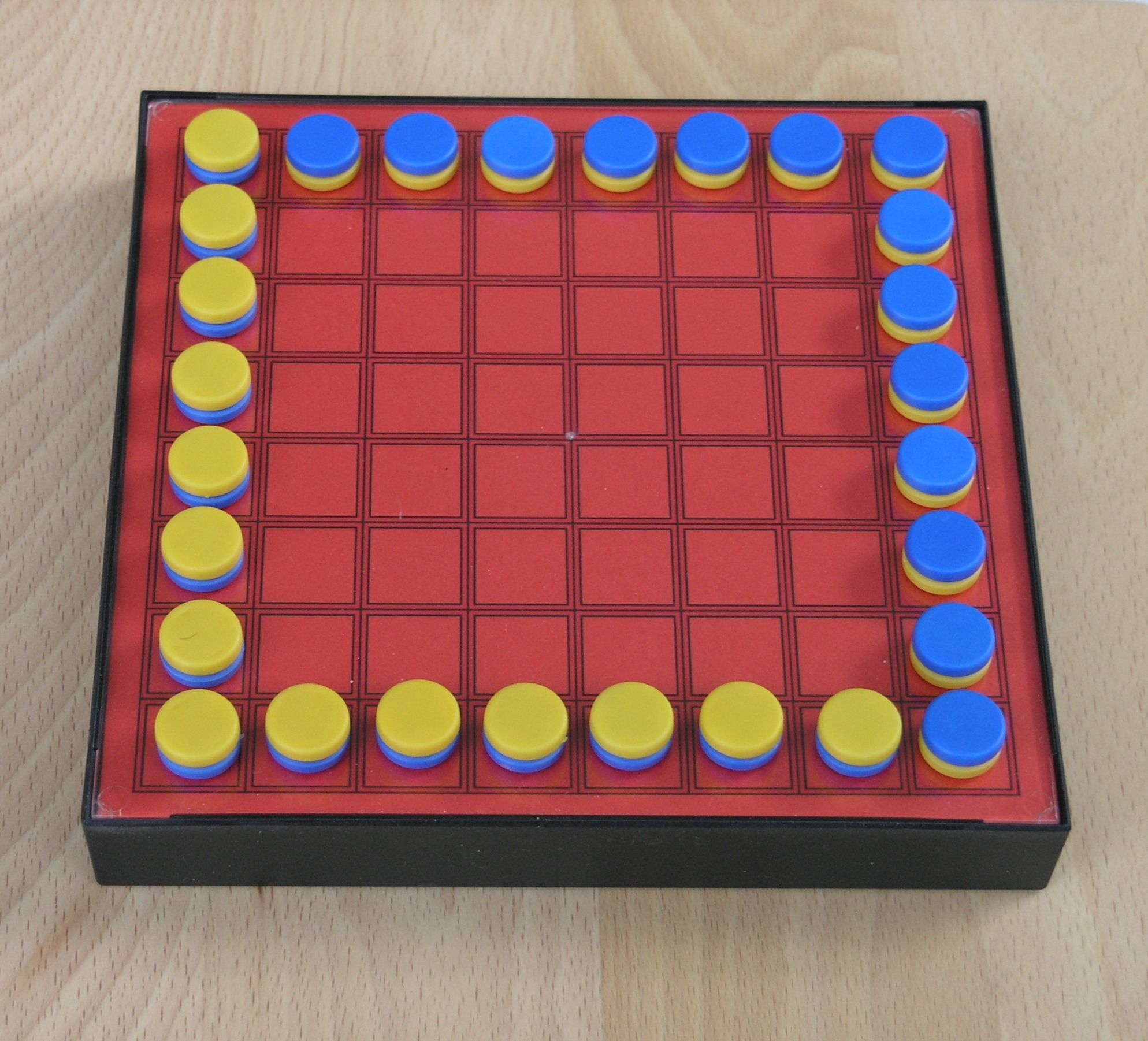
The gameplay is a pure strategic duel on a grid board. Each player starts by positioning their pieces along two perpendicular edges (one on the top and left, the other on the right and bottom). Movement is very intuitive for anyone familiar with chess: pieces move like rooks in straight lines. However, the real twist lies in the capture mechanic, which is very similar to the famous Reversi (or Othello). If you manage to sandwich an enemy piece or a group of pieces between your own, they flip color and become yours! It is a constant battle for territory and conversion.
What makes Ming Mang so fascinating is that feeling of playing something ancient. There are no dice, no magic cards—just you, your opponent, and the mathematics of positioning. If you enjoy games that require reading the board and anticipation, get ready to lose track of time. It is a quick game, but one that will make your brain work overtime planning your next move. It is the perfect challenge for a quick 20-minute match or an entire afternoon of intense rematches!
Gallery
Box and component photos
Tap any photo to open fullscreen. Photos submitted by the community or publisher.
Rules manual
Official PDF file
Best player count
BGG community vote
Soundtrack
Ambience suggested by Melodice
Where to Buy
Prices monitored daily
Price history — last 6 months (lowest new offer)
As an Amazon Associate I earn from qualifying purchases. Prices and availability subject to change.
Alert enabled!
Join the BoardGamesBot deals group
Get the best board game deals every day — without message spam.
Join the WhatsApp groupGame details
Mechanics, categories, families and credits
Mechanics
Categories
Families
Community
Data from BoardGameGeek
Frequently Asked Questions
Quick answers before you buy
How long does a game last?
Do I need to know how to play chess?
Is it hard to learn?
Can I play with more than 2 players?
What do I need to play?
Is it a game for kids?
Other Games You'll Like
Based on mechanics and theme