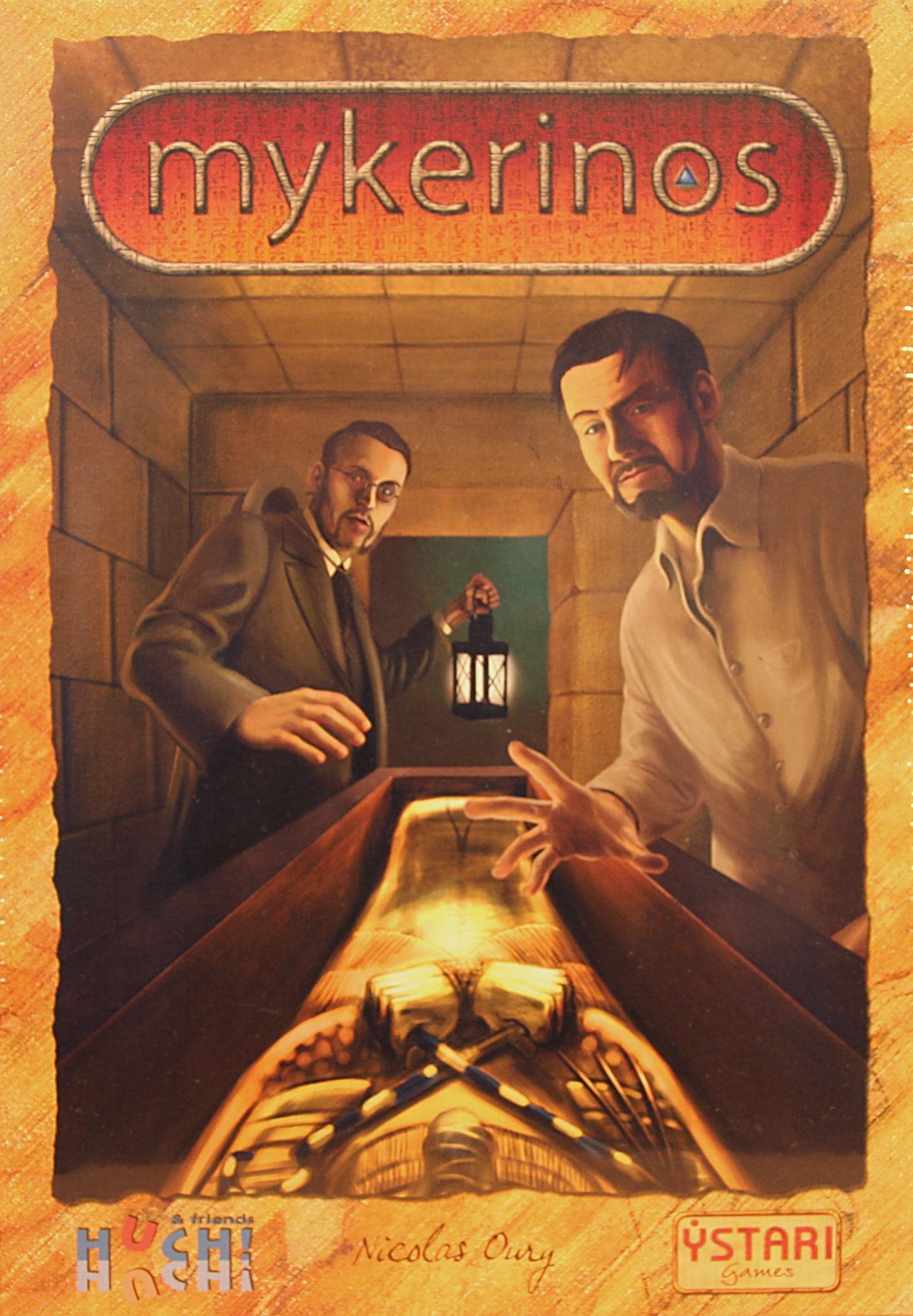
Mykerinos
Ystari Games, HUCH!, Lautapelit.fi · Board game · 2006
2–4 · best 4
30–60 min
Weight 2.6/5
Buy · from US$ 18.45
7.1
rating
Ludopedia
6.8
rating
BGG
Our Verdict
FOR GENRE FANS
Perfect for those who enjoy area control with a touch of hand management; the museum theme is charming and engaging.
Highlights
- Well-balanced influence mechanics
- Modular board ensures variety
- Immersive historical theme
- Smart archaeologist management
Keep in mind
- Learning curve for beginners
- Pacing can be slow with 4 players
Rules manual not indexed yet
Upload the PDF rulebook to ask questions about this game with AI.
About the game
What you do in a play session
Travel back to 1899, the golden age of Egyptology! In Mykerinos, you take on the role of an ambitious archaeologist seeking glory and precious relics in the sands of Egypt. But you aren't digging alone; you work for powerful benefactors — such as Lady Violet or Colonel Tangerine — who demand results so their pieces can shine in the museum's grand final exhibition.
The gameplay unfolds over four intense rounds. The board is modular and dynamic, composed of cards that form excavation areas with square grids. Some of these areas contain obstacles, like the famous pyramids, which can thwart your plans. To conquer the terrain, you must manage your pool of archaeologists: you spend one professional to start an excavation or two extra ones to expand your influence in an area already occupied.
The game is a strategic tug-of-war. You must decide whether to use the special abilities of the benefactors (which help you bypass obstacles or retrieve your team faster) or focus on securing area majority to collect relic cards. But beware: the strategy doesn't end in the field. Visiting the Museum is crucial to multiply the value of certain card colors at the end of the game, turning your discoveries into real prestige.
At the end of the fourth round, the exhibition opens. Victory goes to the player with the most points, combining the value of collected cards, museum position bonuses, and the versatility of having collected relics from all benefactors. It's a game of positioning, resource management, and timing, where every move on the board can change who will become Europe's most renowned archaeologist.
The gameplay unfolds over four intense rounds. The board is modular and dynamic, composed of cards that form excavation areas with square grids. Some of these areas contain obstacles, like the famous pyramids, which can thwart your plans. To conquer the terrain, you must manage your pool of archaeologists: you spend one professional to start an excavation or two extra ones to expand your influence in an area already occupied.
The game is a strategic tug-of-war. You must decide whether to use the special abilities of the benefactors (which help you bypass obstacles or retrieve your team faster) or focus on securing area majority to collect relic cards. But beware: the strategy doesn't end in the field. Visiting the Museum is crucial to multiply the value of certain card colors at the end of the game, turning your discoveries into real prestige.
At the end of the fourth round, the exhibition opens. Victory goes to the player with the most points, combining the value of collected cards, museum position bonuses, and the versatility of having collected relics from all benefactors. It's a game of positioning, resource management, and timing, where every move on the board can change who will become Europe's most renowned archaeologist.
Gallery
Box and component photos
Tap any photo to open fullscreen. Photos submitted by the community or publisher.
Rules videos
Learn by watching before you open the box

Best player count
BGG community vote
2
REC
3
REC
4
BEST
Soundtrack
Ambience suggested by Melodice
Loading playlist...
Where to Buy
Prices monitored daily
Finding best prices...
Prices unavailable at this time.
Price history — last 6 months (lowest new offer)
As an Amazon Associate I earn from qualifying purchases. Prices and availability subject to change.
Alert enabled!
Join the BoardGamesBot deals group
Get the best board game deals every day — without message spam.
Join the WhatsApp groupGame details
Mechanics, categories, families and credits
Mechanics
Categories
Families
Publisher
Ystari Games, HUCH!, Lautapelit.fi, Millenium, Rio Grande Games
Designer
Nicolas Oury
Artist
Arnaud Demaegd
Community
Data from BoardGameGeek
4,104owners
607wishlist
121want to play
Frequently Asked Questions
Quick answers before you buy
Is the game too complex?
It has a medium weight (2.56 on BGG), so it's not an entry-level game. It requires planning and an understanding of the interaction between cards and the board.
How long does a game take?
Generally between 30 and 60 minutes, depending on the number of players and the group's experience.
Does it work well with 2 players?
Yes, the game supports 2 to 4 players, making it a great tactical duel for two.
Do I need English cards to play?
No, the game has no language dependency, so you can play any version without issues.
Who would you recommend Mykerinos to?
To those who enjoy area control games, indirect strategy, and archaeology/history themes.
Other Games You'll Like
Based on mechanics and theme