Odyssey: Wrath of Poseidon — Prices
Ares Games, Devir, Heidelberger Spieleverlag · Board game · 2015
2–5 · best 2
30 min
Weight 1.6/5
Buy · from US$ 22.84
6.3
rating
Ludopedia
6.3
rating
BGG
Our Verdict
FOR GENRE FANS
Perfect for those who love deduction games and want to feel the pressure of being hunted by a god. The highlight is the tension of hidden information.
Highlights
- Constant and intriguing tension
- Great one-versus-many dynamic
- Well-applied mythological theme
- Fast and direct gameplay
Keep in mind
- Heavily dependent on group interaction
- Can be frustrating for those who hate being lost
Rules manual not indexed yet
Upload the PDF rulebook to ask questions about this game with AI.
About the game
What you do in a play session
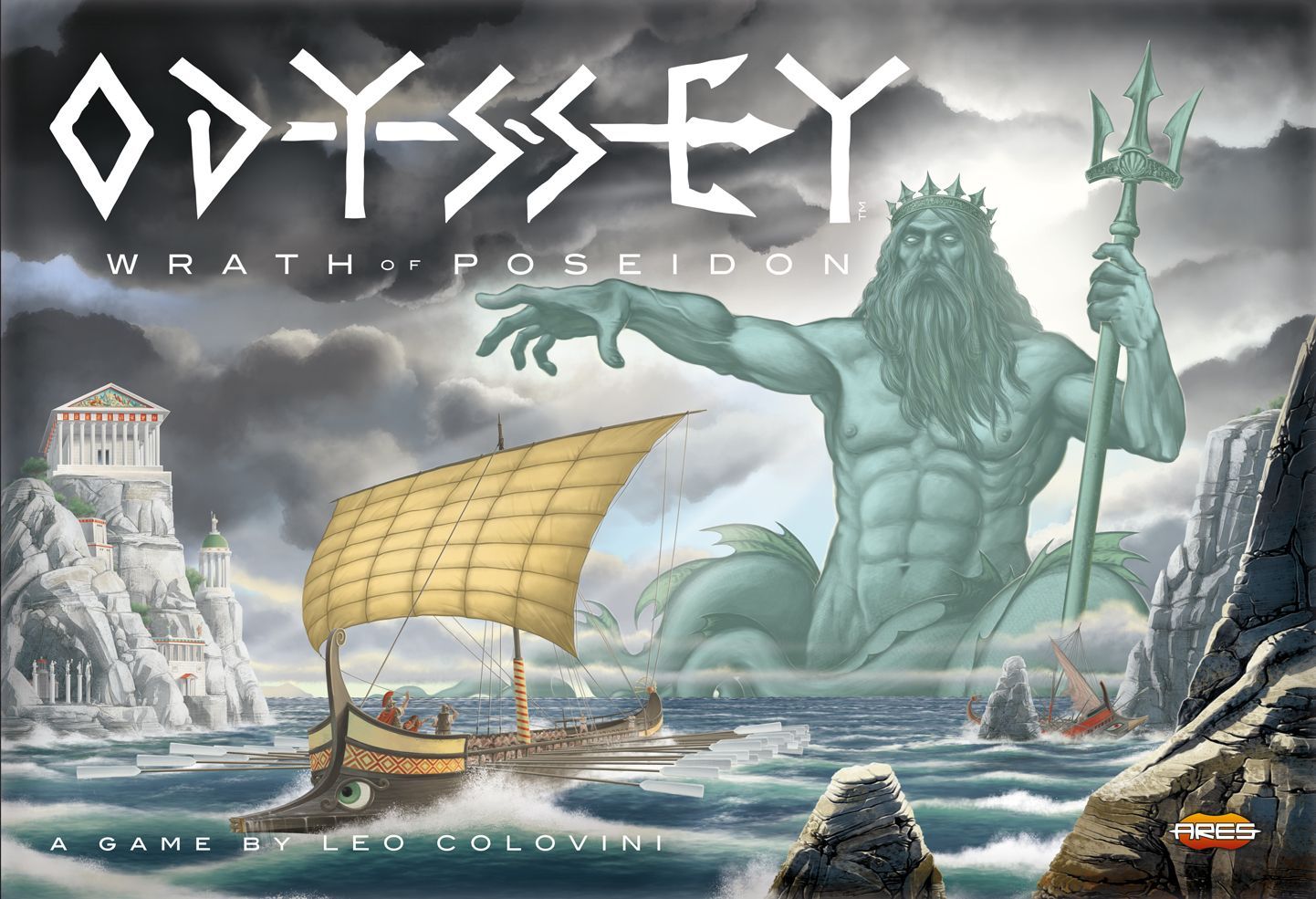
Imagine the war is over, and you and your crew just want to go home. The catch? Poseidon woke up on the wrong side of the bed and decided that nobody reaches the Sacred Island without a fight. In Odyssey: Wrath of Poseidon, the tension is high thanks to a clever system of duplicate game boards, separated by a barrier (usually the game box itself). This creates a state of total asymmetric information.
On one side, we have the player controlling Poseidon. He is the only one who knows the ships' actual positions. On the other side, the navigators are desperately trying to find their way. They have their own map, but the markings there are merely best guesses. As the game progresses, Poseidon unleashes powerful storms that knock the ships off course, making the navigators' notes increasingly inaccurate and confusing. It's that feeling of being lost in the middle of the ocean, trying to guess your direction while a Greek god laughs at your misfortune.
To win, the navigators must use logic, memory, and deduction to filter clues and reach the Sacred Island before time runs out. If they make it, the team wins. If Poseidon manages to keep them lost until the end, the God of the Sea claims victory. It's a psychological duel where team communication is essential, but the blindness caused by the storms makes every move a gamble. Can you trust your map, or has Poseidon already sent you to the other side of the world?
On one side, we have the player controlling Poseidon. He is the only one who knows the ships' actual positions. On the other side, the navigators are desperately trying to find their way. They have their own map, but the markings there are merely best guesses. As the game progresses, Poseidon unleashes powerful storms that knock the ships off course, making the navigators' notes increasingly inaccurate and confusing. It's that feeling of being lost in the middle of the ocean, trying to guess your direction while a Greek god laughs at your misfortune.
To win, the navigators must use logic, memory, and deduction to filter clues and reach the Sacred Island before time runs out. If they make it, the team wins. If Poseidon manages to keep them lost until the end, the God of the Sea claims victory. It's a psychological duel where team communication is essential, but the blindness caused by the storms makes every move a gamble. Can you trust your map, or has Poseidon already sent you to the other side of the world?
Gallery
Box and component photos
Tap any photo to open fullscreen. Photos submitted by the community or publisher.
Best player count
BGG community vote
2
BEST
3
REC
4
OK
5
BEST
Soundtrack
Ambience suggested by Melodice
Loading playlist...
Where to Buy
Prices monitored daily
Finding best prices...
Prices unavailable at this time.
Price history — last 6 months (lowest new offer)
Alert enabled!
Join the BoardGamesBot deals group
Get the best board game deals every day — without message spam.
Join the WhatsApp groupGame details
Mechanics, categories, families and credits
Mechanics
Categories
Families
Publisher
Ares Games, Devir, Heidelberger Spieleverlag, Kaissa Chess & Games
Designer
Leo Colovini
Artist
Francesco Mattioli
Community
Data from BoardGameGeek
874owners
103wishlist
10want to play
Frequently Asked Questions
Quick answers before you buy
Is the game hard to learn?
Not at all! The weight is low (1.6/5), so the rules are simple. The challenge isn't in learning how to play, but in deducing your actual position.
How long does a game last?
It's quite fast, around 30 minutes. Great as a 'just one more' game before ending the night.
Does it work well with 2 players?
Yes, but the dynamic changes. With more players, the team discussion and deduction become richer and more fun.
Does it require much table space?
A bit, as you need space to place the game box between the two boards so players can't peek at each other's side.
Is it recommended for people who dislike complex games?
Absolutely. It's a game of logic and memory, without dense rules or massive manuals.
Other Games You'll Like
Based on mechanics and theme