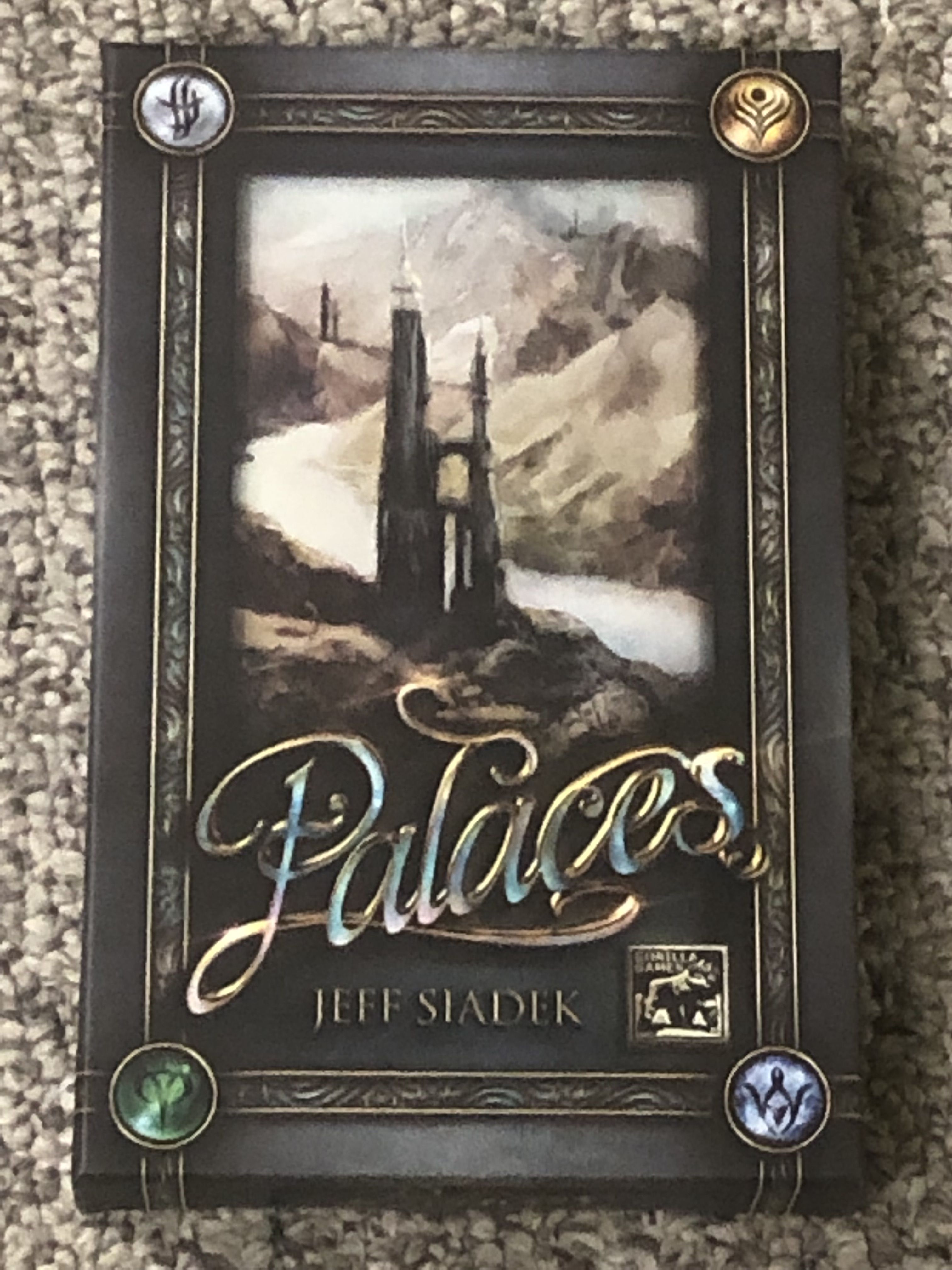
—
rating
Ludopedia
5.9
rating
BGG
Our Verdict
RECOMMENDED
A unique deck-builder with auctions that will make you think twice before bidding!
Highlights
- Tense and fast auctions
- Unique victory condition
- Smart resource management
- Dynamic and agile play
Keep in mind
- Requires attention to detail
- Slight learning curve
Rules manual not indexed yet
Upload the PDF rulebook to ask questions about this game with AI.
About the game
What you do in a play session
If you think every deck-building game follows the same 'buy a card and discard your hand' formula, get ready to be surprised by Palaces. Here, the focus isn't just on what you have, but how much you are willing to bet to get what you need. You step into the role of an architect or master builder during the Renaissance, where the goal is to construct magnificent towers. But heads up: the victory logic is a bit different from what we're used to. Instead of aiming for the tallest tower, you want to build two towers that are as balanced as possible, and the winner is the player whose shorter tower is the tallest.
The gameplay is fast-paced and intense. On each turn, the active player selects one of three card stacks and starts an auction. Everyone else can bid or simply pass. Bidding isn't just about a number; it depends on the value of the card suits you offer. If there's a tie in bid value, we dive into the details: we compare the suits (Gold, Silver, Crystal, and Marble) and, if still tied, we look at the composition of the bid. Won the auction? You take the card to your discard pile (which eventually returns to your hand) and gain the right to add a new floor to your tower. The non-winners simply draw cards to strengthen their hands.
The standout feature of Palaces is that you don't discard your entire hand after your turn, making resource management much more strategic and less reliant on pure luck. You need to plan how your cards will behave in the future, ensuring you have the right suits to win crucial bids. It's a game of 'who can get what they want without spending everything they have,' perfect for those who love auction mechanics and want something that breaks the mold.
The gameplay is fast-paced and intense. On each turn, the active player selects one of three card stacks and starts an auction. Everyone else can bid or simply pass. Bidding isn't just about a number; it depends on the value of the card suits you offer. If there's a tie in bid value, we dive into the details: we compare the suits (Gold, Silver, Crystal, and Marble) and, if still tied, we look at the composition of the bid. Won the auction? You take the card to your discard pile (which eventually returns to your hand) and gain the right to add a new floor to your tower. The non-winners simply draw cards to strengthen their hands.
The standout feature of Palaces is that you don't discard your entire hand after your turn, making resource management much more strategic and less reliant on pure luck. You need to plan how your cards will behave in the future, ensuring you have the right suits to win crucial bids. It's a game of 'who can get what they want without spending everything they have,' perfect for those who love auction mechanics and want something that breaks the mold.
Gallery
Box and component photos
Tap any photo to open fullscreen. Photos submitted by the community or publisher.
Best player count
BGG community vote
2
OK
3
OK
4
BEST
Soundtrack
Ambience suggested by Melodice
Loading playlist...
Where to Buy
Prices monitored daily
Finding best prices...
Prices unavailable at this time.
Price history — last 6 months (lowest new offer)
Alert enabled!
Join the BoardGamesBot deals group
Get the best board game deals every day — without message spam.
Join the WhatsApp groupGame details
Mechanics, categories, families and credits
Mechanics
Categories
Families
Publisher
Gorilla Games
Designer
Jeff Siadek
Community
Data from BoardGameGeek
219owners
23wishlist
1want to play
Frequently Asked Questions
Quick answers before you buy
How long does a game take?
Usually around 45 minutes, depending on the number of players.
Is it a complex game?
The concept is simple, but the bidding strategy requires attention to suits and values.
How many players is it for?
It works very well for 2 to 4 players.
What should I know before playing?
It's good to be familiar with auction and deck-building mechanics.
Is there a lot of luck involved?
Luck exists when drawing cards, but the bidding strategy heavily compensates for it.
Other Games You'll Like
Based on mechanics and theme