Papyria — Prices
Irongames, Capstone Games, Fentasy Games · Board game · 2025
1–4 · best 3
Solo
90–120 min
Weight 2.9/5
Buy · from US$ 47.99
—
rating
Ludopedia
7.7
rating
BGG
Our Verdict
RECOMMENDED
Perfect for those who love dense civilization Eurogames focused on optimization. The highlight is the depth of the action selection.
Highlights
- Very rewarding resource management
- Well-integrated historical theme
- High replayability via variable setup
- Robust and challenging solo mode
Keep in mind
- Steep initial learning curve
- Playtime can be quite long
Rules manual not indexed yet
Upload the PDF rulebook to ask questions about this game with AI.
About the game
What you do in a play session
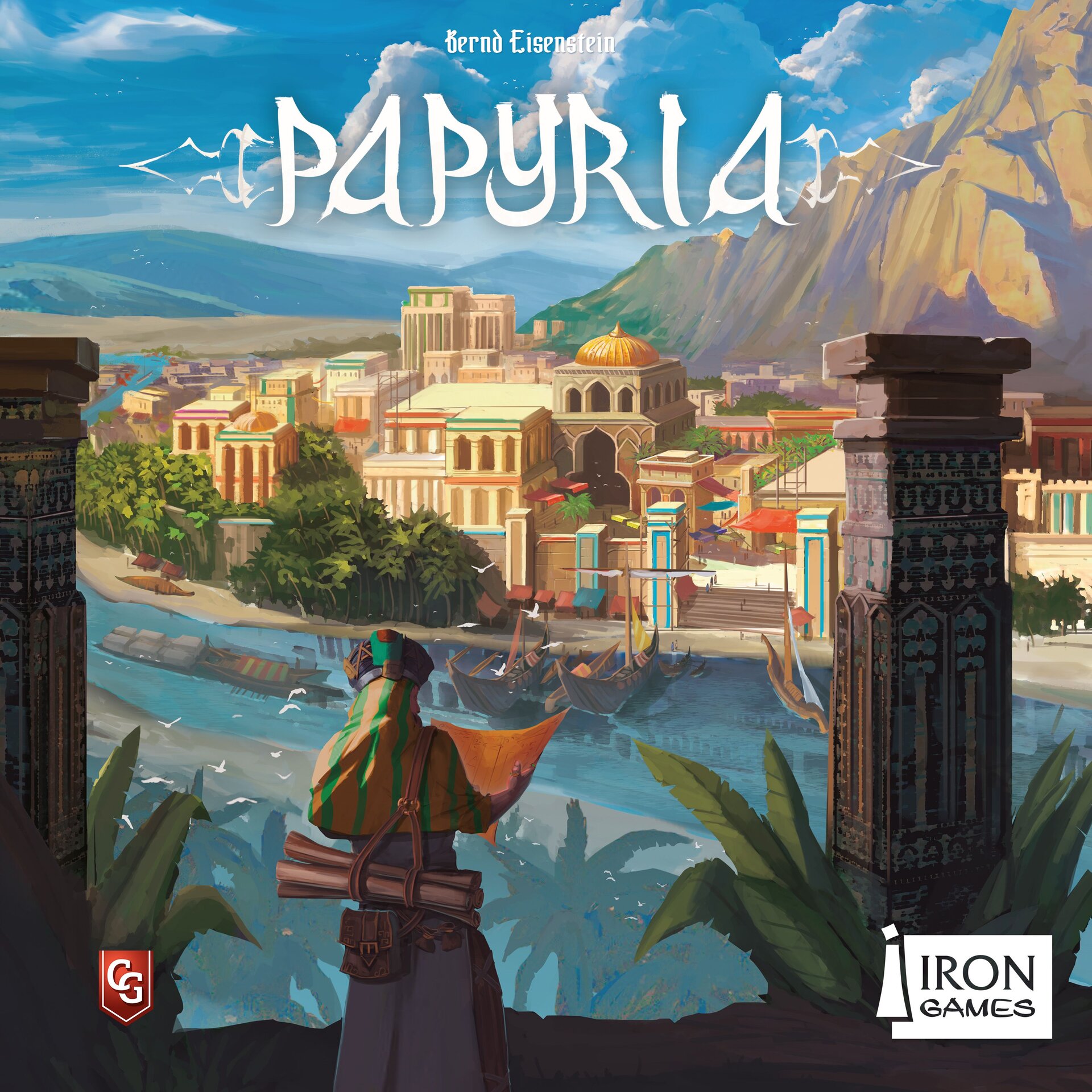
Imagine being transported to Mesopotamia around 1500 BC, right between the Tigris and Euphrates rivers. It's a time of immense change: the invention of the wheel and writing have revolutionized society, and the first great cities are emerging. In Papyria, you step into the shoes of an explorer leader striving to leave your mark on this fertile land. Your goal? Build the most impressive infrastructure in the region, creating canal networks, erecting temples, sanctuaries, and cities, and developing mines to extract the coveted lapis lazuli.
The gameplay loop is quite engaging. You control a wanderer or a ship to navigate the map. Upon reaching a destination, you don't just perform a single task; you choose two out of three possible actions. You might decide to acquire a new tile for your display, secure a multiplier for final scoring, or focus on producing papyrus and lapis lazuli. These resources are vital, as they are required for construction and special actions that can shift the balance of power.
The game blends worker placement strategy with movement management and tile placement. Careful planning is essential, as efficiency is the key to victory. The game doesn't last forever: it concludes once the resources from several spaces are depleted and a certain number of 'end-of-game' tiles are revealed and fulfilled. After a series of final scoring calculations, the player with the most prosperous and influential civilization wins. It's a perfect fit for those who enjoy long-term planning and the satisfaction of seeing their territory expand across the map.
The gameplay loop is quite engaging. You control a wanderer or a ship to navigate the map. Upon reaching a destination, you don't just perform a single task; you choose two out of three possible actions. You might decide to acquire a new tile for your display, secure a multiplier for final scoring, or focus on producing papyrus and lapis lazuli. These resources are vital, as they are required for construction and special actions that can shift the balance of power.
The game blends worker placement strategy with movement management and tile placement. Careful planning is essential, as efficiency is the key to victory. The game doesn't last forever: it concludes once the resources from several spaces are depleted and a certain number of 'end-of-game' tiles are revealed and fulfilled. After a series of final scoring calculations, the player with the most prosperous and influential civilization wins. It's a perfect fit for those who enjoy long-term planning and the satisfaction of seeing their territory expand across the map.
Gallery
Box and component photos
Tap any photo to open fullscreen. Photos submitted by the community or publisher.
Rules videos
Learn by watching before you open the box
In English

Best player count
BGG community vote
1
REC
2
REC
3
BEST
4
REC
Soundtrack
Ambience suggested by Melodice
Loading playlist...
Where to Buy
Prices monitored daily
Finding best prices...
Prices unavailable at this time.
Price history — last 6 months (lowest new offer)
Alert enabled!
Join the BoardGamesBot deals group
Get the best board game deals every day — without message spam.
Join the WhatsApp groupGame details
Mechanics, categories, families and credits
Mechanics
Categories
Families
Publisher
Irongames, Capstone Games, Fentasy Games
Designer
Bernd Eisenstein
Artist
Daniel Cunha, Klemens Franz
Community
Data from BoardGameGeek
753owners
560wishlist
76want to play
Frequently Asked Questions
Quick answers before you buy
Is the game too complex?
It's classified as 'Expert', so it has several layers of rules. If you're familiar with modern Euros, you'll adapt quickly, but be ready to study the manual.
How long does a game take?
Expect around 90 to 120 minutes. This may vary slightly depending on the group's experience.
Does it work well solo?
Yes! The game features dedicated solo rules, making it a great choice for those who enjoy solitaire challenges.
Do I need historical knowledge to play?
Not at all. While the theme is beautiful and immersive, the rules are clear and independent of any prior knowledge of Mesopotamia.
Is the game language dependent?
No. Like most modern games of this style, there is little to no language dependency.
Other Games You'll Like
Based on mechanics and theme