8.2
rating
Ludopedia
7.0
rating
BGG
Our Verdict
RECOMMENDED
If you love a blend of strategy, teamwork and a dash of rivalry, Rockwell will hook you with its drilling tension.
Highlights
- Unique semi‑cooperative and competitive mix
- Well‑balanced resource management
- Modular board keeps it fresh
- Vice‑president auction adds drama
Keep in mind
- Moderate learning curve
- Playtime can stretch with four players
- Some actions may feel repetitive
Rules manual not indexed yet
Upload the PDF rulebook to ask questions about this game with AI.
About the game
What you do in a play session
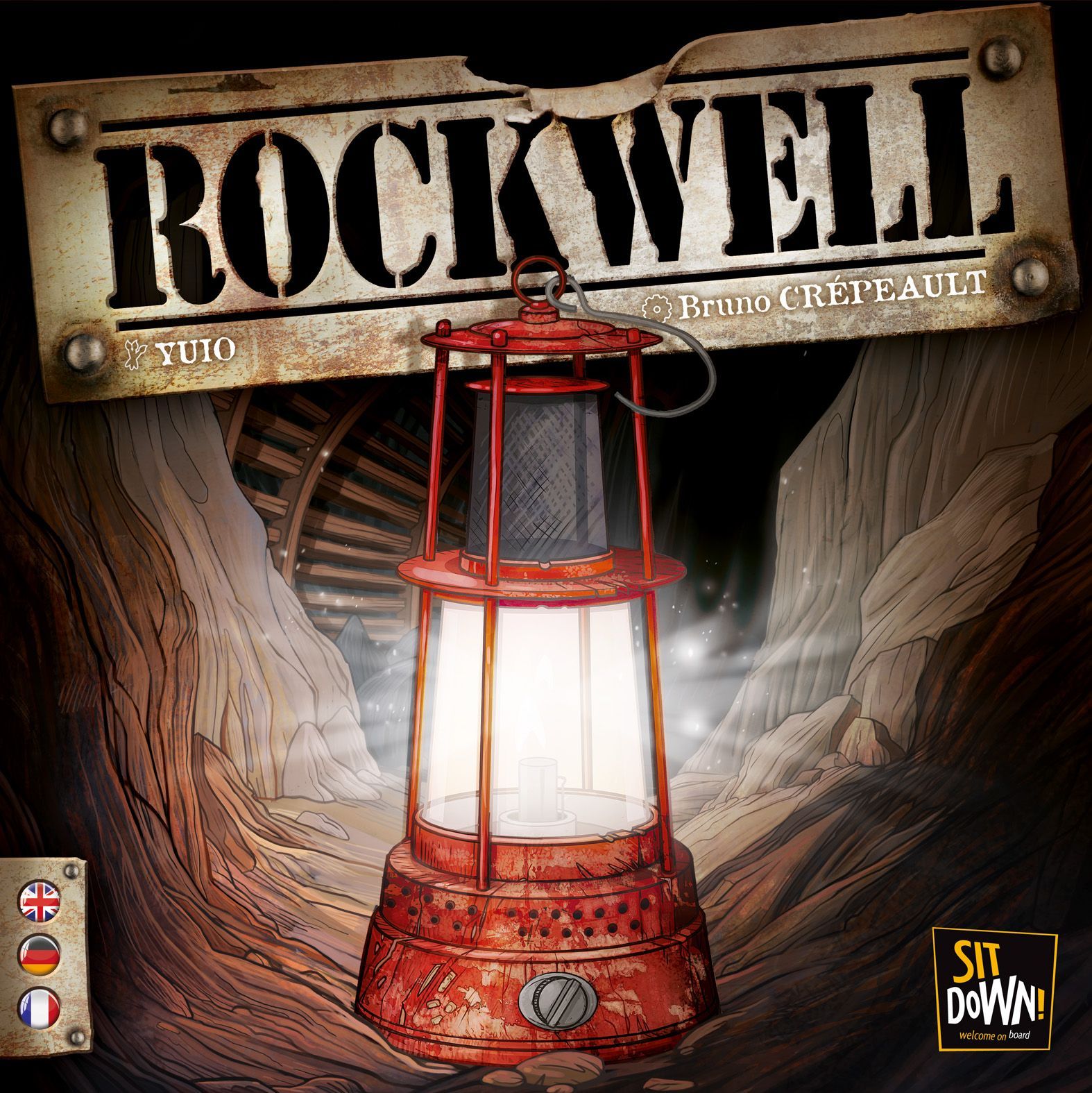
In Rockwell each player takes the role of a drilling company vying for lucrative contracts with the giant Rockwell corporation. Since Rockwell lacks in‑house teams, it buys stakes in specialized firms and pits them against each other on a flagship project: drilling down to the Earth's core. The win condition is to finish with the most Renown points, earned through three avenues – completing nine predefined achievements, making investments that grant renown, and holding majorities in resources or money at game end.
The game unfolds over three phases that repeat until an end‑game trigger occurs: a majority of players reach the core with their drill crews, or a player completes all nine achievements. Each round starts with a closed‑fist auction that determines the order in which each player's two vice‑presidents are deployed. Depending on the phase a vice‑president is used, they can corrupt rival crews, hire subcontractors to boost drilling power, or conduct market transactions, buying and selling resources.
Drill crews move at a fixed rate – one crew per round – and each crust tile has a resistance value. When the combined power of crews on a tile meets or exceeds that value, the tile is excavated, flipped, and an Extraction card is drawn, distributing discovered resources among the participants. Any indivisible remainder follows a priority chain (mine owner first, then highest drilling power, then the player who triggered the dig). After four rounds, mines placed on excavated tiles generate additional resources.
Beyond exploration, players can invest in upgrades: increase crew power (max 4), place up to three mines, improve mine safety to avoid extraction loss, and enhance crew movement. These choices force a balance between rapid expansion, stable resource income, or focusing on achievements. With a moderate weight (3.2/5) and about 90 minutes of play, Rockwell blends worker placement, area influence, and modular board design, delivering a tense semi‑cooperative experience that appeals to fans of economic and exploration games alike.
The game unfolds over three phases that repeat until an end‑game trigger occurs: a majority of players reach the core with their drill crews, or a player completes all nine achievements. Each round starts with a closed‑fist auction that determines the order in which each player's two vice‑presidents are deployed. Depending on the phase a vice‑president is used, they can corrupt rival crews, hire subcontractors to boost drilling power, or conduct market transactions, buying and selling resources.
Drill crews move at a fixed rate – one crew per round – and each crust tile has a resistance value. When the combined power of crews on a tile meets or exceeds that value, the tile is excavated, flipped, and an Extraction card is drawn, distributing discovered resources among the participants. Any indivisible remainder follows a priority chain (mine owner first, then highest drilling power, then the player who triggered the dig). After four rounds, mines placed on excavated tiles generate additional resources.
Beyond exploration, players can invest in upgrades: increase crew power (max 4), place up to three mines, improve mine safety to avoid extraction loss, and enhance crew movement. These choices force a balance between rapid expansion, stable resource income, or focusing on achievements. With a moderate weight (3.2/5) and about 90 minutes of play, Rockwell blends worker placement, area influence, and modular board design, delivering a tense semi‑cooperative experience that appeals to fans of economic and exploration games alike.
Gallery
Box and component photos
Tap any photo to open fullscreen. Photos submitted by the community or publisher.
Rules videos
Learn by watching before you open the box


Best player count
BGG community vote
2
OK
3
REC
4
BEST
Soundtrack
Ambience suggested by Melodice
Loading playlist...
Where to Buy
Prices monitored daily
Finding best prices...
Prices unavailable at this time.
Price history — last 6 months (lowest new offer)
As an Amazon Associate I earn from qualifying purchases. Prices and availability subject to change.
Alert enabled!
Join the BoardGamesBot deals group
Get the best board game deals every day — without message spam.
Join the WhatsApp groupGame details
Mechanics, categories, families and credits
Mechanics
Categories
Families
Publisher
Sit Down!
Designer
Bruno Crépeault
Artist
Yuio
Community
Data from BoardGameGeek
1,189owners
180wishlist
39want to play
Frequently Asked Questions
Quick answers before you buy
How many players can play?
2 to 4 players.
What is the typical playing time?
About 90 minutes, though it can stretch with more players.
How complex is the game?
Moderate weight (3.2/5) – it requires planning but isn’t overly complicated.
What components are included?
Modular board, drilling crew pieces, extraction cards, resource tokens, vice‑president miniatures, mine tiles, and investment markers.
Who is the game best suited for?
Fans of economic, exploration and semi‑cooperative games who enjoy a bit of competitive tension.
Do I need to master advanced auction rules?
The closed‑fist auction is easy to learn; mastering vice‑president deployment adds strategic depth.
Are there any expansions?
No official expansions yet, but the modular board invites home‑brew variations.
Other Games You'll Like
Based on mechanics and theme