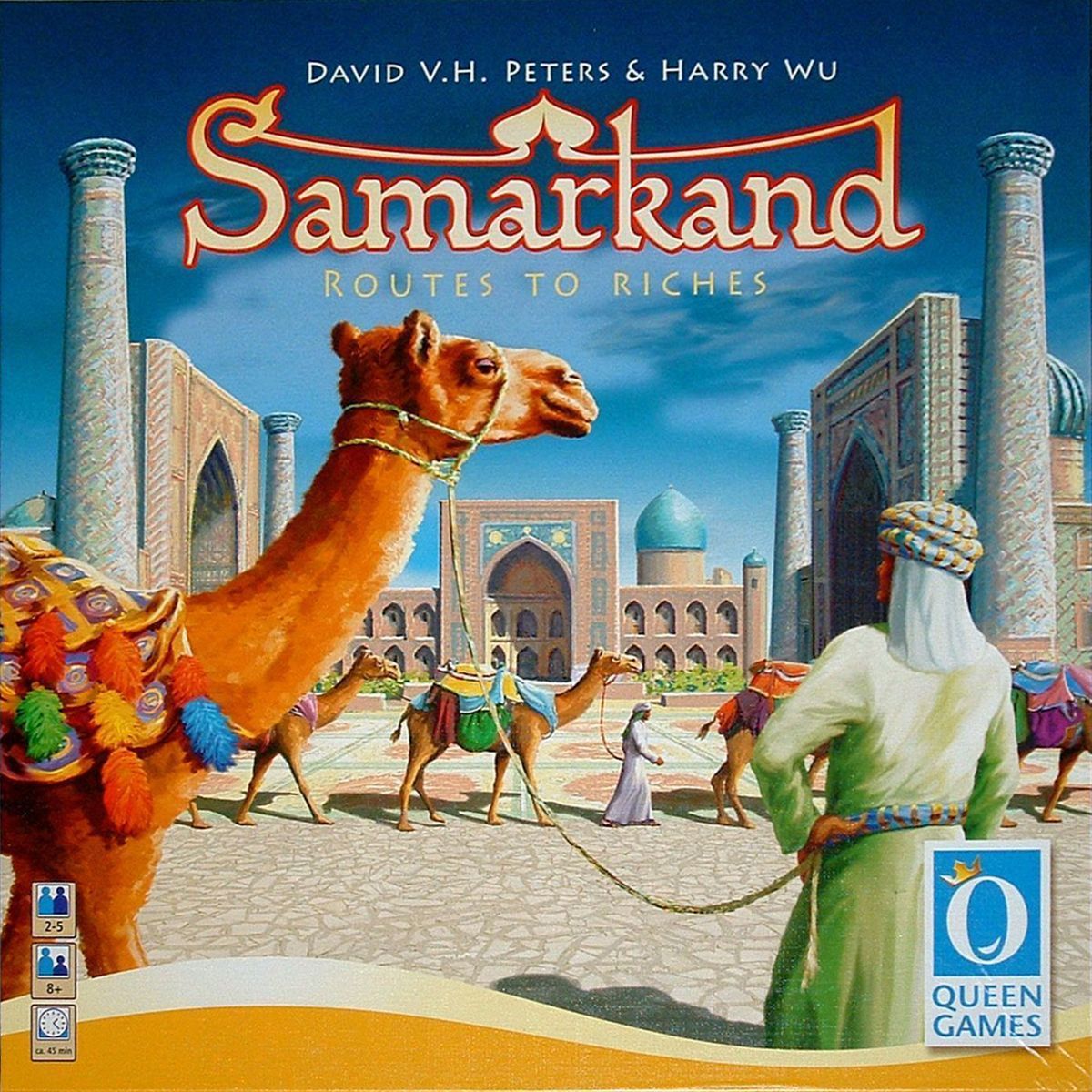
Samarkand: Routes to Riches
Queen Games, Piatnik · Board game · 2010If you enjoy a strategic route-building and stock management game with a Silk Road thematic touch, Samarkand is an excellent choice. It's a eurogame that shines in its indirect interaction and decision-making.
- Engaging route strategy
- Clever stock management
- Constant indirect interaction
- Important tactical decisions
- Well-integrated theme
- Can be a bit dry
- Initial learning curve
- Low direct interaction
About the game
What you do in a play session
Each turn, you face a crucial choice: either marry into a new merchant family, paying the entry cost to secure your influence, or expand the trade routes of a family you are already linked to by marriage. But be warned, each family only accepts up to two 'in-laws'! When expanding a route, you use the family's resources to extend your network, seeking to connect with other families not yet reached, establishing new trade relationships, and, most importantly, being the first to reach coveted goods spaces.
The game concludes when all families have established at least one trade relationship, or when a single family has established five. The final score is a clever sum of your goods cards combined with the acquired goods markers, the trade relationship markers you've collected, and the money remaining in your coffers. A fun fact: this title evolved from 'Age of Scheme: Routes to Riches', but with adjusted rules, a different player count, and a visual refresh, it's considered an entirely new game. Get ready to forge alliances, plot routes, and dominate trade!
Gallery
Box and component photos
Tap any photo to open fullscreen. Photos submitted by the community or publisher.
Best player count
BGG community vote
Soundtrack
Ambience suggested by Melodice
Where to Buy
Prices monitored daily
Price history — last 6 months (lowest new offer)
As an Amazon Associate I earn from qualifying purchases. Prices and availability subject to change.
Alert enabled!
Join the BoardGamesBot deals group
Get the best board game deals every day — without message spam.
Join the WhatsApp groupGame details
Mechanics, categories, families and credits
Mechanics
Categories
Families
Community
Data from BoardGameGeek
Frequently Asked Questions
Quick answers before you buy
How many players can play Samarkand: Routes to Riches?
What is the average playtime for a game?
What is the complexity level of the game?
What are the main game mechanics?
Is there a lot of player interaction?
Who is Samarkand: Routes to Riches recommended for?
Other Games You'll Like
Based on mechanics and theme