The Downfall of Pompeii — Price & soundtrack
AMIGO, Maldito Games, Mayfair Games · Board game · 2004
2–4 · best 4
45 min
Weight 1.9/5
Buy · from US$ 31.49
7.7
rating
Ludopedia
7.2
rating
BGG
Our Verdict
RECOMMENDED
Perfect for those who enjoy survival games with a bit of meanness and positioning tactics.
Highlights
- Well-built rising tension
- Clever movement mechanics
- Simple and quick to learn rules
- Direct and competitive interaction
Keep in mind
- Luck can ruin perfect plans
- Heavy reliance on precise timing
Rules manual not indexed yet
Upload the PDF rulebook to ask questions about this game with AI.
About the game
What you do in a play session
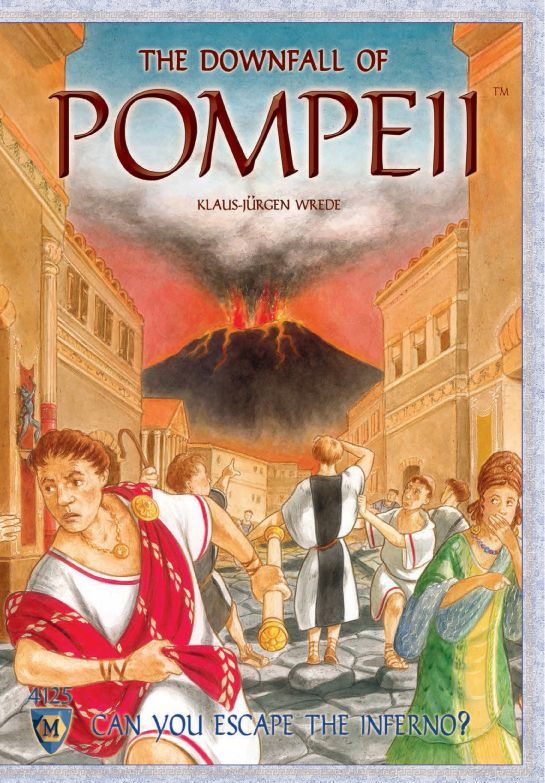
Imagine yourself in Pompeii in AD 79. The city is at its peak, buzzing with people seeking their fortune, but there's a massive problem: Mount Vesuvius is about to blow. In The Downfall of Pompeii, your goal is simple yet desperate: get as many of your people out of the city before everything is buried under ash and lava.
The game is split into two very distinct phases. In the first, tension builds as you play cards to position your characters in the city's buildings. Strategy is key here: you want to place your pieces in spots that allow for a quick escape, but you can also leverage the presence of others to bring in 'relatives' and increase your numbers. The heat rises with Omen cards, which let you toss your opponents' pieces straight into the erupting volcano. It's that classic 'last laugh' moment of tactical sabotage.
Once the second eruption hits, the game completely shifts. Now, lava begins to swallow the city. Each turn, players place lava tiles that annihilate anyone in their path and, even worse, can block the city's exits. Movement now depends on how many characters are in the same space, creating a tactical 'boost' system. You must calculate every step carefully to avoid getting trapped while the ground disappears beneath your feet. The player who rescues the most survivors wins the match.
If you have the 2013 second edition, you'll find the 'Dual Vent' tiles and a new variant to add more flavor to the experience. It's a game that blends luck, positioning, and that pinch of malice needed to survive the disaster.
The game is split into two very distinct phases. In the first, tension builds as you play cards to position your characters in the city's buildings. Strategy is key here: you want to place your pieces in spots that allow for a quick escape, but you can also leverage the presence of others to bring in 'relatives' and increase your numbers. The heat rises with Omen cards, which let you toss your opponents' pieces straight into the erupting volcano. It's that classic 'last laugh' moment of tactical sabotage.
Once the second eruption hits, the game completely shifts. Now, lava begins to swallow the city. Each turn, players place lava tiles that annihilate anyone in their path and, even worse, can block the city's exits. Movement now depends on how many characters are in the same space, creating a tactical 'boost' system. You must calculate every step carefully to avoid getting trapped while the ground disappears beneath your feet. The player who rescues the most survivors wins the match.
If you have the 2013 second edition, you'll find the 'Dual Vent' tiles and a new variant to add more flavor to the experience. It's a game that blends luck, positioning, and that pinch of malice needed to survive the disaster.
Gallery
Box and component photos
Tap any photo to open fullscreen. Photos submitted by the community or publisher.
Rules videos
Learn by watching before you open the box


Best player count
BGG community vote
2
REC
3
REC
4
BEST
Soundtrack
Ambience suggested by Melodice
Loading playlist...
Where to Buy
Prices monitored daily
Finding best prices...
Prices unavailable at this time.
Price history — last 6 months (lowest new offer)
As an Amazon Associate I earn from qualifying purchases. Prices and availability subject to change.
Alert enabled!
Join the BoardGamesBot deals group
Get the best board game deals every day — without message spam.
Join the WhatsApp groupGame details
Mechanics, categories, families and credits
Mechanics
Categories
Families
Publisher
AMIGO, Maldito Games, Mayfair Games
Designer
Klaus-Jürgen Wrede
Artist
Guido Hoffmann, Oliver Freudenreich
Community
Data from BoardGameGeek
10,006owners
1,936wishlist
468want to play
Frequently Asked Questions
Quick answers before you buy
Is the game complex? Does it take long to learn?
Not at all! The rules are simple and intuitive, so you can get started quickly. The complexity comes from the in-game tactics, not the rulebook.
How many people can play?
The game supports 2 to 4 players, making it great for small groups who enjoy competitive play.
How long does a game last?
It usually takes about 45 minutes, making it ideal for those who want a dynamic game without committing the whole afternoon.
Is it a very 'aggressive' game?
It has 'Take That' elements, so yes, you can throw opponents' pieces into the volcano. If you don't like your plans being sabotaged, brace yourself!
Who do you recommend this game for?
For those who like historical themes, grid movement mechanics, and enjoy interacting (or hindering) other players.
Other Games You'll Like
Based on mechanics and theme