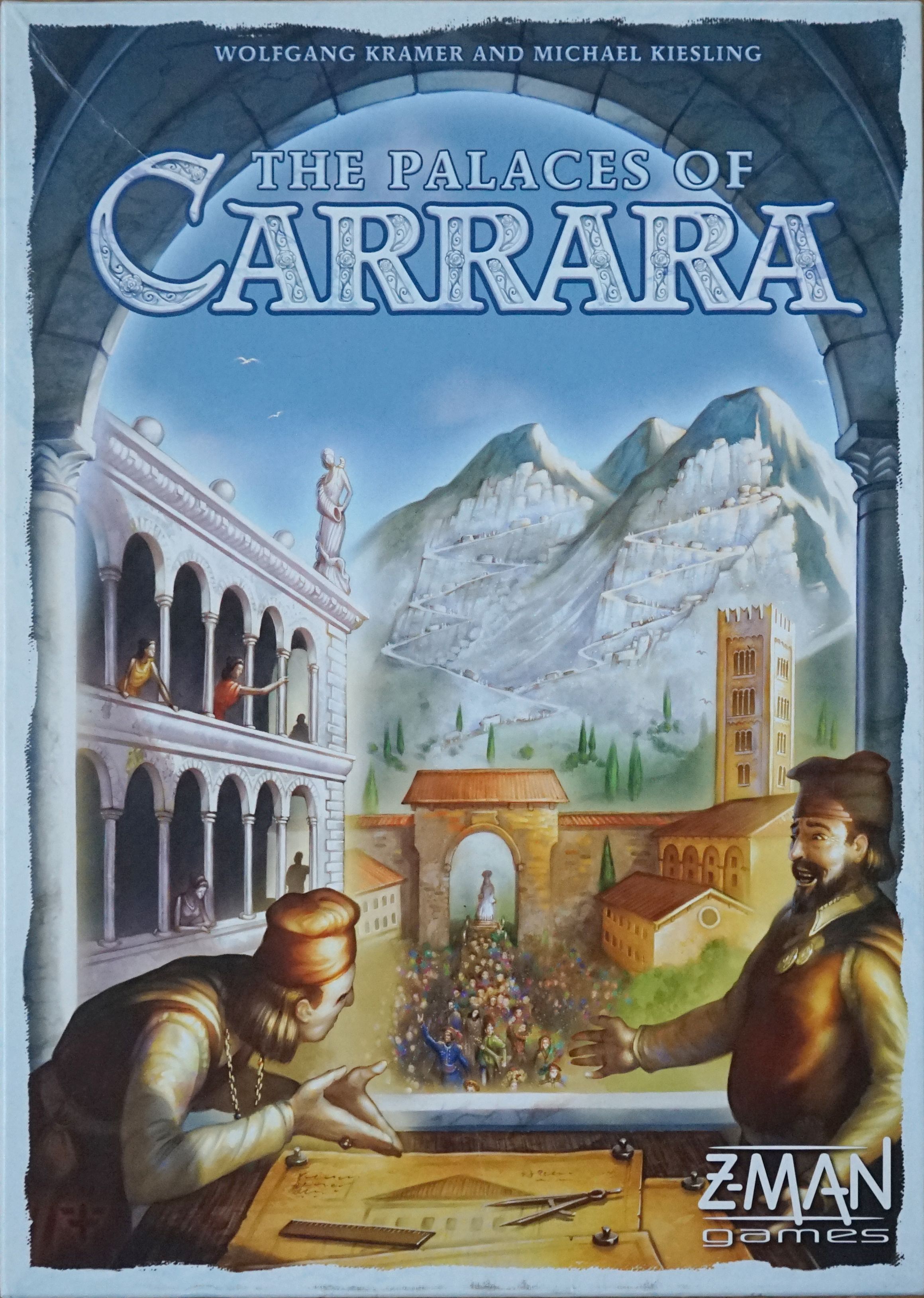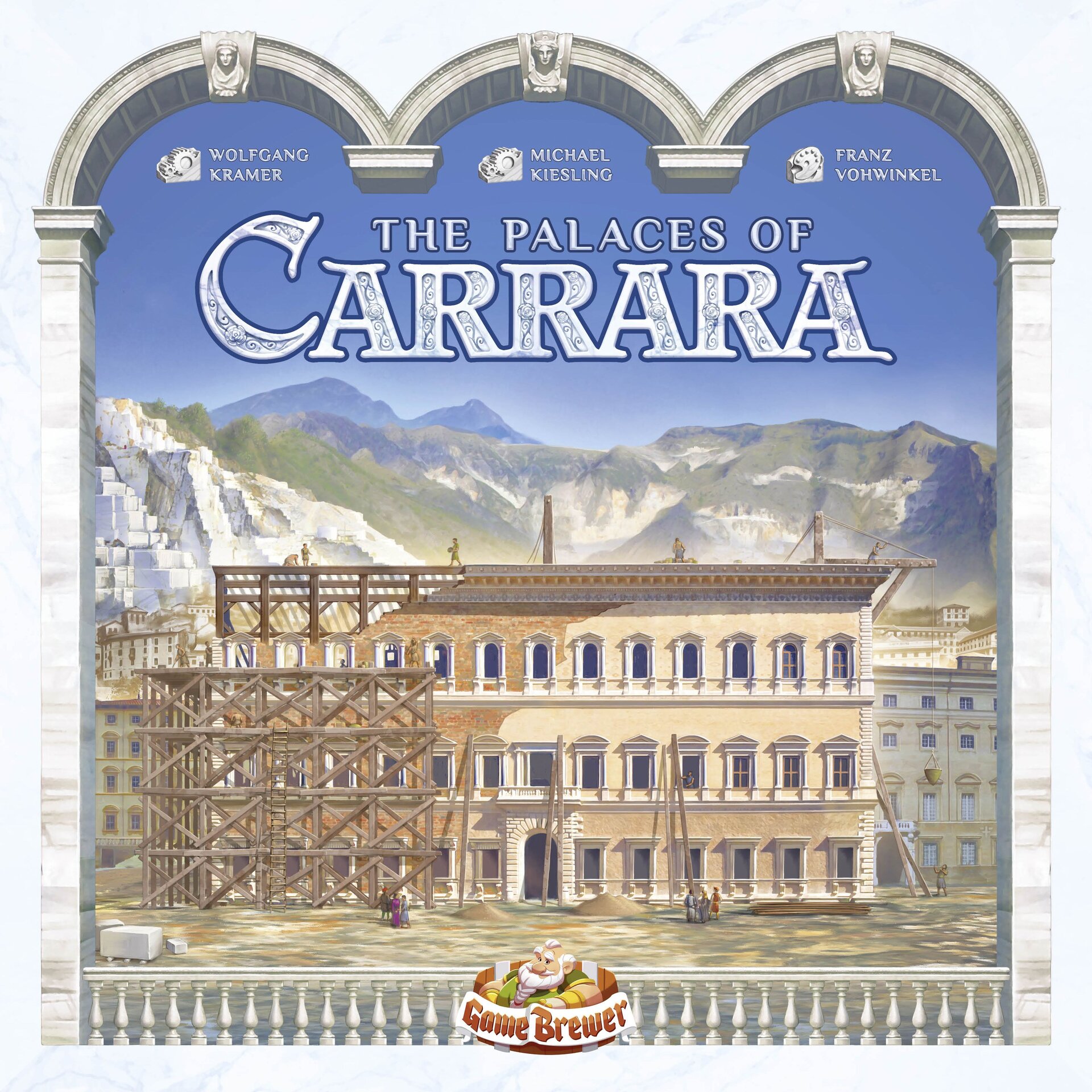
The Palaces of Carrara (Second Edition)
Game Brewer, Delta Vision Publishing, Dexker Games · Board game · 2022Perfect for those who love classic Eurogames with tight economies and deep strategy. The highlight is the constant dilemma regarding resource pricing.
- Very clever economic dilemma
- Designed by renowned authors
- Advanced mode adds depth
- Elegant visual components
- Moderate learning curve
- Indirect interaction may feel dry
About the game
What you do in a play session
In this second edition, the experience has been refined. Besides revised rules that make the gameplay flow more smoothly, there is the addition of a completely new advanced mode that shifts the table dynamics. This new mode introduces statues, which open up a huge array of new scoring strategies, allowing you to value your buildings in ways that weren't possible in the original version. It's the perfect opportunity for those who enjoy thinking several moves ahead and managing resources with surgical precision.
Designed by the powerhouse duo Wolfgang Kramer and Michael Kiesling, the game balances the tension of who grabs the resource first with the satisfaction of seeing your city grow. You'll find yourself questioning whether it's worth taking that expensive marble now or if it's better to focus on smaller buildings while your rivals fight over the premium material. If you enjoy Euro-style economic games with a touch of indirect interaction and heavy risk management, The Palaces of Carrara is a treat. Prepare your budget, plan your architecture, and try to ensure your rivals don't build palaces more magnificent than yours!
Gallery
Box and component photos
Tap any photo to open fullscreen. Photos submitted by the community or publisher.
Rules videos
Learn by watching before you open the box


Best player count
BGG community vote
Soundtrack
Ambience suggested by Melodice
Where to Buy
Prices monitored daily
Price history — last 6 months (lowest new offer)
As an Amazon Associate I earn from qualifying purchases. Prices and availability subject to change.
Alert enabled!
Join the BoardGamesBot deals group
Get the best board game deals every day — without message spam.
Join the WhatsApp groupGame details
Mechanics, categories, families and credits
Mechanics
Categories
Families
Community
Data from BoardGameGeek
Frequently Asked Questions
Quick answers before you buy
Is the game too complex for beginners?
How long does a game last?
Is the advanced mode mandatory?
Does it work well with 2 players?
Is there a lot of text on the components?
Other Games You'll Like
Based on mechanics and theme