This is Mine! — Prices
Grok Games, Mandala Jogos, Arkham Society · Board game · 2023
2–4
30–45 min
Weight 1.0/5
Buy · from US$ 9.57
7.8
rating
Ludopedia
7.3
rating
BGG
Our Verdict
RECOMMENDED
Perfect for those looking for a quick filler with direct interaction and plenty of player banter.
Highlights
- Very clever division mechanic
- Fast and dynamic gameplay
- Simple and intuitive rules
- Constant interaction between players
Keep in mind
- Lack of deep strategic complexity
- Relies heavily on group interaction
Rules manual not indexed yet
Upload the PDF rulebook to ask questions about this game with AI.
About the game
What you do in a play session
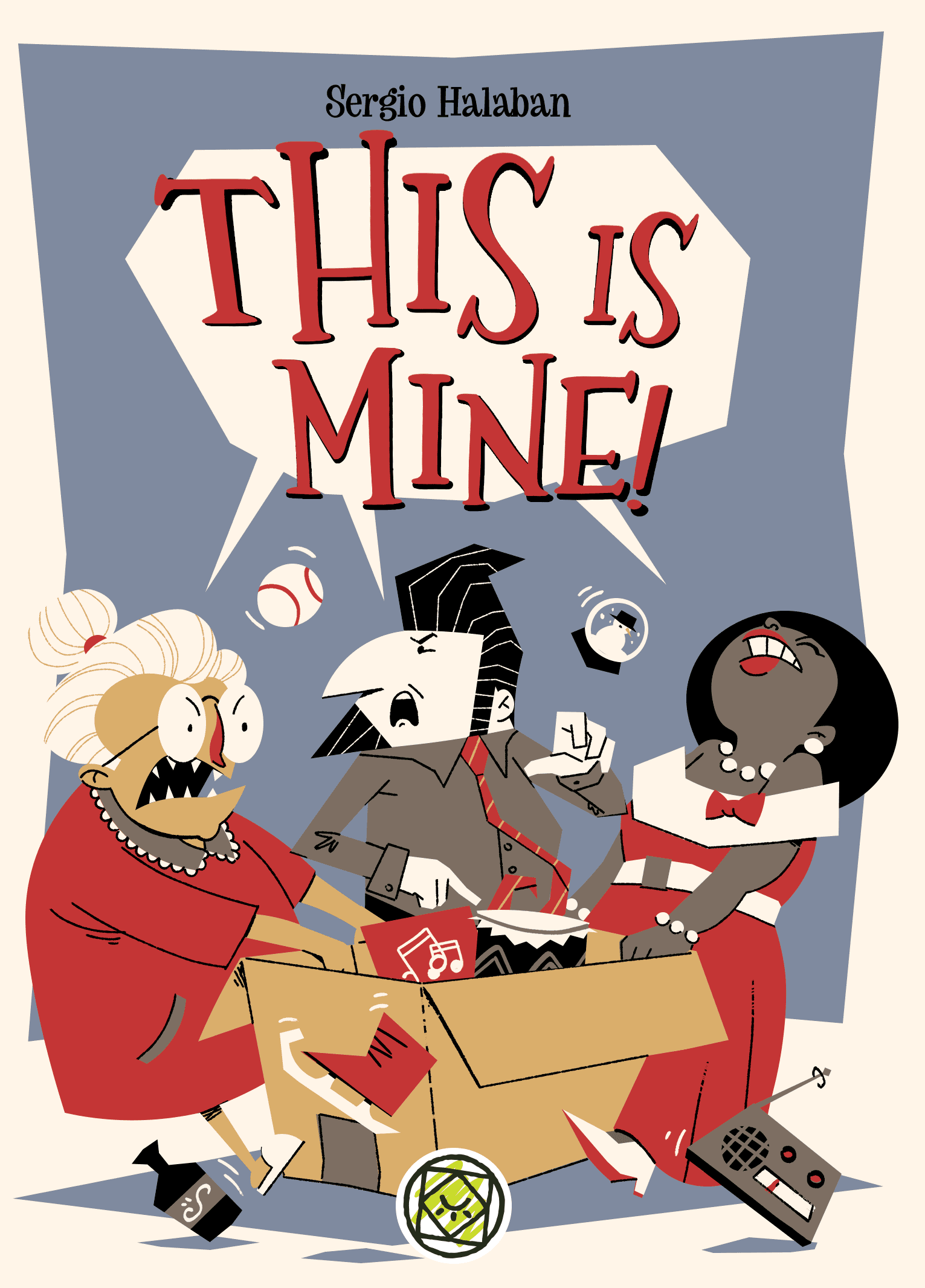
You know that eccentric uncle who travels the world and returns with the craziest stories? That's Uncle Howard. A dedicated beatnik and friend to legendary artists, poets, and musicians, he left behind a fascinating legacy... and a very peculiar will. Instead of dividing his estate simply, he decided to turn the inheritance into a game! Now, you and your cousins are competing to see who gets the most valuable relics from his collection.
The dynamics are simple but full of mischief. Each round, the starting player takes the revealed cards from the deck and divides them into lots. You can create large or small groups, but each lot must contain at least one card. The catch? The divider places their marker on one of the lots, claiming: 'This is Mine!'. But it's not that easy. Other players can disagree and 'steal' the lot, provided they pay money to value one of the other available lots. It's a cat-and-mouse game: you try to build the perfect lot for yourself, but you know that if it's too good, someone will want to snatch it away.
The ultimate goal is pure strategic greed. You need to gather collections of items of the same type to maximize your score. The more coordinated your archive of Uncle Howard's memories is, the greater your fortune will be at the end. It's a fast, light game with direct interaction that sparks laughter and healthy arguments at the table. Will you manage to manipulate the split to get the best part of the inheritance, or will you end up with the leftovers while your cousins get rich?
The dynamics are simple but full of mischief. Each round, the starting player takes the revealed cards from the deck and divides them into lots. You can create large or small groups, but each lot must contain at least one card. The catch? The divider places their marker on one of the lots, claiming: 'This is Mine!'. But it's not that easy. Other players can disagree and 'steal' the lot, provided they pay money to value one of the other available lots. It's a cat-and-mouse game: you try to build the perfect lot for yourself, but you know that if it's too good, someone will want to snatch it away.
The ultimate goal is pure strategic greed. You need to gather collections of items of the same type to maximize your score. The more coordinated your archive of Uncle Howard's memories is, the greater your fortune will be at the end. It's a fast, light game with direct interaction that sparks laughter and healthy arguments at the table. Will you manage to manipulate the split to get the best part of the inheritance, or will you end up with the leftovers while your cousins get rich?
Gallery
Box and component photos
Tap any photo to open fullscreen. Photos submitted by the community or publisher.
Best player count
BGG community vote
2
OK
3
OK
4
OK
Soundtrack
Ambience suggested by Melodice
Loading playlist...
Where to Buy
Prices monitored daily
Finding best prices...
Prices unavailable at this time.
Price history — last 6 months (lowest new offer)
Alert enabled!
Join the BoardGamesBot deals group
Get the best board game deals every day — without message spam.
Join the WhatsApp groupGame details
Mechanics, categories, families and credits
Mechanics
Categories
Publisher
Grok Games, Mandala Jogos, Arkham Society, HIT Games
Designer
Sérgio Halaban
Artist
Diego Sá
Community
Data from BoardGameGeek
132owners
43wishlist
6want to play
Frequently Asked Questions
Quick answers before you buy
Is the game complex to learn?
Not at all! The rules are super simple, and you'll be playing in a few minutes. Ideal for those who hate reading giant manuals.
How long does a game last?
Between 30 and 45 minutes, making it perfect as a game night opener or a filler between heavier titles.
Does it work well with 2 players?
Yes, but the fun peaks with 3 or 4 players, where the fight over the lots becomes more chaotic and entertaining.
Is it suitable for children?
Absolutely. With a low weight (1/5 on BGG), it's great for introducing set collection mechanics to novice players.
What determines the winner?
The final score based on the sets of items collected. Whoever assembles the most valuable inheritance wins.
Other Games You'll Like
Based on mechanics and theme