Tower of Doubt
itten, Kawasaki Factory, Popcorn Games · Board game · 2012
2 · best 2
10–20 min
Weight 2.0/5
Buy
7.5
rating
Ludopedia
6.7
rating
BGG
Our Verdict
HIGHLY RECOMMENDED
If you love a quick bluff showdown, Tower of Doubt gives you exactly that in 10‑20 minute rounds.
Highlights
- Intense bluffing in short plays
- Ultra‑simple rules
- Perfect for two players
Keep in mind
- Limited strategic depth
- Relies heavily on visual perception
Rules manual not indexed yet
Upload the PDF rulebook to ask questions about this game with AI.
About the game
What you do in a play session
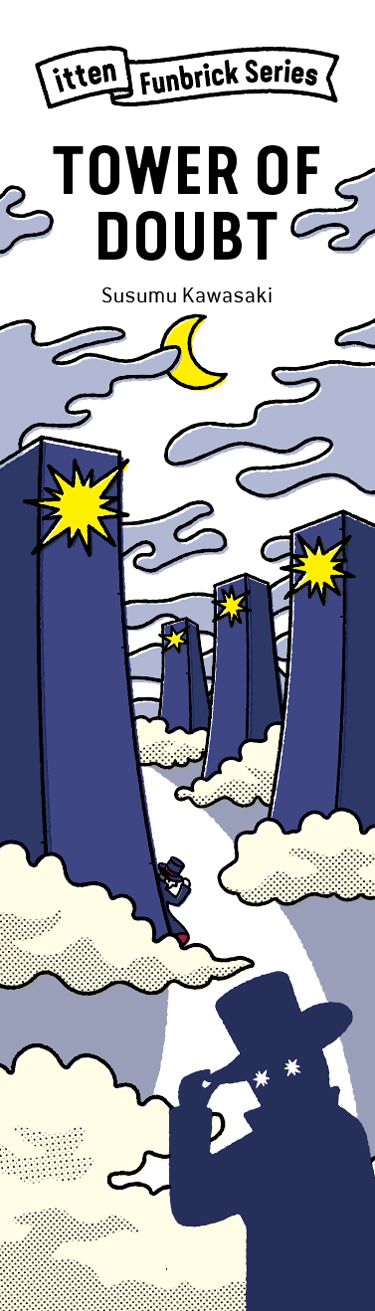
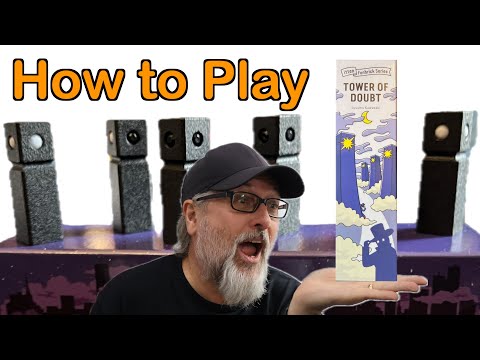
Tower of Doubt is a fast‑paced, 10‑to‑20‑minute duel for two players who love a good bluff. The board is set up with six four‑sided towers; each tower shows two faces to one player while the other two faces, hidden from them, are visible to the opponent. The faces are painted white or black, but only six colour combinations can occur: all white, three white, two white (adjacent or opposite), one white, or none white. The goal is to finish the round with as many white faces under your control as possible.
To claim towers, each player places coloured blocks on the faces they think are white. These blocks act both as ownership markers and as bluffing tools, since the opponent cannot see the true colour underneath. When the timer runs out, each participant selects two towers they believe contain the most white faces and scores them. The total number of white faces on the two chosen towers decides the winner.
Setup is minimal: just position the towers and hand out the blocks. There are no cards, complex boards, or lengthy rulebooks, making it ideal for a quick filler between heavier games. Despite its simplicity, the tension of not knowing what the other sees creates plenty of fun and forces players to read expressions, calculate probabilities, and, of course, pull off a well‑timed bluff. Its 2/5 weight on BGG signals an almost nonexistent learning curve, yet strategic depth emerges in deciding which towers to contest and when to sacrifice a block to confuse the rival. In short, Tower of Doubt offers a compact blend of deduction and bluffing, perfect for two players who enjoy quick, mental face‑offs.
To claim towers, each player places coloured blocks on the faces they think are white. These blocks act both as ownership markers and as bluffing tools, since the opponent cannot see the true colour underneath. When the timer runs out, each participant selects two towers they believe contain the most white faces and scores them. The total number of white faces on the two chosen towers decides the winner.
Setup is minimal: just position the towers and hand out the blocks. There are no cards, complex boards, or lengthy rulebooks, making it ideal for a quick filler between heavier games. Despite its simplicity, the tension of not knowing what the other sees creates plenty of fun and forces players to read expressions, calculate probabilities, and, of course, pull off a well‑timed bluff. Its 2/5 weight on BGG signals an almost nonexistent learning curve, yet strategic depth emerges in deciding which towers to contest and when to sacrifice a block to confuse the rival. In short, Tower of Doubt offers a compact blend of deduction and bluffing, perfect for two players who enjoy quick, mental face‑offs.
Gallery
Box and component photos
Tap any photo to open fullscreen. Photos submitted by the community or publisher.
Rules videos
Learn by watching before you open the box
Best player count
BGG community vote
2
BEST
Soundtrack
Ambience suggested by Melodice
Loading playlist...
Where to Buy
Prices monitored daily
Finding best prices...
Prices unavailable at this time.
Price history — last 6 months (lowest new offer)
As an Amazon Associate I earn from qualifying purchases. Prices and availability subject to change.
Alert enabled!
Join the BoardGamesBot deals group
Get the best board game deals every day — without message spam.
Join the WhatsApp groupGame details
Mechanics, categories, families and credits
Categories
Families
Publisher
itten, Kawasaki Factory, Popcorn Games
Designer
Susumu Kawasaki
Artist
Susumu Kawasaki
Community
Data from BoardGameGeek
326owners
49wishlist
8want to play
Frequently Asked Questions
Quick answers before you buy
How long does a typical game last?
Usually between 10 and 20 minutes, depending on how fast players make decisions.
How many players can play?
Exactly two; the game is built for a head‑to‑head duel.
Do I need prior knowledge of complex mechanics?
No. The rules are straightforward and can be learned in a few minutes.
What components are included?
Six four‑sided towers, colored blocks for marking faces, and a timer marker.
What audience is the game best suited for?
Anyone who enjoys deduction, bluffing, and quick matches—especially couples or friends who play often.
Other Games You'll Like
Based on mechanics and theme