
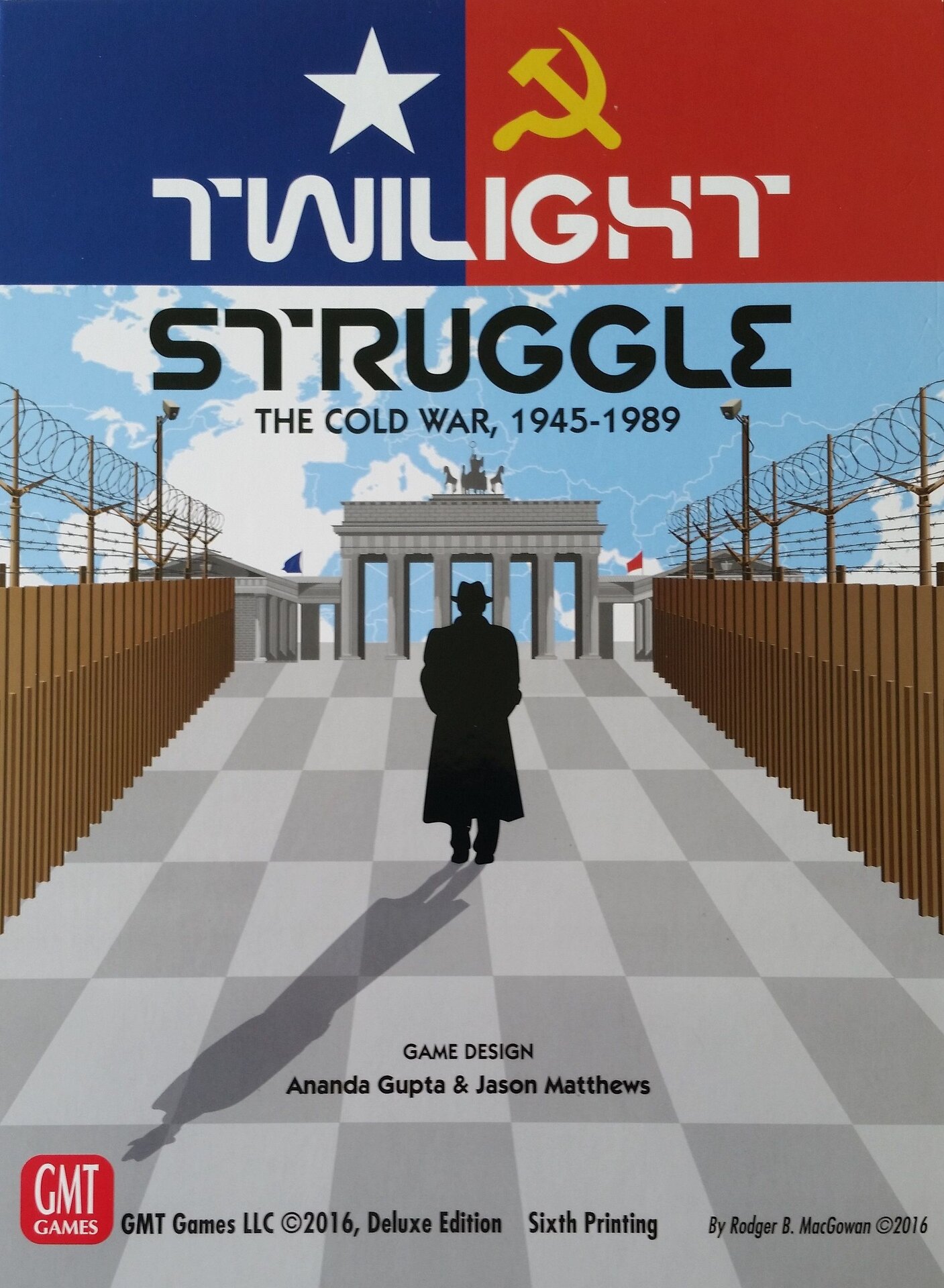
Twilight Struggle
GMT Games, Asterion Press, Bard Centrum Gier · Board game · 2005What do you want to do now
Ask anything about Twilight Struggle: rules, setup, components, complexity, price, or whether it fits your group.
If you're looking for a deeply strategic two-player game that perfectly captures the tension and intrigue of the Cold War, Twilight Struggle is an absolute must-play. It's a masterclass in card-driven area control and historical simulation.
- Unparalleled historical immersion and theme
- Deep strategic choices and tension
- Excellent card-driven mechanics
- High replayability for two players
- Rewarding for dedicated players
- Significant learning curve for new players
- Long playtime requires commitment
- Can be unforgiving of mistakes
About the game
What you do in a play session
The game begins amidst the ruins of post-war Europe and extends until 1989, with the dissolution of the Soviet Union and the rise of the United States as the sole remaining superpower. Inspired by classics like We the People and Hannibal: Rome vs. Carthage, Twilight Struggle uses a card-driven system to propel the narrative and player actions. The period's world map serves as the stage for players to move their units and exert influence, seeking allies and control for their faction. Decision-making is crucial, as resources are always limited, requiring strategy in the use of cards and units.
Event cards are the heart of the game, adding historical depth and flavor. They represent a vast array of historical happenings, from the Arab-Israeli conflicts of 1948 and 1967, through the Vietnam War and the U.S. peace movement, to the Cuban Missile Crisis and other incidents that brought the world to the brink of nuclear annihilation. Dedicated subsystems capture the prestigious Space Race and nuclear tensions, with the possibility of an abrupt game end due to nuclear war. Each turn represents 3 to 5 years, and the map scale is point-to-point, with influence markers representing units.
Expansions
Published additional content

Gallery
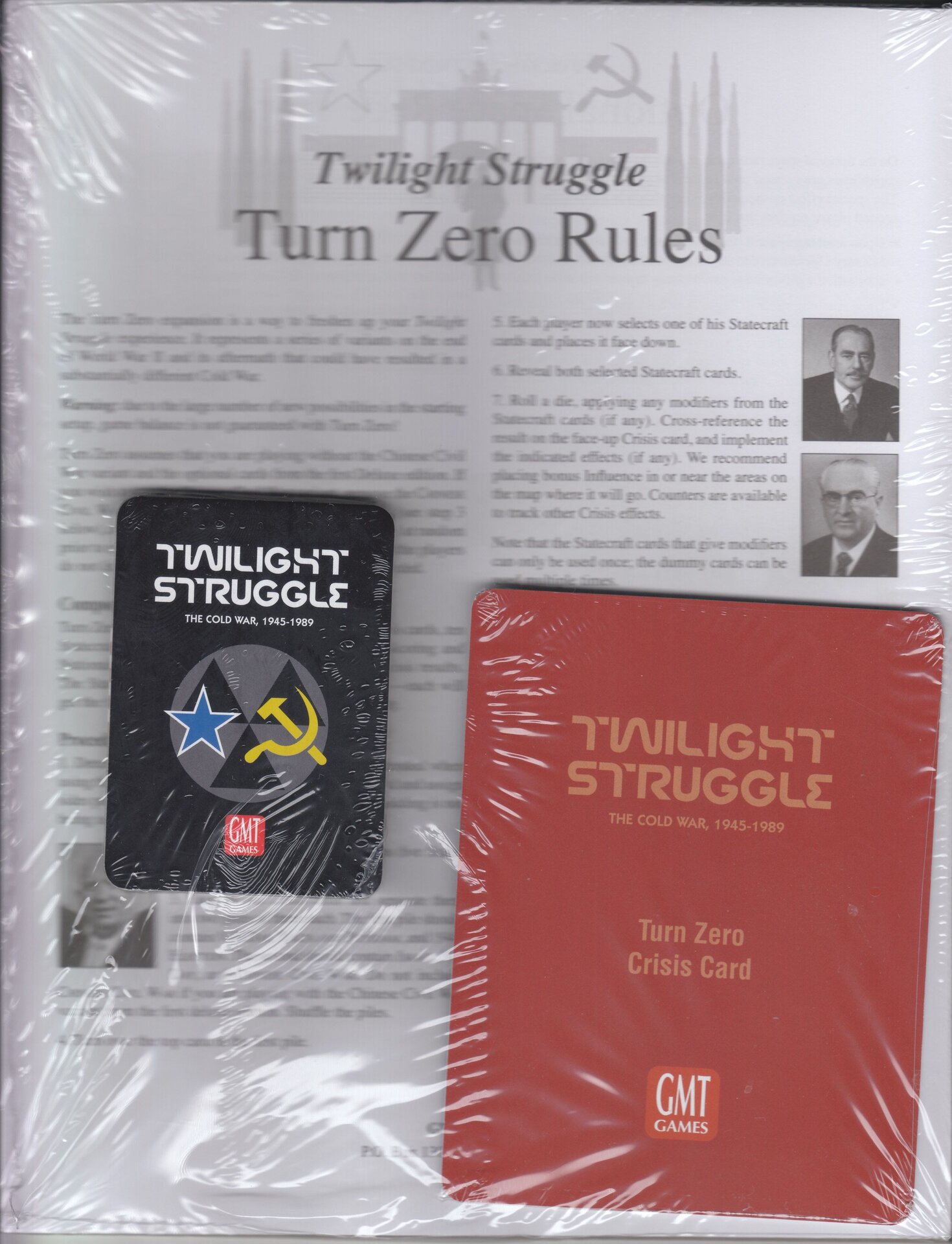
Box and component photos
Tap any photo to open fullscreen. Photos submitted by the community or publisher.
Rules videos
Learn by watching before you open the box
In English
-
 TWILIGHT STRUGGLE: The Movie / 12 HOUR Strategy Guide
-
 TWILIGHT STRUGGLE How To Play / Digital Tutorial WALKTHROUGH
-
 TWILIGHT STRUGGLE / SPACE RACE Strategy / HOW To Use The SPACE RACE In TWILIGHT STRUGGLE Board Game
-
 TWILIGHT STRUGGLE / RESHUFFLE Strategy /HOW To Manage The RESHUFFLES In TWILIGHT STRUGGLE Board Game
-
 Cold War in a Box: How To Play Twilight Struggle
-
 Twilight Struggle - 2p - The Rules by Heavy Cardboard
-
 Twilight Struggle STRATEGY Guide / HOW to play the Red Scare Purge / HOW TO WIN at Twilight Struggle
-
 HOW to play the SOUTHEAST ASIA scoring card
-
 How to Play Twilight Struggle with Jorge - Part 1, Rules (Greek Subbed)
-
 TWILIGHT STRUGGLE Strategy / HOW Do You Play The BRUSH WAR Card? / STRATEGY Tips
-
 Twilight Struggle STRATEGY / HOW To PLAY Cuban Missile Crisis Card
-
 Twilight Struggle STRATEGY Guide / HOW to play the Decolonization card / Strategy Walkthrough
Rules manual
Official PDF file
Best player count
BGG community vote
Soundtrack
Ambience suggested by Melodice
Where to Buy
Prices monitored daily
Price history — last 6 months (lowest new offer)
As an Amazon Associate I earn from qualifying purchases. Prices and availability subject to change.
Alert enabled!
Join the BoardGamesBot deals group
Get the best board game deals every day — without message spam.
Join the WhatsApp groupGame details
Mechanics, categories, families and credits
Mechanics
Categories
Families
Community
Data from BoardGameGeek
Frequently Asked Questions
Quick answers before you buy
How many players can play Twilight Struggle?
What is the average playtime for a game?
What is the complexity level of the game?
What are the main components of the game?
Who is Twilight Struggle suitable for?
Is the game language dependent?
Other Games You'll Like
Based on mechanics and theme
 1989: Dawn of Freedom
 Twilight Struggle: 20th Anniversary Hall of Fame Edition
 Twilight Struggle: Red Sea – Conflict in the Horn of Africa
 Andean Abyss
 Labyrinth: The War on Terror, 2001 – ?
 The British Way: Counterinsurgency at the End of Empire
 1960: The Making of the President
 People Power: Insurgency in the Philippines, 1981-1986
