Unconscious Mind
Fantasia Games, Frosted Games, GaGa Games · Board game · 2024
1–4 · best 2
Solo
60–120 min
Weight 4.0/5
Buy · from US$ 45.00
8.9
rating
Ludopedia
7.9
rating
BGG
Our Verdict
HIGHLY RECOMMENDED
If you love a Euro with historic flavor and deep strategy, Unconscious Mind grabs you from the first turn.
Highlights
- engaging engine building
- well‑integrated mechanics
- unique psychological theme
Keep in mind
- steep learning curve
- playtime can run long
Rules manual not indexed yet
Upload the PDF rulebook to ask questions about this game with AI.
About the game
What you do in a play session
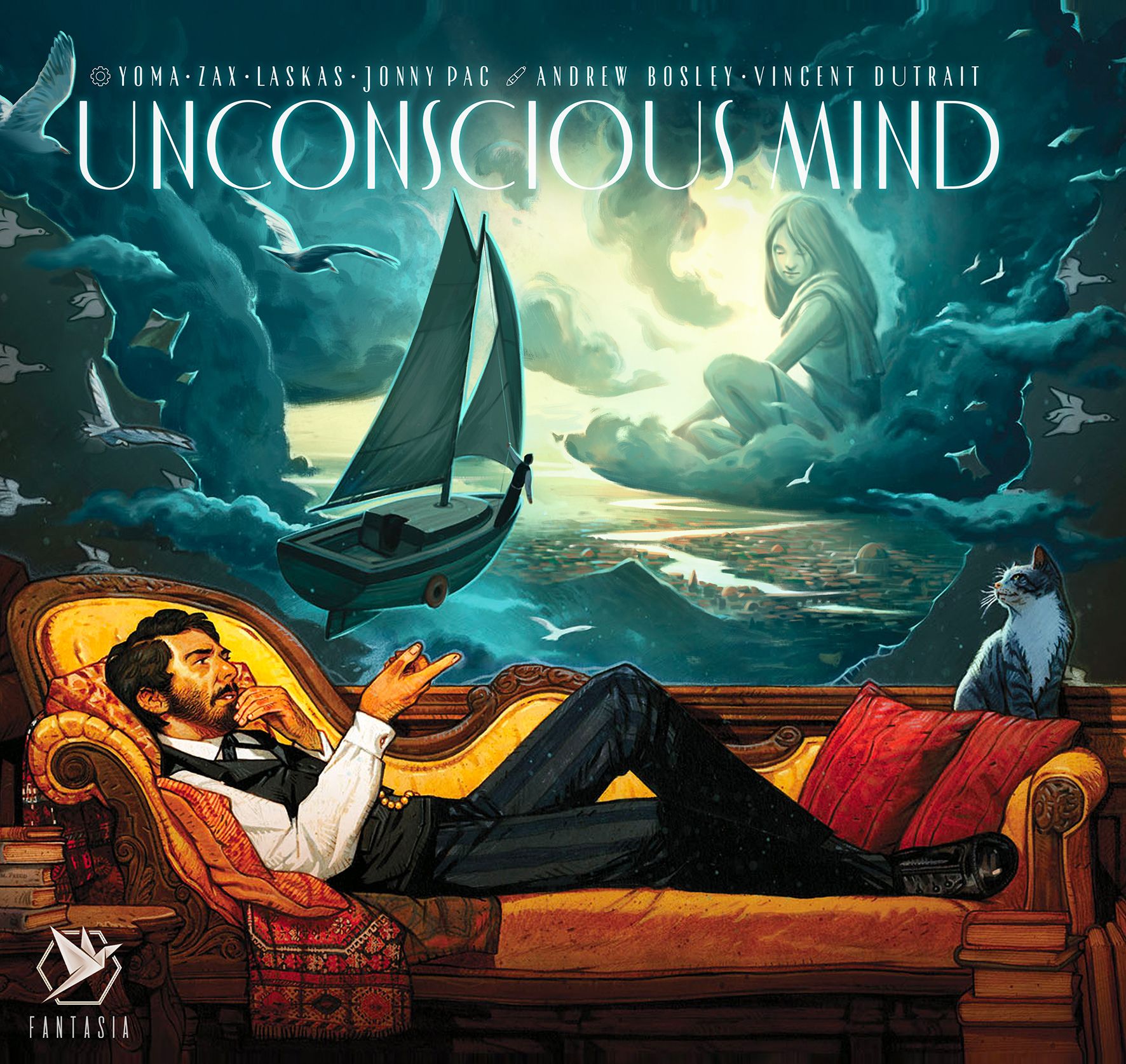
In early‑1900s Vienna, Freud and his circle met every Wednesday to dissect dreams and the unconscious. Unconscious Mind drops you into that Psychological Society as an aspiring analyst eager to gain fame, clients, and novel therapeutic tricks. Each round you place one or two Ideas (workers) on the central Meeting Table, unlocking actions such as drafting tiles for your tableau, pulling multi‑use cards, or moving around the city via an inkpot rondel. Where you slot your Ideas also determines how far the rondel advances, triggering rows or columns of effects that fuel your engine.
Your main currency is Insight, tracked on a multi‑level dial. You spend Insight to interpret surface‑level Manifest dreams and, by digging deeper, reveal Latent dreams, lifting transparent layers from client cards. Each removed layer unveils special abilities and end‑game scoring opportunities. Contracts with fellow members, end‑game bonuses, and set collections round out the strategy, while worker placement and programmed movement keep the tempo tight.
The game ends when the Society’s reputation hits a preset threshold; the analyst with the most influence, cured clients, and theoretical breakthroughs wins. Supporting 1‑4 players (solo mode is robust), the game blends euro‑style mechanics—rondel, worker placement, tableau building, cascading effects—into a sleek package of transparent components that feel like peeling back layers of the mind. Perfect for fans of historic settings, psychology, and engine‑building depth, Unconscious Mind offers a rich yet accessible experience.
Your main currency is Insight, tracked on a multi‑level dial. You spend Insight to interpret surface‑level Manifest dreams and, by digging deeper, reveal Latent dreams, lifting transparent layers from client cards. Each removed layer unveils special abilities and end‑game scoring opportunities. Contracts with fellow members, end‑game bonuses, and set collections round out the strategy, while worker placement and programmed movement keep the tempo tight.
The game ends when the Society’s reputation hits a preset threshold; the analyst with the most influence, cured clients, and theoretical breakthroughs wins. Supporting 1‑4 players (solo mode is robust), the game blends euro‑style mechanics—rondel, worker placement, tableau building, cascading effects—into a sleek package of transparent components that feel like peeling back layers of the mind. Perfect for fans of historic settings, psychology, and engine‑building depth, Unconscious Mind offers a rich yet accessible experience.
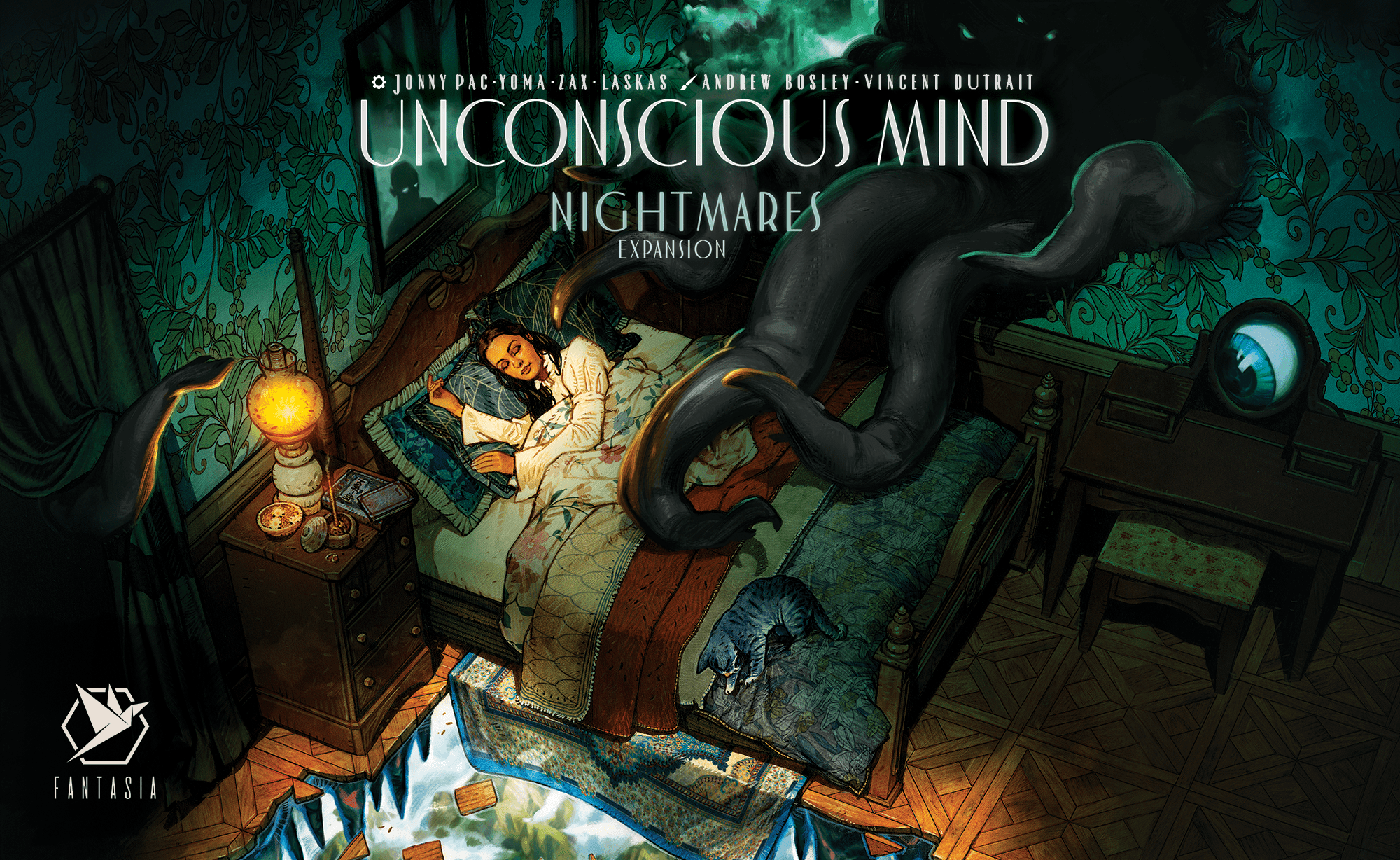
Expansions
Published additional content

Gallery
Box and component photos
Tap any photo to open fullscreen. Photos submitted by the community or publisher.
Rules videos
Learn by watching before you open the box
In English
-
 How to Play Unconscious Mind - Base Game
-
 How to Play Unconscious Mind - Solo Game
-
 Unconscious Mind - Tutorial & Playthrough
-
 How to Play Unconscious Mind - Expansions
-
 A "simplified" look at Unconscious Mind | Is this a game for you?
-
 How To Play Unconcious Mind with @ezbgames
-
 Unconscious Mind solo playthrough (with explanations)
-
 Unconscious Mind – Learn the Rules the Easy Way | Board Game Shortcut
-
 Unconscious Mind Rules Challenge
-
 How To Play Unconscious Mind Board Game
-
 All the Games with Steph: Unconscious Mind - The Teach
-
 Essen Spiel 2024 Novelties - FANTASIA Games
Best player count
BGG community vote
1
REC
2
BEST
3
BEST
4
OK
Soundtrack
Ambience suggested by Melodice
Loading playlist...
Where to Buy
Prices monitored daily
Finding best prices...
Prices unavailable at this time.
Price history — last 6 months (lowest new offer)
Alert enabled!
Join the BoardGamesBot deals group
Get the best board game deals every day — without message spam.
Join the WhatsApp groupGame details
Mechanics, categories, families and credits
Mechanics
Categories
Families
Publisher
Fantasia Games, Frosted Games, GaGa Games, Gémklub, Keep Exploring Games, Lucky Duck Games, Maldito Games, Mosaico Jogos, Regatul Jocurilor, TLAMA games
Designer
Antonio Zax, Jonny Pac, Laskas, Yoma
Artist
Andrew Bosley, Vincent Dutrait, Yoma
Community
Data from BoardGameGeek
15,207owners
4,817wishlist
382want to play
Frequently Asked Questions
Quick answers before you buy
How many players can join?
1 to 4 players, with a robust solo mode.
What is the typical playing time?
Between 60 and 120 minutes, depending on player count and familiarity.
How complex is the game?
Complexity is about 4 out of 5, requiring careful management of several interlocking systems.
Are the components high quality?
Yes, the game features transparent elements that represent dream layers and a well‑crafted Insight dial.
Do I need to know Freud to enjoy it?
Not really; the game provides enough background for newcomers to get into the theme.
Are there expansions available?
Currently only the base game is out; no expansions have been announced yet.
Can I play it digitally?
Yes, there are digital implementations as a TableTop Simulator mod and on Tabletopia.
Other Games You'll Like
Based on mechanics and theme