Age of Renaissance
The Avalon Hill Game Co, Descartes Editeur · Board game · 1996
3–6 · best 5
120–300 min
Weight 3.9/5
6.8
rating
Ludopedia
7.1
rating
BGG
6.8
rating
Ludopedia
7.1
rating
BGG
Our Verdict
HIGHLY RECOMMENDED
If you enjoy historical strategy games, Age of Renaissance will catch your interest.
Highlights
- Fluid resource management
- Auctions keep tension high
- Provincial control is engaging
Keep in mind
- Long playtime
- Moderate complexity
Rules manual not indexed yet
Upload the PDF rulebook to ask questions about this game with AI.
About the game
What you do in a play session
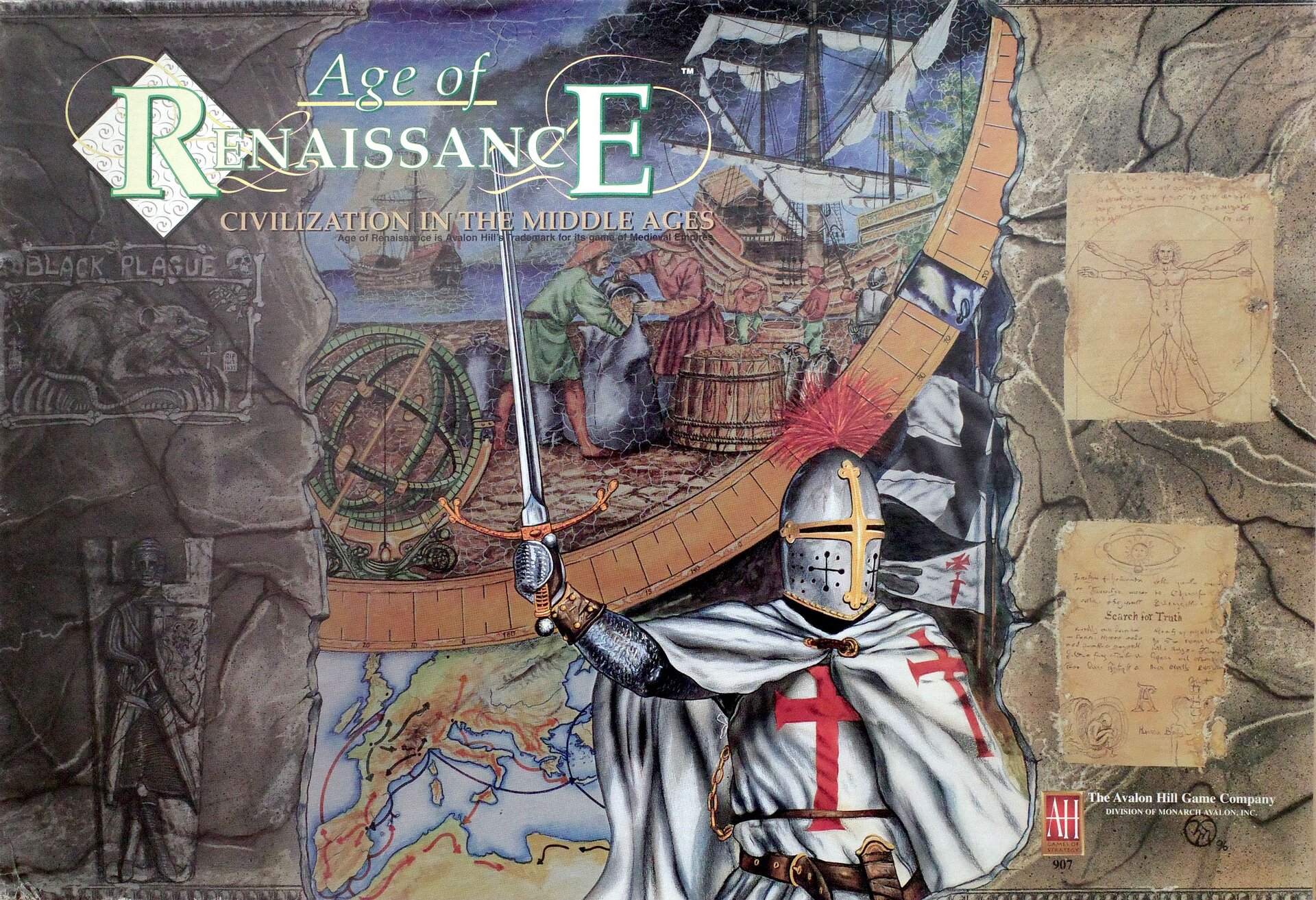
Age of Renaissance is a strategy game that presents itself as a kind of sequel to Civilization, but with a historical twist. Players take on the role of rulers of small city‑states that, throughout the Middle Ages and the Renaissance, seek to consolidate their culture, expand their territory, and accumulate technological advances. The heart of the game is a deck of cards made up of events, payout tokens, and legendary leaders from each era. Each card has an effect that can drastically alter the board dynamics, and the timing of when you decide to play it is crucial to ensure a different outcome in every game.
The main goal of each city‑state is to accumulate points through technological advances, but the challenge lies in keeping the misery index of your culture as low as possible. The payout system works similarly to Civilization: the more resources of the same type you hold, the higher the reward. However, in Age of Renaissance, payouts are triggered when cards are played simultaneously by all players, creating a continuous and unpredictable flow of action.
To control territory, the game introduces a “combat” mechanism that determines domination of provinces. By conquering a province, you gain access to valuable resources and influence over the region. Piece movements are limited to specific areas of the board, requiring careful planning and adaptation to changing scenarios. Auctions of resources and cards add a layer of tension, as players compete for items that can turn the tide in their favor.
The gameplay experience is long, with games ranging from two to five hours depending on player experience. Complexity is moderate, but the strategic depth rewards those who enjoy long‑term planning. Age of Renaissance is ideal for groups that appreciate civilization‑building, economic, and historical games, offering a consistent challenge and high replayability thanks to the variety of cards and possible strategies.
The main goal of each city‑state is to accumulate points through technological advances, but the challenge lies in keeping the misery index of your culture as low as possible. The payout system works similarly to Civilization: the more resources of the same type you hold, the higher the reward. However, in Age of Renaissance, payouts are triggered when cards are played simultaneously by all players, creating a continuous and unpredictable flow of action.
To control territory, the game introduces a “combat” mechanism that determines domination of provinces. By conquering a province, you gain access to valuable resources and influence over the region. Piece movements are limited to specific areas of the board, requiring careful planning and adaptation to changing scenarios. Auctions of resources and cards add a layer of tension, as players compete for items that can turn the tide in their favor.
The gameplay experience is long, with games ranging from two to five hours depending on player experience. Complexity is moderate, but the strategic depth rewards those who enjoy long‑term planning. Age of Renaissance is ideal for groups that appreciate civilization‑building, economic, and historical games, offering a consistent challenge and high replayability thanks to the variety of cards and possible strategies.
Gallery
Box and component photos
Tap any photo to open fullscreen. Photos submitted by the community or publisher.
Rules videos
Learn by watching before you open the box
In English


Best player count
BGG community vote
3
OK
4
REC
5
BEST
6
BEST
Soundtrack
Ambience suggested by Melodice
Loading playlist...
Where to Buy
Prices monitored daily
Finding best prices...
Prices unavailable at this time.
Price history — last 6 months (lowest new offer)
Alert enabled!
Join the BoardGamesBot deals group
Get the best board game deals every day — without message spam.
Join the WhatsApp groupGame details
Mechanics, categories, families and credits
Mechanics
Categories
Families
Publisher
The Avalon Hill Game Co, Descartes Editeur
Designer
Don Greenwood, Jared Scarborough
Artist
Kurt Miller, Stephen Langmead
Community
Data from BoardGameGeek
3,041owners
422wishlist
135want to play
Frequently Asked Questions
Quick answers before you buy
How many players can play?
The game supports 3 to 6 players.
What is the typical game duration?
Between 120 and 300 minutes, depending on player experience.
How complex is the game?
It has a moderate complexity level, requiring attention to detail and strategic planning.
What are the main components?
Deck of cards, resource tokens, province board, and control pieces.
Who is it recommended for?
Ideal for fans of civilization-building and historical strategy games.
What is the best strategy to win?
Balance the pursuit of technical advances with keeping misery low and controlling key provinces.
Other Games You'll Like
Based on mechanics and theme