Alma Mater — Prices
eggertspiele, Arclight Games, Plan B Games · Board game · 2020
2–4 · best 4
90–150 min
Weight 3.7/5
Buy · from US$ 24.68
8.0
rating
Ludopedia
7.3
rating
BGG
Our Verdict
If you love a mix of strategy and history, Alma Mater is your next pick!
Highlights
- Creative hand management
- Challenging closed drafting
- Engaging worker placement
Keep in mind
- Long playtime
- Moderate learning curve
Rules manual not indexed yet
Upload the PDF rulebook to ask questions about this game with AI.
About the game
What you do in a play session
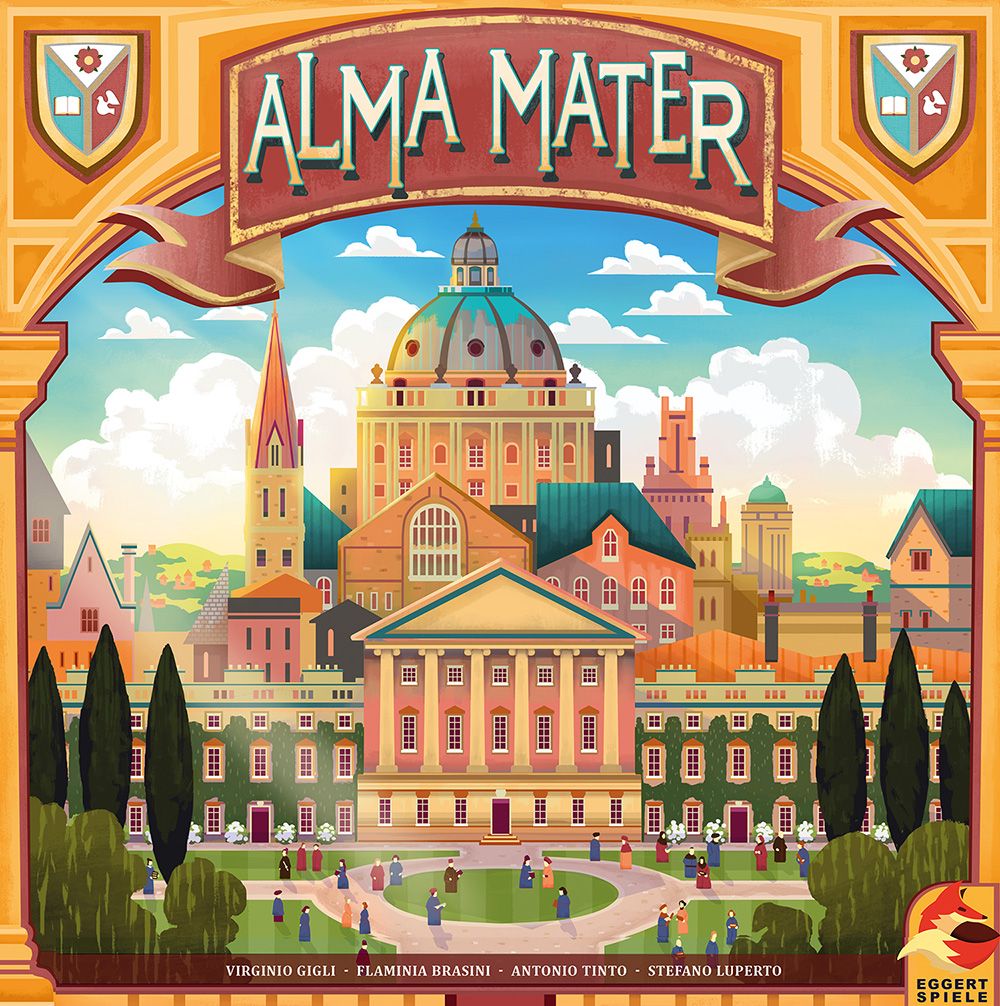
In Alma Mater, you take on the role of a dean at an independent university in the 15th century, during the height of the Renaissance. Your goal? Turn your school into a bastion of knowledge, attract the best professors and students, exchange ideas with other colleges, and excel in the four major disciplines: Arts, Sciences, History, and Literature. The game blends several mechanics that keep your brain engaged: you manage a hand of cards, assign workers to specific tasks (worker placement), and place tiles on the board to expand your university (tile placement). All of this occurs within a closed drafting system, where you choose cards from a limited pool, forcing you to think carefully before every move. At the end, end‑game bonuses reward the most achievements, such as having the largest library or the best laboratory. With a playtime of 90 to 150 minutes, it’s perfect for family game nights or evenings with friends who enjoy strategy and historical themes. If you like games that combine planning, friendly competition, and a well‑crafted setting, Alma Mater will surprise you.
The game has a balanced pace: hand‑management and worker placement add tension, while closed drafting keeps everything dynamic. The components are solid: worker tokens, illustrated cards, and a sturdy board. The learning curve is moderate, ideal for those already experienced with strategy games but not so complex as to be intimidating.
In short, Alma Mater offers a rich thematic and mechanical experience, with a good dose of competition and collaboration among players, all set in a historical backdrop reminiscent of Renaissance debates.
The game has a balanced pace: hand‑management and worker placement add tension, while closed drafting keeps everything dynamic. The components are solid: worker tokens, illustrated cards, and a sturdy board. The learning curve is moderate, ideal for those already experienced with strategy games but not so complex as to be intimidating.
In short, Alma Mater offers a rich thematic and mechanical experience, with a good dose of competition and collaboration among players, all set in a historical backdrop reminiscent of Renaissance debates.
Gallery
Box and component photos
Tap any photo to open fullscreen. Photos submitted by the community or publisher.
Rules videos
Learn by watching before you open the box


Best player count
BGG community vote
2
OK
3
REC
4
BEST
Soundtrack
Ambience suggested by Melodice
Loading playlist...
Where to Buy
Prices monitored daily
Finding best prices...
Prices unavailable at this time.
Price history — last 6 months (lowest new offer)
As an Amazon Associate I earn from qualifying purchases. Prices and availability subject to change.
Alert enabled!
Join the BoardGamesBot deals group
Get the best board game deals every day — without message spam.
Join the WhatsApp groupGame details
Mechanics, categories, families and credits
Mechanics
Categories
Families
Publisher
eggertspiele, Arclight Games, Plan B Games, Rawstone, sternenschimmermeer
Designer
Acchittocca, Antonio Tinto, Flaminia Brasini, Stefano Luperto, Virginio Gigli
Artist
Chris Quilliams
Community
Data from BoardGameGeek
7,705owners
1,070wishlist
107want to play
Frequently Asked Questions
Quick answers before you buy
What is the average playtime of Alma Mater?
The game typically lasts between 90 and 150 minutes, depending on player experience and decision-making.
How many players can join?
Alma Mater is ideal for 2 to 4 players, offering balanced competition and dynamics.
How steep is the learning curve?
The curve is moderate; newcomers to strategy games may need a quick tutorial, but the mechanics are intuitive.
What are the main components?
The board, worker tokens, resource cards, and expansion tiles are the main components, all of good quality.
Who is the game best suited for?
For those who enjoy historical themes, strategy, and resource management, especially fans of Renaissance games.
Does the game have repetitive mechanics?
While drafting and worker placement repeat, the combination with the theme and end‑game bonuses keeps variety.
Can it be played in a shorter time?
Yes, experienced players can speed up the pace, but the game is designed to enjoy the depth of decisions.
Other Games You'll Like
Based on mechanics and theme