Coloretto — Prices
ABACUSSPIELE, 999 Games, Brain Games · Board game · 2003
2–5 · best 4
30 min
Weight 1.3/5
Buy · from US$ 8.54
—
rating
Ludopedia
7.0
rating
BGG
Our Verdict
RECOMMENDED
Perfect for those looking for a fast-paced card game with a touch of mischief and risk. The highlight is the tension of being forced to take unwanted cards.
Highlights
- Learn the rules in five minutes
- Constant competitive tension
- Intriguing exponential scoring
- Direct player interaction
Keep in mind
- Luck significantly influences the outcome
- Can be frustrating for those who hate losing points
Rules manual not indexed yet
Upload the PDF rulebook to ask questions about this game with AI.
About the game
What you do in a play session
Ever played a game that seems straightforward but puts you in a cruel dilemma every single round? That's Coloretto. The premise is simple: you want to collect sets of cards of the same color to score. However, there's a catch: you only score positively for the three colors you've collected the most. Any other color in your hand becomes a penalty. This is where the fun (and the mischief) begins!
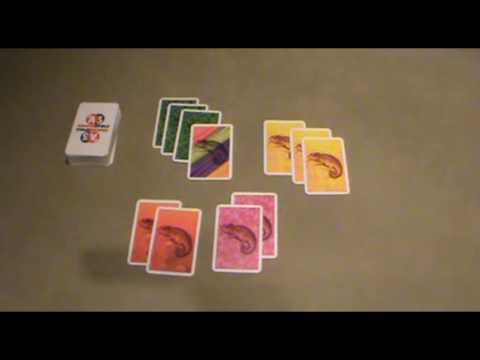
On your turn, you have two choices: either draw a card from the deck and place it in one of the rows on the table, or claim an entire row of cards for your collection. The twist is that rows have a maximum limit of three cards. Once a row is full, someone is forced to take it. And if that row is filled with colors you don't want? Well, you'll either have to swallow the loss or try to 'push' the bad cards onto the next player.
To help you out, there are Jokers, which are incredibly valuable as they act as wildcards for any color, and +2 cards, which provide guaranteed points regardless of your sets—perfect for when your color strategy goes south. Scoring uses a triangular system: the first card is worth 1 point, the second 2, the third 3, and so on. In other words, the larger your set of a specific color, the exponentially more points you earn.
It's a game of 'push your luck' and risk management. You try to build your sets, but you always run the risk of being forced to take a pile of cards that will wreck your final score. It's fast, tense, and perfect for those who enjoy watching their friends struggle with their own choices. Some versions also include two-player variants and expansions that add new cards and limits, making the dynamics even more spicy.
On your turn, you have two choices: either draw a card from the deck and place it in one of the rows on the table, or claim an entire row of cards for your collection. The twist is that rows have a maximum limit of three cards. Once a row is full, someone is forced to take it. And if that row is filled with colors you don't want? Well, you'll either have to swallow the loss or try to 'push' the bad cards onto the next player.
To help you out, there are Jokers, which are incredibly valuable as they act as wildcards for any color, and +2 cards, which provide guaranteed points regardless of your sets—perfect for when your color strategy goes south. Scoring uses a triangular system: the first card is worth 1 point, the second 2, the third 3, and so on. In other words, the larger your set of a specific color, the exponentially more points you earn.
It's a game of 'push your luck' and risk management. You try to build your sets, but you always run the risk of being forced to take a pile of cards that will wreck your final score. It's fast, tense, and perfect for those who enjoy watching their friends struggle with their own choices. Some versions also include two-player variants and expansions that add new cards and limits, making the dynamics even more spicy.
Expansions
Published additional content
Gallery
Box and component photos
Tap any photo to open fullscreen. Photos submitted by the community or publisher.
Rules videos
Learn by watching before you open the box


Best player count
BGG community vote
2
REC
3
REC
4
BEST
5
REC
Soundtrack
Ambience suggested by Melodice
Loading playlist...
Where to Buy
Prices monitored daily
Finding best prices...
Prices unavailable at this time.
Price history — last 6 months (lowest new offer)
Alert enabled!
Join the BoardGamesBot deals group
Get the best board game deals every day — without message spam.
Join the WhatsApp groupGame details
Mechanics, categories, families and credits
Mechanics
Categories
Families
Publisher
ABACUSSPIELE, 999 Games, Brain Games, Corfix, Devir, DV Games, G3, Grow Jogos e Brinquedos, HomoLudicus, Kaissa Chess & Games, Korea Boardgames, Lautapelit.fi, Lifestyle Boardgames Ltd, Möbius Games, Oya, PS-Games, Red Glove, Rio Grande Games, Swan Panasia Co., Ltd.
Designer
Michael Schacht
Artist
Guido Favaro, Michael Schacht, Oksana Svistun
Community
Data from BoardGameGeek
31,750owners
2,283wishlist
314want to play
Frequently Asked Questions
Quick answers before you buy
Is the game hard to learn?
Not at all! The rules are super simple, and you can explain them to your group in under 5 minutes.
How many people can play?
From 2 to 5 players. Some versions have specific rules for 2 players to keep the balance.
How long does a game last?
It's very quick, usually lasting around 30 minutes.
Is it suitable for children?
Yes, since it's visual and has simple rules, it's great for introducing set collection mechanics to kids.
What happens if I collect too many different colors?
That's the danger! You only score positively for your top 3 colors; all other colors subtract points from your total.
Other Games You'll Like
Based on mechanics and theme