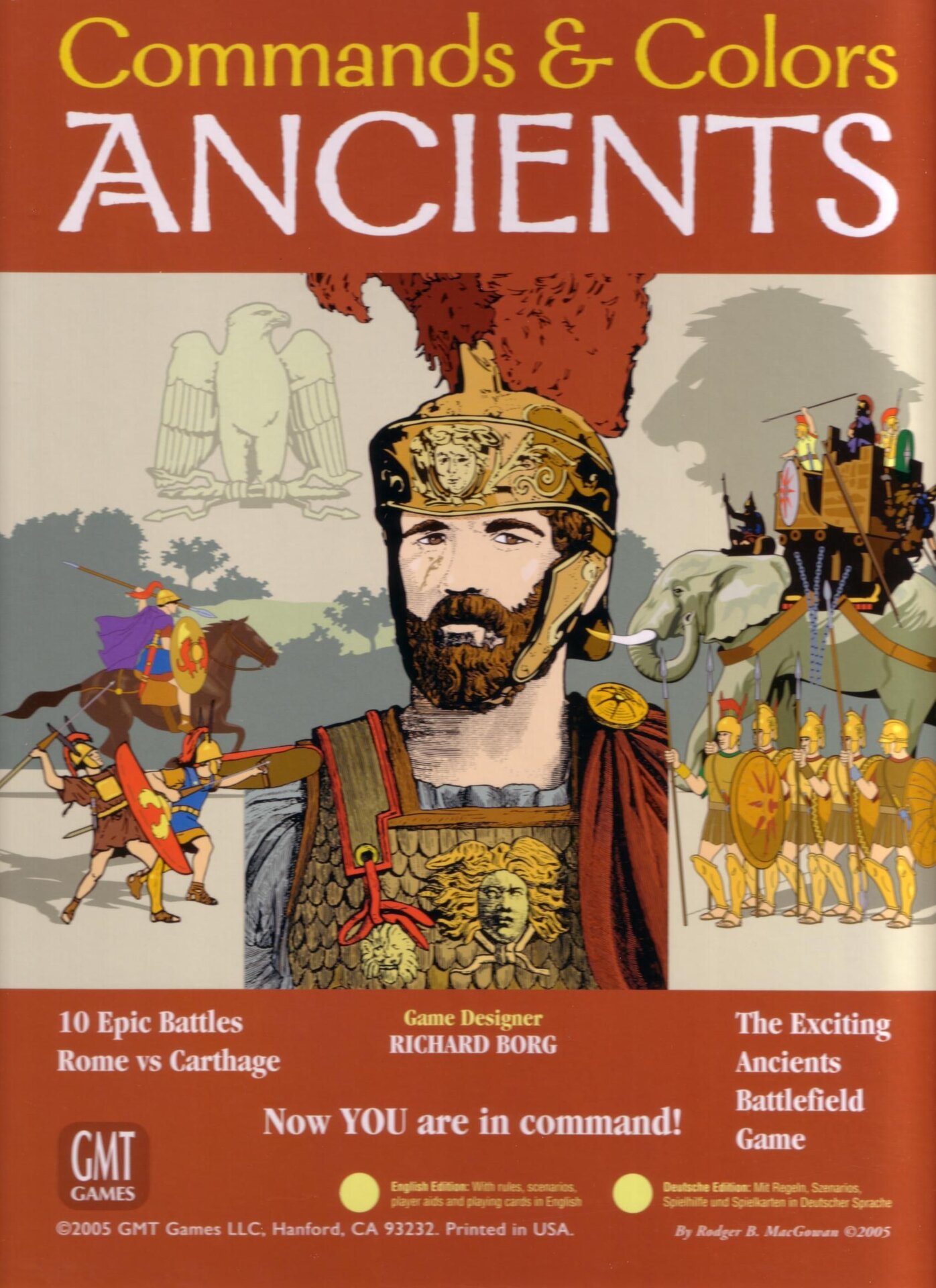
How to Play Commands & Colors: Ancients
GMT Games, Devir, Wargames Club Publishing · Board game · 2006What do you want to do now
Ask anything about Commands & Colors: Ancients: rules, setup, components, complexity, price, or whether it fits your group.
Video: How to Play
Start here, then follow the written guide
Step by step
Game Objective
The goal of the game is to be the first to capture a set number of Victory Banners (usually 5 to 8), depending on the victory conditions of the selected battle. A Victory Banner is earned for each enemy leader or enemy unit completely eliminated from the battlefield. When the last block of a unit or a leader block is eliminated, collect a Victory Banner block. In some scenarios, additional Victory Banners may be earned by capturing certain terrain hexes or other battlefield objectives.
Setup
To set up the game, follow the steps below:
- Select a battle from the scenario book. If this is your first game of Commands & Colors: Ancients, it is recommended to start with the first battle.
- Place the board in the center of the table.
- Place the terrain hexes as indicated on the scenario battle map.
- Separate the blocks by Victory Banners, Carthaginian forces (brown blocks), and Roman forces (gray blocks). Place the unit blocks on the board, matching the positions of the units on the scenario battle map.
- Choose each player’s side and sit accordingly. Each scenario specifies which army is at the top or bottom of the battlefield.
- Shuffle the Command Cards deck and deal the Command Cards to each side, according to the notes in the scenario’s War Council. Keep your Command Cards secret from the opposing player. Place the remaining deck face down next to the battlefield within easy reach of both players.
- Place the seven Battle Dice within reach of both players.
- Review any special rules or victory conditions that apply to the battle.
- The starting player, as indicated in the scenario’s War Council notes, begins play.
Game Flow
The game progresses with players alternating turns until one player reaches the number of Victory Banners specified in the scenario’s victory conditions. During your turn, follow the sequence below:
- Play a Command Card.
- Issue orders to units and leaders.
- Move.
- Fight.
- Draw a new Command Card.
Actions and How to Play
Detail each action available to the player:
- Play a Command Card: At the start of your turn, play a Command Card from your deck. Place it face up in front of you and read it aloud. Command Cards are typically used to order units (and possibly leaders) to move and/or fight.
- Unit and Leader Orders: After playing a Command Card, announce which eligible units or leaders you choose to order. Only those units or leaders may move, fight, or take a special action.
- Movement: Units move sequentially, one ordered unit at a time, in the order you choose. You must complete the movement of one unit before starting another. Additionally, you must complete all unit movements before proceeding to combat.
- Combat: There are two types of combat: Ranged Combat and Melee Combat. An ordered unit may engage in only one type of combat when ordered, even if it is capable of both types.
End of Game and Scoring
Refer to the rulebook for details on this section.
Winning Tips
Refer to the rulebook for details on this section.
More videos
More rules explanations from the community
In English
-
 Rules Breakdown: Commands & Colors: Ancients Part I
-
 Unboxing the Game
-
 Level Up 46: Behind the Theme of C&C: War Elephants and Chariots
-
 How to learn CCA solo using wargameroom
-
 Rules Breakdown: Commands & Colors: Ancients - Part 3
-
 LU47: Behind the Theme, C&C: Hannibal Barca, less known facts
-
 Rules Breakdown: Commands & Colors: Ancients - Part 2
-
 Tutorial for Commands and Colors: Ancients (GMT Games)
-
 Learning CC Ancients using Wargameroom.com
-
 Playing C&C Ancients using CDG Solo System
-
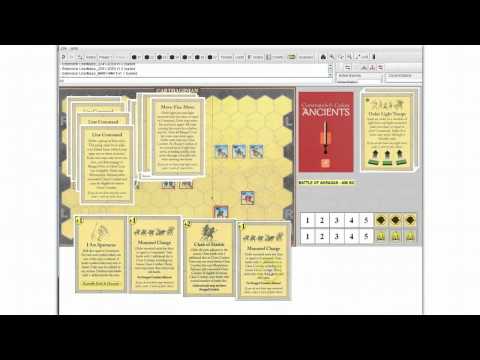 Command and Colors Ancients- The Cards
Rules manual
Official PDF file
Frequently Asked Questions
Quick answers about the rules
What is the objective of Commands & Colors: Ancients?
How do you set up Commands & Colors: Ancients?
How do you play Commands & Colors: Ancients?
How does Commands & Colors: Ancients end, and how do you score?
What are some tips for winning Commands & Colors: Ancients?
Expansions
Published additional content

Other Games You'll Like
Based on mechanics and theme