Confusing Lands
(Web published), Board Game Circus, Envy Born Games · Board game · 2024
1–2 · best 2
Solo
10 min
Weight 1.6/5
Buy · from US$ 5.70
7.4
rating
Ludopedia
7.2
rating
BGG
Our Verdict
RECOMMENDED
Perfect for those who love quick, visual puzzles; the layering mechanic is the star of the show.
Highlights
- Ultra-fast and dynamic gameplay
- Very original layering mechanic
- Super charming thematic visuals
- Easy to learn, hard to master
Keep in mind
- Games might end too quickly
- Lacks depth for hardcore gamers
Rules manual not indexed yet
Upload the PDF rulebook to ask questions about this game with AI.
About the game
What you do in a play session
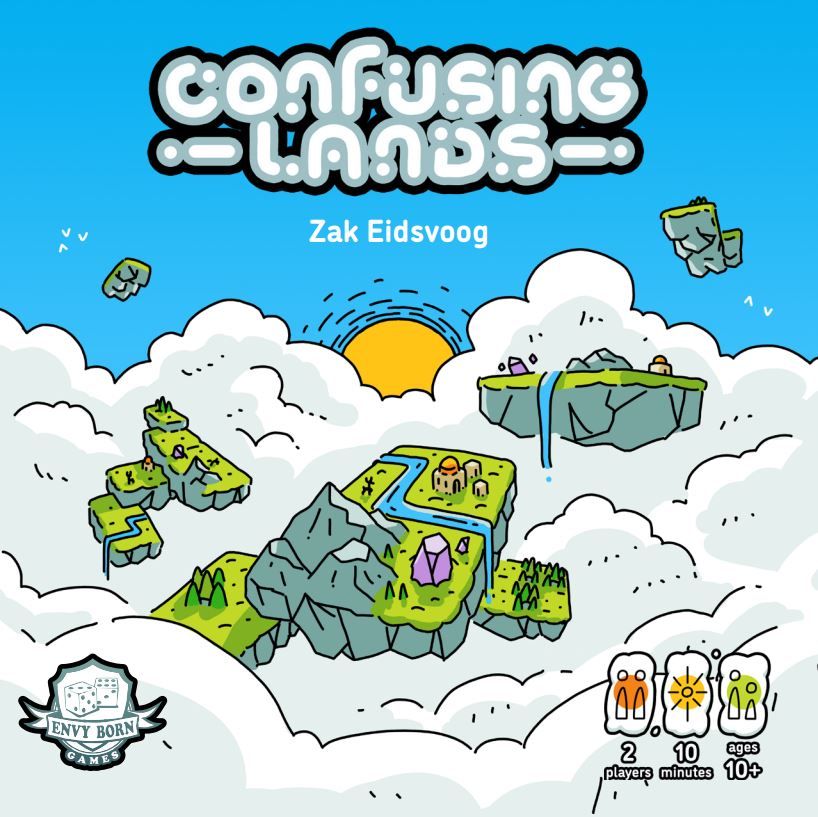
Ever imagined building your own floating archipelago, but with a touch of chaos? In Confusing Lands, that's exactly what you and your opponent do. The game is a fast-paced and visually stimulating microgame where the goal is to construct the most efficient (and curiously confusing) landscape possible. Forget rigid boards; the fun here lies in how you position your cards to create towering mountains, winding rivers, and even encounter some cute deer along the way.
The dynamics are simple yet cunning: each player plays cards containing various symbols and scoring conditions. The trick is in the layering. Since you place cards on top of others, the way you organize these elements determines your final score. It's not just about what you play, but where you play it, as the geometry of your landscape dictates your success.
Once each player has played 8 cards, it's time for the moment of truth. Scoring is a hybrid process: there is a single shared scoring condition that affects both players, in addition to the specific conditions you managed to build into your own area. The winner is whoever best balances the global condition with their own personal strategy. It's the perfect kind of game for those who want something quick that still makes your brain itch a bit while trying to optimize space.
If you enjoy card-based puzzles and want something that doesn't take up the entire afternoon, Confusing Lands is the right choice. It's fast, it's beautiful, and, as the name suggests, delightfully confusing!
The dynamics are simple yet cunning: each player plays cards containing various symbols and scoring conditions. The trick is in the layering. Since you place cards on top of others, the way you organize these elements determines your final score. It's not just about what you play, but where you play it, as the geometry of your landscape dictates your success.
Once each player has played 8 cards, it's time for the moment of truth. Scoring is a hybrid process: there is a single shared scoring condition that affects both players, in addition to the specific conditions you managed to build into your own area. The winner is whoever best balances the global condition with their own personal strategy. It's the perfect kind of game for those who want something quick that still makes your brain itch a bit while trying to optimize space.
If you enjoy card-based puzzles and want something that doesn't take up the entire afternoon, Confusing Lands is the right choice. It's fast, it's beautiful, and, as the name suggests, delightfully confusing!
Gallery
Box and component photos
Tap any photo to open fullscreen. Photos submitted by the community or publisher.
Rules videos
Learn by watching before you open the box


Best player count
BGG community vote
1
REC
2
BEST
Soundtrack
Ambience suggested by Melodice
Loading playlist...
Where to Buy
Prices monitored daily
Finding best prices...
Prices unavailable at this time.
Price history — last 6 months (lowest new offer)
As an Amazon Associate I earn from qualifying purchases. Prices and availability subject to change.
Alert enabled!
Join the BoardGamesBot deals group
Get the best board game deals every day — without message spam.
Join the WhatsApp groupGame details
Mechanics, categories, families and credits
Mechanics
Categories
Families
Publisher
(Web published), Board Game Circus, Envy Born Games, TLAMA games
Designer
Zak Eidsvoog
Artist
Zak Eidsvoog
Community
Data from BoardGameGeek
1,731owners
611wishlist
56want to play
Frequently Asked Questions
Quick answers before you buy
How long does a game last?
It's super fast! A game takes about 10 minutes, making it an ideal filler between larger games.
Can I play it solo?
Yes, the game includes solitaire rules for those who want to test their puzzle skills without opponents.
Is it a complex game?
Not really, the weight is low (approx. 1.6). The rules are simple, but the strategy of where to place each card provides the challenge.
Do I need a lot of table space?
Nope, since it's a layering card game, it takes up very little space. It fits anywhere!
Who would you recommend this game to?
Couples, friends who enjoy quick games, or anyone who loves building patterns and visual puzzles.
Other Games You'll Like
Based on mechanics and theme