Darjeeling — Price & soundtrack
ABACUSSPIELE, Corfix, Rio Grande Games · Board game · 2007
2–5 · best 4
60 min
Weight 2.2/5
Buy · from US$ 31.95
7.0
rating
Ludopedia
6.6
rating
BGG
Our Verdict
RECOMMENDED
If you enjoy economic games with a dash of racing and direct interaction, Darjeeling might just be your next favorite tea! It's a clever game of management and timing.
Highlights
- Dynamic market speculation
- Intense player interaction
- Exciting point race
- 'Barge' mechanic is innovative
- Guaranteed replayability
Keep in mind
- Runaway leader possible
- Requires constant vigilance
- Theme might be niche
Rules manual not indexed yet
Upload the PDF rulebook to ask questions about this game with AI.
About the game
What you do in a play session
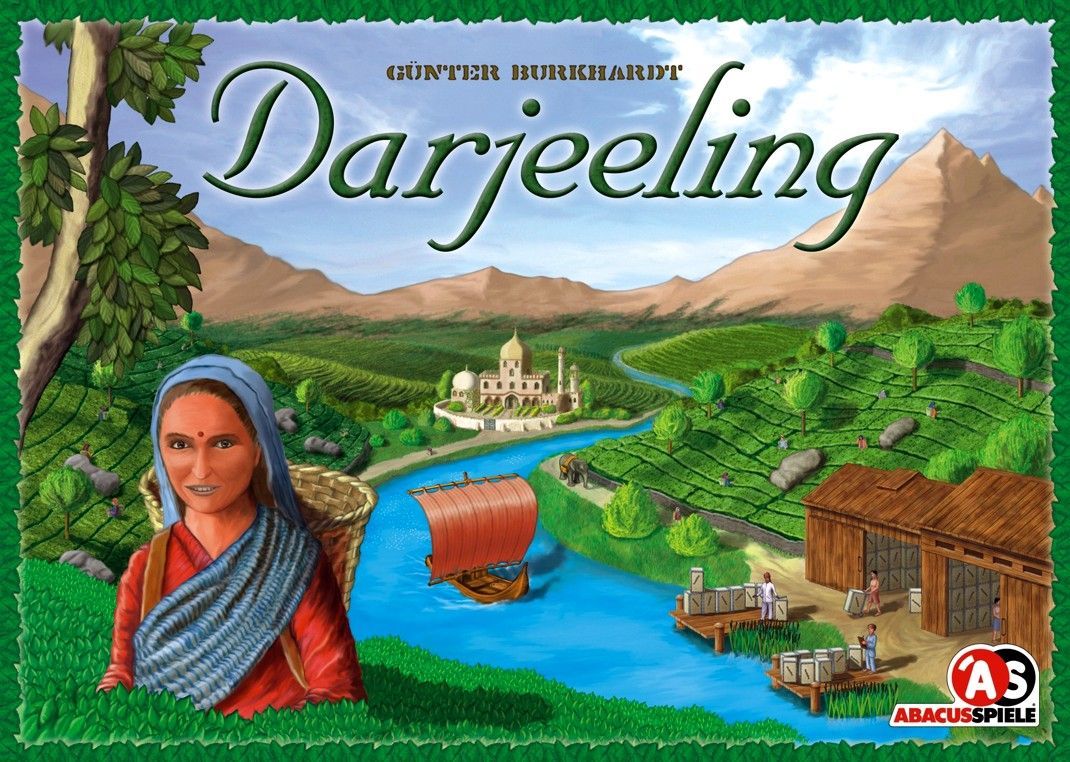
In Darjeeling, players embark on a strategic journey through the world of tea, competing to collect and ship the freshest and most valued varieties. The game unfolds across two main board areas. In the first, a grid represents tea plantations, with squares containing half-crates of four distinct varieties. Each player moves their marker, collecting one half-crate per turn, following simple but competitive movement rules to secure the best spaces. When a player accumulates enough halves of a single color to form whole crates, they can make a tea shipment.
Shipments yield victory points in three crucial ways. First, there's a 'demand' bonus that varies based on how long it's been since that variety was last shipped, potentially up to 6 VPs. Second, shipments of at least four crates grant a flat bonus of 1 VP per crate. Most pivotally, however, are the VPs awarded at the beginning of subsequent turns, depending on your shipment's position on a 'barge' of recent shipments. Newer shipments sit at the top of the column and pay higher VP multipliers, but are pushed down as other players make their own shipments. This creates a constant race and tension among players, who are incentivized to make shipments, even smaller ones, to keep their teas at the top and deny points to opponents. The game ends as soon as a player reaches 100 victory points, requiring constant vigilance to prevent a runaway leader.
Shipments yield victory points in three crucial ways. First, there's a 'demand' bonus that varies based on how long it's been since that variety was last shipped, potentially up to 6 VPs. Second, shipments of at least four crates grant a flat bonus of 1 VP per crate. Most pivotally, however, are the VPs awarded at the beginning of subsequent turns, depending on your shipment's position on a 'barge' of recent shipments. Newer shipments sit at the top of the column and pay higher VP multipliers, but are pushed down as other players make their own shipments. This creates a constant race and tension among players, who are incentivized to make shipments, even smaller ones, to keep their teas at the top and deny points to opponents. The game ends as soon as a player reaches 100 victory points, requiring constant vigilance to prevent a runaway leader.
Gallery
Box and component photos
Tap any photo to open fullscreen. Photos submitted by the community or publisher.
Rules videos
Learn by watching before you open the box
In English

Best player count
BGG community vote
2
OK
3
REC
4
BEST
5
REC
Soundtrack
Ambience suggested by Melodice
Loading playlist...
Where to Buy
Prices monitored daily
Finding best prices...
Prices unavailable at this time.
Price history — last 6 months (lowest new offer)
Alert enabled!
Join the BoardGamesBot deals group
Get the best board game deals every day — without message spam.
Join the WhatsApp groupGame details
Mechanics, categories, families and credits
Mechanics
Categories
Families
Publisher
ABACUSSPIELE, Corfix, Rio Grande Games
Designer
Günter Burkhardt
Artist
Christof Tisch
Community
Data from BoardGameGeek
1,496owners
213wishlist
52want to play
Frequently Asked Questions
Quick answers before you buy
What is the average playtime for a game of Darjeeling?
A game of Darjeeling typically lasts between 60 and 90 minutes, depending on the number of players and their familiarity with the rules. It's a perfect length for a strategic experience without overstaying its welcome.
How many players can play Darjeeling?
Darjeeling is designed for 2 to 5 players. The dynamics shift a bit with player count, being more tactical with fewer players and more chaotic with more.
What is the complexity level of the game?
The game is considered medium complexity (BGG weight 2.205/5). The basic rules are easy to learn, but the strategic depth and the interaction of victory points as a resource add interesting layers.
Is Darjeeling suitable for beginners or experienced players?
It's a good fit for intermediate players looking for a strategic challenge, but it can also be enjoyed by beginners who want to step up from introductory games, especially if playing with someone who already knows the ropes.
What are the main components of the game?
You'll find a modular board with the tea plantation grid, player markers, cubes for tea shipments, and possibly some player screens to keep your information secret. All well-produced to immerse you in the theme.
Is there much player interaction in Darjeeling?
Yes, interaction is a strong point! You'll constantly be competing for spaces on the board, speculating on tea demand, and most importantly, trying to push your opponents' shipments off the 'barge' to deny them points. It's quite direct and competitive.
Other Games You'll Like
Based on mechanics and theme