Isla Dorada
Funforge, Arclight Games, Delta Vision Publishing · Board game · 2010
3–6 · best 4
60–90 min
Weight 2.2/5
Buy · from US$ 35.08
7.3
rating
Ludopedia
6.7
rating
BGG
Our Verdict
RECOMMENDED
Perfect for those who love direct interaction and 'tug-of-war' games with an adventure theme. The highlight is the struggle for group control.
Highlights
- Very high player interaction
- Simple rules and fast learning
- Engaging negotiation dynamics
- Well-implemented exploration theme
Keep in mind
- Card luck can be frustrating
- Flow depends on group energy
Rules manual not indexed yet
Upload the PDF rulebook to ask questions about this game with AI.
About the game
What you do in a play session
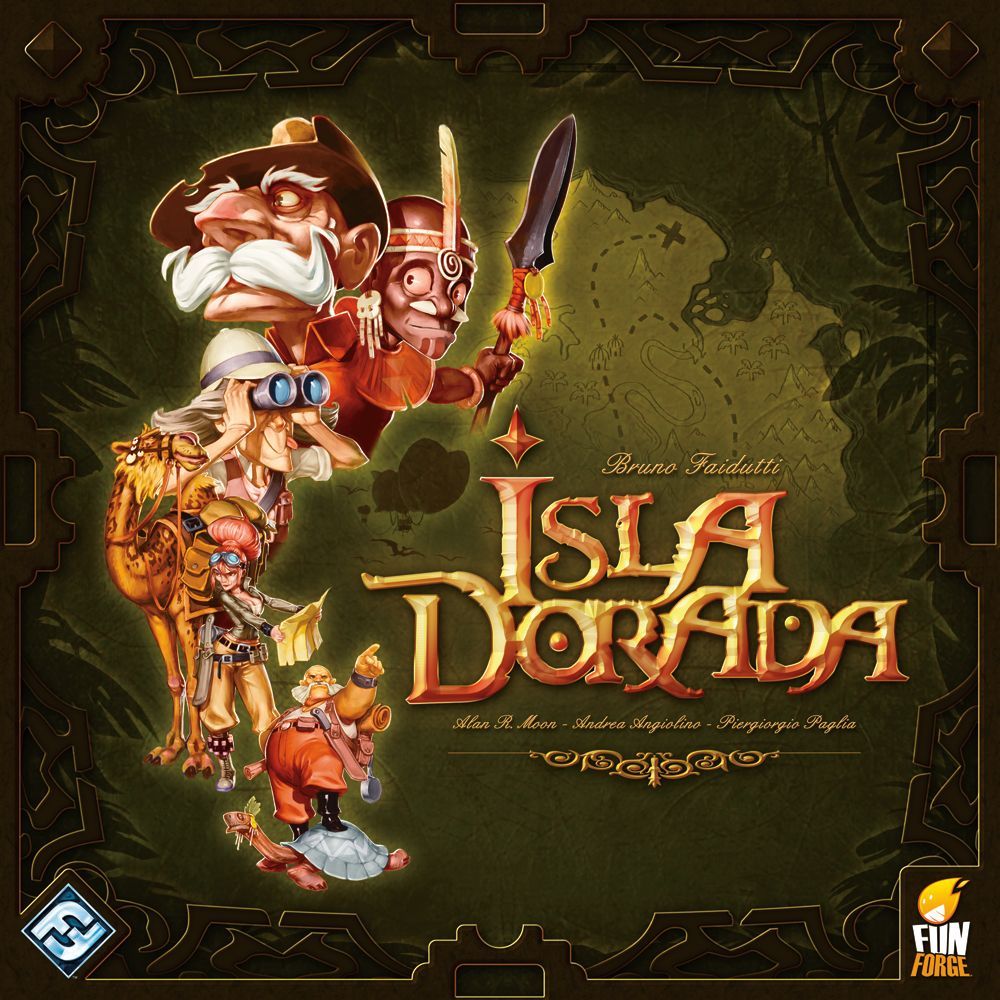
Picture this: it's the 1930s, and your zeppelin has just crashed on a mysterious land known as Isla Dorada. The upside? The island is teeming with sumptuous treasures left behind by ancient, powerful civilizations. The downside? The terrain is inhospitable, riddled with curses, and your fellow explorers are just as greedy as you are. To survive, you all agree to travel as a single group, but don't let the teamwork fool you—this is a race for personal glory.
In Isla Dorada, players move a single shared pawn representing the entire expedition. The core of the game lies in hand management. You'll collect various cards—movements, actions, destinations, and curses—building your hand turn by turn. The goal is to orchestrate the expedition's path through a series of bids and negotiations. You want to steer the group toward the treasures your maps point to, while simultaneously blocking your opponents' objectives or avoiding cursed locations.
It's a constant tug-of-war. You strive to guide the group to your preferred destination, but if an opponent has better cards or a more convincing argument during negotiations, you might end up heading exactly where they want. The tension ramps up as the game progresses because time is limited, and every card played is a critical decision. You'll need a mix of strategic resource management, a bit of mischief to thwart your rivals, and some luck to avoid the island's perils. While the rules are straightforward and can be learned in minutes, the rich player interaction ensures that no two games feel the same. Will you escape the island as the wealthiest explorer, or will you become just another legend lost in the jungle?
In Isla Dorada, players move a single shared pawn representing the entire expedition. The core of the game lies in hand management. You'll collect various cards—movements, actions, destinations, and curses—building your hand turn by turn. The goal is to orchestrate the expedition's path through a series of bids and negotiations. You want to steer the group toward the treasures your maps point to, while simultaneously blocking your opponents' objectives or avoiding cursed locations.
It's a constant tug-of-war. You strive to guide the group to your preferred destination, but if an opponent has better cards or a more convincing argument during negotiations, you might end up heading exactly where they want. The tension ramps up as the game progresses because time is limited, and every card played is a critical decision. You'll need a mix of strategic resource management, a bit of mischief to thwart your rivals, and some luck to avoid the island's perils. While the rules are straightforward and can be learned in minutes, the rich player interaction ensures that no two games feel the same. Will you escape the island as the wealthiest explorer, or will you become just another legend lost in the jungle?
Gallery
Box and component photos
Tap any photo to open fullscreen. Photos submitted by the community or publisher.
Best player count
BGG community vote
3
REC
4
BEST
5
BEST
6
REC
Soundtrack
Ambience suggested by Melodice
Loading playlist...
Where to Buy
Prices monitored daily
Finding best prices...
Prices unavailable at this time.
Price history — last 6 months (lowest new offer)
As an Amazon Associate I earn from qualifying purchases. Prices and availability subject to change.
Alert enabled!
Join the BoardGamesBot deals group
Get the best board game deals every day — without message spam.
Join the WhatsApp groupGame details
Mechanics, categories, families and credits
Mechanics
Categories
Families
Publisher
Funforge, Arclight Games, Delta Vision Publishing, Fantasy Flight Games, Heidelberger Spieleverlag, KADABRA
Designer
Alan R. Moon, Andrea Angiolino, Bruno Faidutti, Pier Giorgio Paglia
Artist
Georges Bouchelaghem, Xavier Gueniffey Durin
Community
Data from BoardGameGeek
3,375owners
533wishlist
97want to play
Frequently Asked Questions
Quick answers before you buy
Is the game cooperative since everyone moves the same pawn?
Nope! While you move one pawn together, it's every explorer for themselves. The goal is individual: the one who collects the most valuable treasures wins.
Is it hard to learn?
Not at all! The rules are very straightforward and can be explained in a few minutes, making it great for groups who dislike complex manuals.
How many players can join?
The game supports 3 to 6 players. The more people at the table, the more chaotic and fun the negotiations become.
How long does a game take?
Usually between 60 and 90 minutes, depending on how intense the bargaining between explorers gets.
Who is this game for?
Anyone who enjoys high-interaction games, bidding, and that light 'betrayal' vibe where you manipulate the game's direction for your own gain.
Other Games You'll Like
Based on mechanics and theme