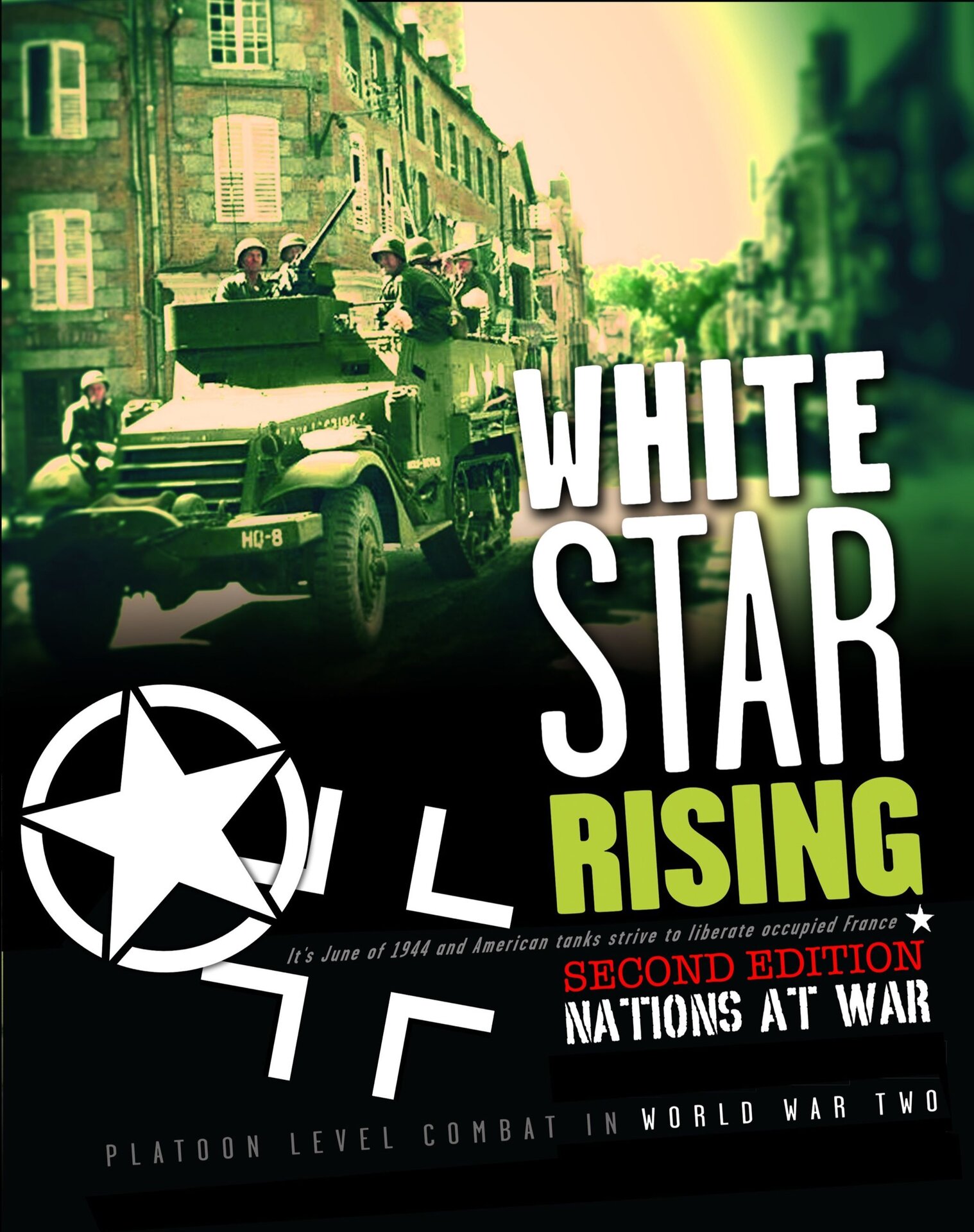
If you're a fan of tactical wargames that don't drown you in rules, Nations at War: White Star Rising is an excellent choice. It delivers a World War II platoon-level combat simulation with a dynamic and unpredictable activation system that keeps you on the edge of your seat. The experience is one of tense, strategic confrontation, where every decision matters, and the luck (or unluck) of the chit-pull can change the tide of battle.
thumb_up
Highlights
check_circle
Streamlined, efficient rules
check_circle
Unpredictable activation system
check_circle
Tactical platoon combat
check_circle
Crucial infantry role
check_circle
Realistic combat simulations
warning_amber
Keep in mind
report_problem
Two-player only
report_problem
Initial learning curve
report_problem
Relies on chit-pull luck
upload_file
Rules manual not indexed yetUpload the PDF rulebook to ask questions about this game with AI.
info
About the game
What you do in a play session
Nations at War: White Star Rising plunges you headfirst into the intense platoon-level combat of World War II, introducing Lock 'n Load Publishing's Nations at War (NAW) game system. If you're into wargames that get straight to the point but don't skimp on tactical depth, this is your game. It packs everything you'd expect from platoon-level conflict: iconic tanks like M-10 Wolverines and Shermans against German Panthers and Tigers, infantry that truly makes a difference (not just cannon fodder!), command and control, air support, and even amphibious landings. And the best part? All this is covered in just eight pages of rules, two fewer than its predecessor, World at War. Units represent platoons of vehicles and infantry, from paratroopers to Volksgrenadiers, and can utilize support weapons like heavy machine guns and flamethrowers for devastating effects. The big innovation of the NAW system is how it tosses traditional turn-based activation out the window. Units are grouped into formations, led by a headquarters, and can only activate if they're within HQ range. Activation order is determined by a chit-pull system, where well-trained formations might activate multiple times in the same turn, while others might not even get a chance to act. Tension is constant, as the turn can end at any moment with the drawing of the second 'end turn' chit. Combat is resolved with dice rolls: a unit's firepower determines how many dice are rolled to hit, and armor plus terrain define defense. Hits cause disruption, reduction, or elimination of the unit. And if things get heated, you can go for close assault, with infantry being especially effective against unsupported armor. Get ready for quick decisions and plenty of adrenaline!
photo_library
Gallery
Box and component photos
11 photos · from the community
01 / 11
Tap any photo to open fullscreen. Photos submitted by the community or publisher.
Country: BelgiumCountry: FranceCountry: GermanyDigital Implementations: SteamPlayers: Games with expansions that add solo playPlayers: Two-Player Only GamesSeries: Nations at War (Lock 'n Load Publishing)
businessPublisherLock 'n Load Publishing, LLC., Spielworxx
editDesignerMark H. Walker
paletteArtistMarc von Martial
groups_2
Community
Data from BoardGameGeek
873owners
127wishlist
37want to play
quiz
Frequently Asked Questions
Quick answers before you buy
6 questions
How many players can play Nations at War: White Star Rising? expand_more
This game is exclusively designed for two players, offering a direct and strategic confrontation.
What is the average playtime for a match? expand_more
A game of Nations at War: White Star Rising can last from 45 minutes to 4 hours, depending on the scenario and players' familiarity with the rules.
Is it a complex game for wargame beginners? expand_more
Despite being a wargame, it stands out for having only eight pages of core rules, making it more accessible than many others in the genre. The complexity lies more in tactical decisions than in memorizing rules.
What are the main components of the game? expand_more
You'll find a hexagonal grid board, chits representing vehicle and infantry platoons, support weapon chits, various markers, and, of course, dice for resolving combat.
What makes the activation system different? expand_more
The chit-pull activation system is the key differentiator. It adds an element of uncertainty, as the order and frequency with which your formations activate are random, requiring constant adaptation.
Are there expansions for this game? expand_more
Yes, White Star Rising is part of the Nations at War series, which has other boxes and expansions that cover different theaters of war and add new elements to the system.



 Celles: The Ardennes, December 23-27, 1944
 Where Eagles Dare: The Battle for Hell's Highway
 Tank on Tank
 The Greatest Day: Sword, Juno, and Gold Beaches
 France '40
 The Devil's Cauldron: The Battles for Arnhem and Nijmegen
 Barbarossa: Army Group Center, 1941
 Bastogne: Screaming Eagles Under Siege 18-27 Dec '44