New England
Goldsieber Spiele, Überplay · Board game · 2003
3–4 · best 4
90 min
Weight 2.5/5
Buy · from US$ 49.99
—
rating
Ludopedia
6.5
rating
BGG
Our Verdict
FOR GENRE FANS
A classic territory management game for those who love auctions and map expansion.
Highlights
- Tense auction mechanics
- Well-balanced resource management
- Satisfying pattern building
- Well-applied historical theme
Keep in mind
- Pacing might be slow for beginners
- Requires high attention to patterns
Rules manual not indexed yet
Upload the PDF rulebook to ask questions about this game with AI.
About the game
What you do in a play session
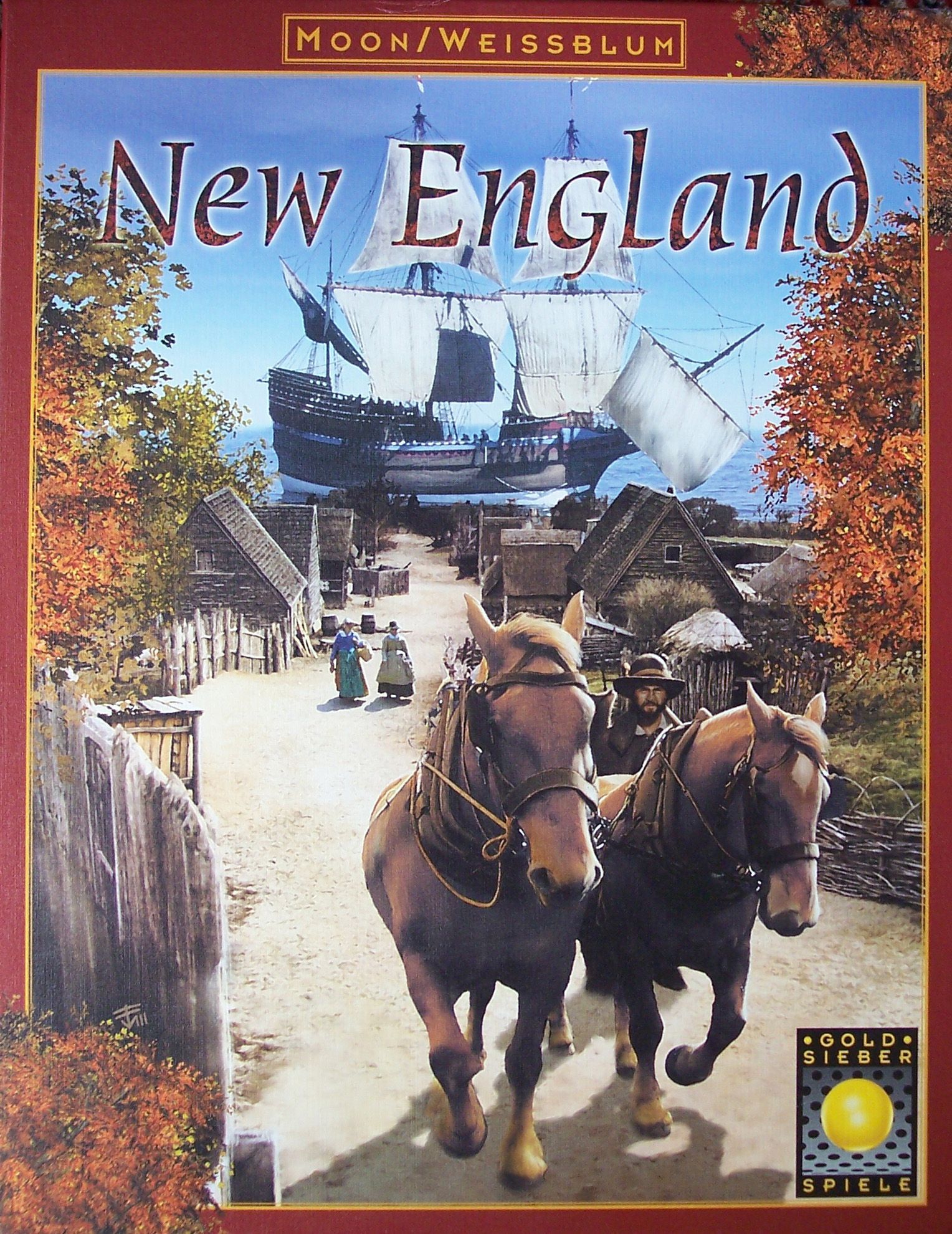
If you enjoy classic colony management and want to feel like a 17th-century pioneer, New England is the place for you! Here, you take on the role of a settler family with a clear mission: expand your territory and transform raw land into a thriving economy. The game takes place on a 98-square grid, and your goal is to buy as much land as possible and develop it to score points. There are three types of terrain: settlements, cropland, and pasture. You start with some pieces of each, but the real fun begins when the auctions start.
The dynamic is quite intense: each round, players bid to buy new land tiles or development cards. And here's the kicker: the highest bidder doesn't just secure the purchase, they also decide what will be available in the next round's auction! This creates a tense balance between spending your shillings now or saving them for later. You can also invest in development cards to attract pilgrims (who generate money), build barns (to store cards), or ships (to boost the auction).
But simply buying land isn't enough; you have to know how to use it. To develop a tile, you must follow specific patterns, such as a triangle of cropland or a square of settlements. If you manage to complete complex patterns, your score will skyrocket! The game ends when the auction resources start running low, and in the end, the player with the most victory points wins. It's a game of pure strategy, where territory planning and money management are the keys to success. Get your family ready and happy settling!
The dynamic is quite intense: each round, players bid to buy new land tiles or development cards. And here's the kicker: the highest bidder doesn't just secure the purchase, they also decide what will be available in the next round's auction! This creates a tense balance between spending your shillings now or saving them for later. You can also invest in development cards to attract pilgrims (who generate money), build barns (to store cards), or ships (to boost the auction).
But simply buying land isn't enough; you have to know how to use it. To develop a tile, you must follow specific patterns, such as a triangle of cropland or a square of settlements. If you manage to complete complex patterns, your score will skyrocket! The game ends when the auction resources start running low, and in the end, the player with the most victory points wins. It's a game of pure strategy, where territory planning and money management are the keys to success. Get your family ready and happy settling!
Gallery
Box and component photos
Tap any photo to open fullscreen. Photos submitted by the community or publisher.
Best player count
BGG community vote
3
REC
4
BEST
Soundtrack
Ambience suggested by Melodice
Loading playlist...
Where to Buy
Prices monitored daily
Finding best prices...
Prices unavailable at this time.
Price history — last 6 months (lowest new offer)
Alert enabled!
Join the BoardGamesBot deals group
Get the best board game deals every day — without message spam.
Join the WhatsApp groupGame details
Mechanics, categories, families and credits
Mechanics
Categories
Families
Publisher
Goldsieber Spiele, Überplay
Designer
Aaron Weissblum, Alan R. Moon
Artist
Franz Vohwinkel
Community
Data from BoardGameGeek
2,416owners
142wishlist
41want to play
Frequently Asked Questions
Quick answers before you buy
How complex is the game?
It's an intermediate/expert level game, requiring attention to tile patterns and money management.
How many players can play?
The game is ideal for 3 to 4 players.
How long does a game last?
The average is about 90 minutes per session.
Is it very competitive?
Yes, the auctions make the struggle for land and cards quite direct among players.
Do I need extra components?
No, the game is complete with its board and pieces.
Other Games You'll Like
Based on mechanics and theme