Pit — Price & soundtrack
(Self-Published), Arclight Games, Clipper · Board game · 1903
3–8 · best 8
30–90 min
Weight 1.2/5
Buy · from US$ 0.25
7.8
rating
Ludopedia
6.4
rating
BGG
What do you want to do now
Ask questions about the game
Ask anything about Pit: rules, setup, components, complexity, price, or whether it fits your group.
Example questions
Continue this chat in the Assistant
Soundtrack
Learn to play
Step by step, manual and videos
Our Verdict
RECOMMENDED
Perfect for those who love loud games and total interaction; the chaos is the best part!
Highlights
- Intense and frenetic social interaction
- Extremely simple and fast rules
- Works great with large groups
- Fun tension of the race against time
Keep in mind
- Can be too noisy for some players
- Lack of complex strategic depth
About the game
What you do in a play session
Imagine the chaos of an early 20th-century stock exchange floor, where everyone is shouting at once to secure the best deal. That is exactly the vibe of Pit! Originally released in 1903, this game is an absolute classic of real-time negotiation. The objective is simple, but the execution is pure adrenaline: you need to collect all the cards of a single commodity (such as wheat or flax) before anyone else does.
Forget etiquette and organized turns. Here, the rule is agitation. You offer trades by shouting the number of cards you want to swap—for example, "Two! Two! Two!"—but you never reveal which commodity you are offering. The fun lies in the chaos of trying to get rid of what you don't need and snagging what's missing to complete your set, all while trying not to be tricked by your opponents. Once you finally achieve a monopoly on a commodity, you ring the bell (if available) and shout "Corner on Wheat!" (or whatever commodity you collected) to end the round and score points.
Some commodities are more valuable than others, so the strategy involves deciding whether to take the easiest path or the most profitable one. Later versions added the Bull and Bear cards, which act as wildcards or penalties, adding more spice to the competition. With a curious history involving patent disputes and even the involvement of a famous psychic, Pit has survived the test of time because it delivers exactly what every party game needs: laughter, noise, and that sense of urgency that gets everyone hyped. It's the perfect game to break the ice in large groups and see who can keep their cool in the middle of the storm.
Forget etiquette and organized turns. Here, the rule is agitation. You offer trades by shouting the number of cards you want to swap—for example, "Two! Two! Two!"—but you never reveal which commodity you are offering. The fun lies in the chaos of trying to get rid of what you don't need and snagging what's missing to complete your set, all while trying not to be tricked by your opponents. Once you finally achieve a monopoly on a commodity, you ring the bell (if available) and shout "Corner on Wheat!" (or whatever commodity you collected) to end the round and score points.
Some commodities are more valuable than others, so the strategy involves deciding whether to take the easiest path or the most profitable one. Later versions added the Bull and Bear cards, which act as wildcards or penalties, adding more spice to the competition. With a curious history involving patent disputes and even the involvement of a famous psychic, Pit has survived the test of time because it delivers exactly what every party game needs: laughter, noise, and that sense of urgency that gets everyone hyped. It's the perfect game to break the ice in large groups and see who can keep their cool in the middle of the storm.
Gallery
Box and component photos
Tap any photo to open fullscreen. Photos submitted by the community or publisher.
Rules videos
Learn by watching before you open the box


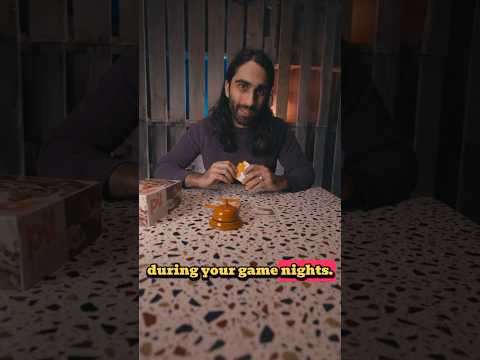

Rules manual
Official PDF file
Best player count
BGG community vote
3
OK
4
REC
5
REC
6
BEST
7
BEST
8
BEST
Soundtrack
Ambience suggested by Melodice
Loading playlist...
Where to Buy
Prices monitored daily
Finding best prices...
Prices unavailable at this time.
Price history — last 6 months (lowest new offer)
Alert enabled!
Join the BoardGamesBot deals group
Get the best board game deals every day — without message spam.
Join the WhatsApp groupGame details
Mechanics, categories, families and credits
Mechanics
Categories
Families
Publisher
(Self-Published), Arclight Games, Clipper, Copp Clark Publishing Company, Crown & Andrews Ltd., Editorial Dos Pasos, Editrice Giochi, Fractal Juegos, Fundex, Grimaud, Hasbro, Holdson, John Waddington Ltd., Juegos Si-Lo, Kaissa Chess & Games, Korea Boardgames, Lighthouse Games, Nordic Games ehf, Parker Brothers, Repos Production, Russimco Games, Schmidt Spiele, Spear's Games, Top Cards, Waddingtons, Winning Moves Games (USA), Yetem S.A.
Designer
Edgar Cayce, George S. Parker, Harry Gavitt
Artist
Andrea Trewhela, Nick the Rat, Olivier Fagnère, Paul Couture, Paul T., Peekasso, Randy Asher, Thoren
Community
Data from BoardGameGeek
20,102owners
747wishlist
73want to play
Frequently Asked Questions
Quick answers before you buy
Is the game very complex?
Not at all! The rules are super simple, and you can learn how to play in less than five minutes.
How many people can play?
The game shines with groups of 3 to 8 people, making it ideal for parties.
How long does a game last?
Rounds are fast, and the whole game usually lasts between 30 and 90 minutes, depending on the target score.
Do I need a bell to play?
The bell is iconic and adds a lot of fun, but it's optional; you can just shout to announce your victory.
Is it suitable for children?
Yes, as long as they don't mind the shouting and the general commotion of the game!
Other Games You'll Like
Based on mechanics and theme