Plunder — Prices
R&R Games · Board game · 2013
2–6 · best 4, 5
30–45 min
Weight 2.0/5
Buy · from US$ 20.95
—
rating
Ludopedia
5.8
rating
BGG
Our Verdict
RECOMMENDED
A fast-paced, thematic deduction game where the goal is to steal your friends' treasure before they steal yours!
Highlights
- Quick and sharp deduction
- Fun pirate theme
- Dynamic and fast sessions
- Easy to learn and play
Keep in mind
- Can get quite competitive
- Relies on player attention
Rules manual not indexed yet
Upload the PDF rulebook to ask questions about this game with AI.
About the game
What you do in a play session
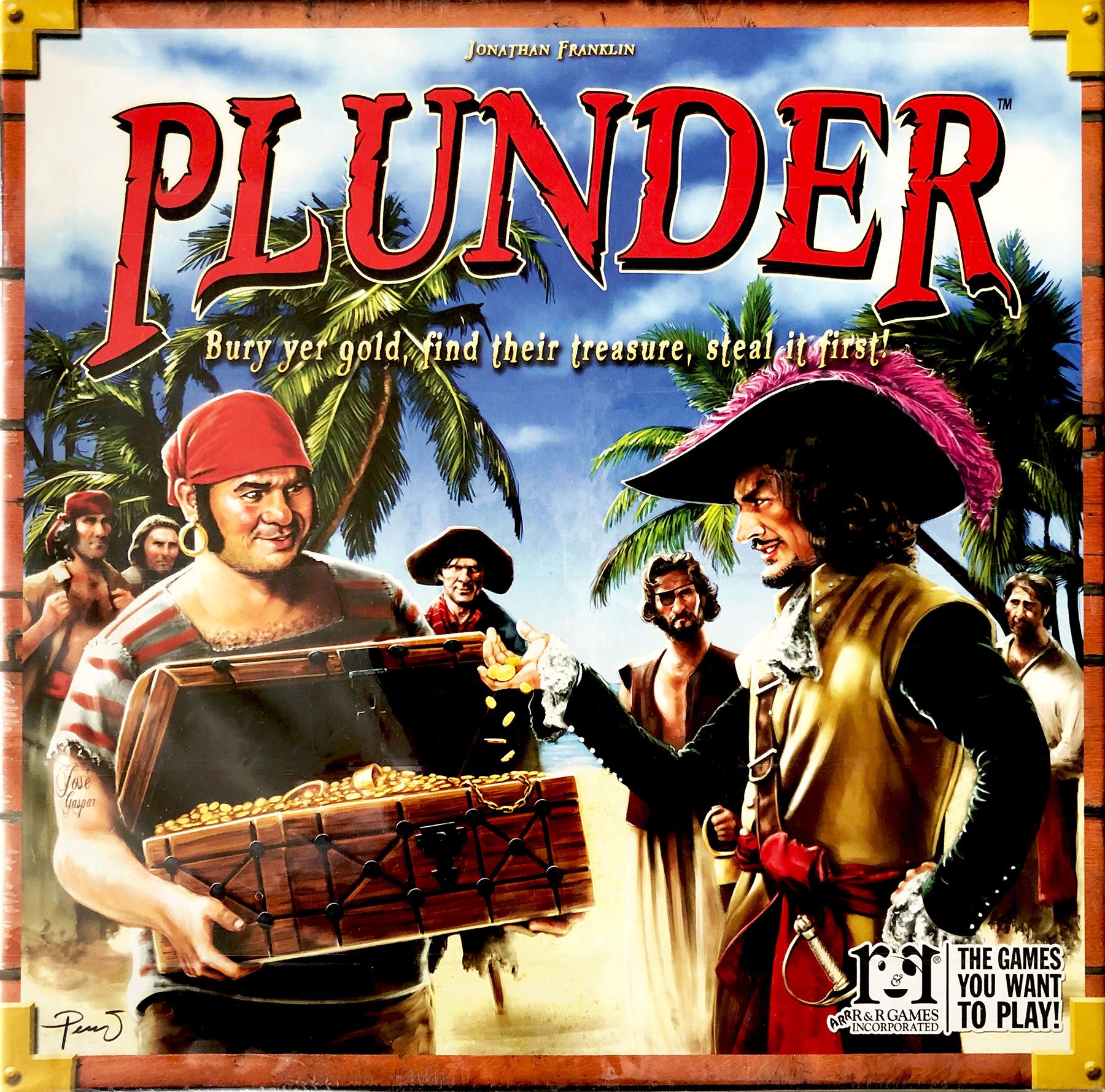
Grab your eye patch and get ready to loot! In Plunder, you step into the shoes of a pirate captain who has just discovered an incredible treasure, but there's a catch: everyone else at the table is eyeing your gold too. The goal is simple but requires a sharp mind: you must figure out the three landmarks (cards) that mark the location of your opponents' treasures to steal them. But don't think it's just a walk in the park; if you are the first to guess the combination, you take the biggest share, but if you arrive later, you'll have to settle for whatever scraps are left!
The gameplay flows through a dynamic system of questions and answers. Each player starts with a unique set of three colored and numbered cards. On your turn, you flip over several question cards that attempt to identify these combinations. Your opponents respond with a simple 'Aye' (yes) or 'Nay' (no) to confirm if they hold the cards in question. It's a game of bluffing and constant observation. Besides trying to rob others, you also need to protect your own treasure. If no one manages to crack your combination, you secure a solid victory point score at the end. If they do, well, you lose a chunk of what you've earned. The winner is the player who accumulates the most treasure, combining what they kept with what they successfully looted from other captains. It's a frantic 15-round race where memory and deduction are your best weapons to leave the table with the fullest chest!
The gameplay flows through a dynamic system of questions and answers. Each player starts with a unique set of three colored and numbered cards. On your turn, you flip over several question cards that attempt to identify these combinations. Your opponents respond with a simple 'Aye' (yes) or 'Nay' (no) to confirm if they hold the cards in question. It's a game of bluffing and constant observation. Besides trying to rob others, you also need to protect your own treasure. If no one manages to crack your combination, you secure a solid victory point score at the end. If they do, well, you lose a chunk of what you've earned. The winner is the player who accumulates the most treasure, combining what they kept with what they successfully looted from other captains. It's a frantic 15-round race where memory and deduction are your best weapons to leave the table with the fullest chest!
Gallery
Box and component photos
Tap any photo to open fullscreen. Photos submitted by the community or publisher.
Best player count
BGG community vote
2
OK
3
REC
4
BEST
5
BEST
6
REC
Soundtrack
Ambience suggested by Melodice
Loading playlist...
Where to Buy
Prices monitored daily
Finding best prices...
Prices unavailable at this time.
Price history — last 6 months (lowest new offer)
Alert enabled!
Join the BoardGamesBot deals group
Get the best board game deals every day — without message spam.
Join the WhatsApp groupGame details
Mechanics, categories, families and credits
Categories
Families
Publisher
R&R Games
Designer
Jonathan Franklin
Artist
Michael Perry
Community
Data from BoardGameGeek
Frequently Asked Questions
Quick answers before you buy
How long does a game last?
Usually between 30 to 45 minutes, depending on the number of players.
What is the recommended age?
Recommended for ages 8 or 10+, due to the need for logical deduction.
Is the game very complex?
Not at all! It has simple rules, perfect for quick and straightforward fun.
How many players can play?
2 to 6 players; with more people, the race for treasure gets even more intense.
What do I need to play?
Just the game's deck of cards. It's compact and very easy to carry.
Other Games You'll Like
Based on mechanics and theme