Rumble in the House — Price & soundtrack
Flatlined Games, asmodee, Heidelberger Spieleverlag · Board game · 2011
3–6 · best 6
20 min
Weight 1.1/5
Buy · from US$ 12.63
8.0
rating
Ludopedia
6.1
rating
BGG
Our Verdict
RECOMMENDED
A chaotic and fast party game, perfect for those who love bluffing and laughing with family.
Highlights
- Super fun bluffing
- Ultra fast rounds
- Easy to teach
- Great for groups
Keep in mind
- Very light strategy
- A bit too short for some
Rules manual not indexed yet
Upload the PDF rulebook to ask questions about this game with AI.
About the game
What you do in a play session
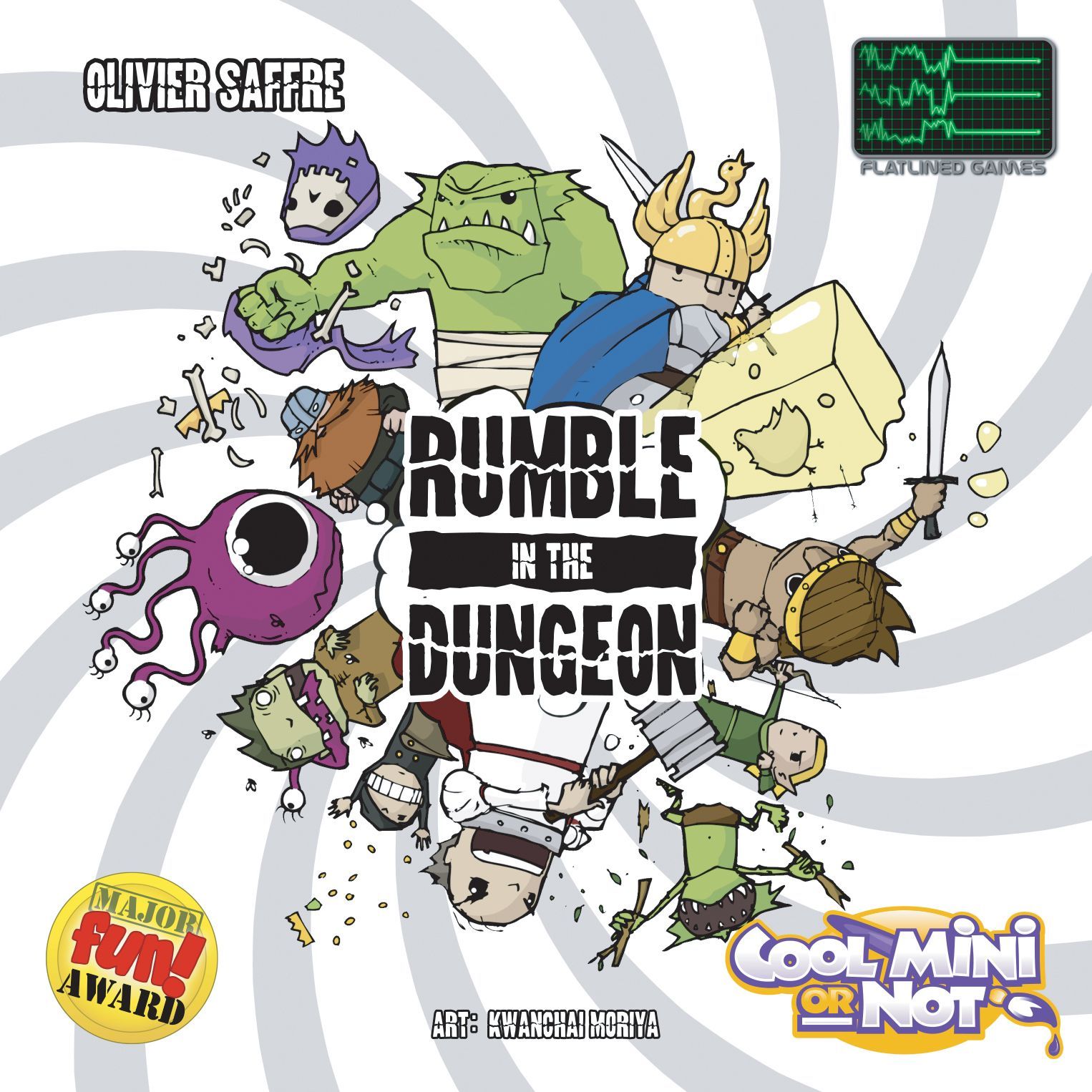
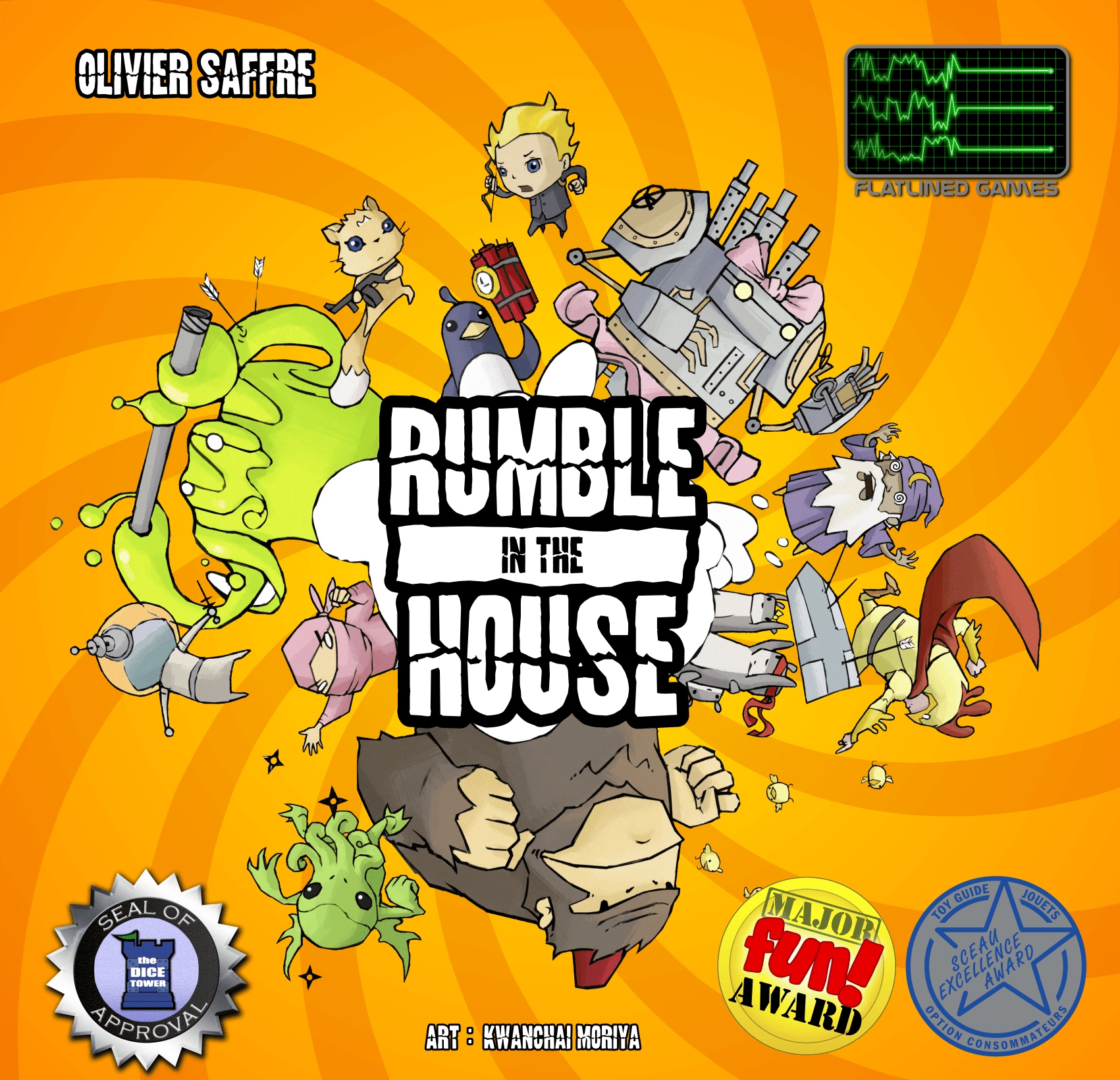
Ever experienced the chaos of too many people sharing a tiny house? Well, Rumble in the House turns that domestic madness into frantic fun! The goal is simple yet tricky: you need to kick other characters out of the house and ensure yours stay inside, all while keeping your true identity a secret. It's a pure bluffing game where the strategy lies in hiding who you are while manipulating what's happening in each room.
The setup is highly dynamic. Each player secretly chooses two characters from the twelve available and places them in different rooms. On your turn, you have two main choices: either move a character that is alone into an adjacent room, or start a 'fight' in a room containing at least two occupants. This fight is the heart of the game: you remove one character from the room and place it in a lineup of those expelled. The round only ends when a single survivor remains in the house.
But don't be fooled; it's not just about kicking others out. Scoring is what truly determines the master of the house. The first two characters expelled are worth nothing, but from the third to the eleventh, each has a growing value from 1 to 9 points. The grand prize? The character that manages to stay in the house until the end is worth a whopping 10 points! However, there's a crucial twist: you only collect points for your most valuable character. This adds a layer of tension, as you must decide whether to protect your 10-point character or focus on ensuring your other characters aren't the first to be kicked out. After three rounds of pure chaos and laughter, the player with the most points wins. It's fast, it's chaotic, and it's perfect for a quick game before dinner or during a social gathering.
The setup is highly dynamic. Each player secretly chooses two characters from the twelve available and places them in different rooms. On your turn, you have two main choices: either move a character that is alone into an adjacent room, or start a 'fight' in a room containing at least two occupants. This fight is the heart of the game: you remove one character from the room and place it in a lineup of those expelled. The round only ends when a single survivor remains in the house.
But don't be fooled; it's not just about kicking others out. Scoring is what truly determines the master of the house. The first two characters expelled are worth nothing, but from the third to the eleventh, each has a growing value from 1 to 9 points. The grand prize? The character that manages to stay in the house until the end is worth a whopping 10 points! However, there's a crucial twist: you only collect points for your most valuable character. This adds a layer of tension, as you must decide whether to protect your 10-point character or focus on ensuring your other characters aren't the first to be kicked out. After three rounds of pure chaos and laughter, the player with the most points wins. It's fast, it's chaotic, and it's perfect for a quick game before dinner or during a social gathering.
Gallery
Box and component photos
Tap any photo to open fullscreen. Photos submitted by the community or publisher.
Best player count
BGG community vote
3
REC
4
REC
5
REC
6
BEST
Soundtrack
Ambience suggested by Melodice
Loading playlist...
Where to Buy
Prices monitored daily
Finding best prices...
Prices unavailable at this time.
Price history — last 6 months (lowest new offer)
Alert enabled!
Join the BoardGamesBot deals group
Get the best board game deals every day — without message spam.
Join the WhatsApp groupGame details
Mechanics, categories, families and credits
Mechanics
Categories
Families
Publisher
Flatlined Games, asmodee, Heidelberger Spieleverlag, IELLO
Designer
Julie Saffre
Artist
Kwanchai Moriya
Community
Data from BoardGameGeek
1,920owners
123wishlist
18want to play
Frequently Asked Questions
Quick answers before you buy
What is the recommended age?
Since it's a simple deduction game, it works well from age 7 or 8 onwards.
How long does a game last?
It's very quick, about 20 minutes per session.
Is the game complex?
Not at all! It has very simple rules, ideal for immediate fun.
How many players can play?
3 to 6 players will have a blast.
What do I need to know to start?
Just understand that you want to keep your characters in the house and hide who they are!
Is it good for kids?
Yes, it's excellent for introducing the concept of bluffing in a light and fun way.
Other Games You'll Like
Based on mechanics and theme