Saltfjord — Prices
Aporta Games, Arrakis Games, DSV Games · Board game · 2024
1–4 · best 2
Solo
45–90 min
Weight 3.0/5
Buy · from US$ 39.99
8.2
rating
Ludopedia
7.8
rating
BGG
Our Verdict
RECOMMENDED
A delightful dice-driven engine builder for those who love watching a settlement thrive strategically.
Highlights
- Brilliant row/column activation mechanic
- Immersive and cozy theme
- High replayability via variable setup
- Very smooth gameplay pacing
Keep in mind
- Relies on some dice luck
- Might challenge very casual players
Rules manual not indexed yet
Upload the PDF rulebook to ask questions about this game with AI.
About the game
What you do in a play session
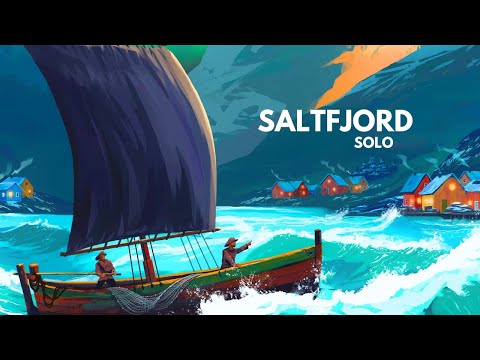
Grab your wool sweater and get ready for the northern Norwegian chill! In Saltfjord, we find ourselves at the end of the 19th century, where your quiet fishing village is about to undergo a massive transformation. Your mission is clear, yet strategically deep: you must decide how to shape the destiny of your people. Will you focus on constructing new buildings to expand your settlement? Will you send your boats out to sea in search of abundant fish? Or perhaps the path lies in trade and technological innovation to make everyday life easier?
The heart of the game is a very elegant dice drafting system. Instead of just rolling and hoping for the best, you select dice that activate buildings on your personal player board. Here is the clever part: your board is a grid. When you pick a die, it automatically activates all buildings located in the corresponding row or column of that die's value. As you build more structures, every die you select gains significantly more activation power. It is a constant evolution of your engine!
Over three intense rounds, you will manage resources, advance along technology tracks to unlock special abilities (like upgrading your boat), and complete trade orders to secure extra income. The game also offers a great dose of unpredictability with its variable setup: special abilities and end-game scoring tiles change every session, ensuring that no two games feel exactly the same. If you enjoy engine-building games with a touch of controlled luck and the immense satisfaction of watching your village thrive, Saltfjord is your next obsession!
The heart of the game is a very elegant dice drafting system. Instead of just rolling and hoping for the best, you select dice that activate buildings on your personal player board. Here is the clever part: your board is a grid. When you pick a die, it automatically activates all buildings located in the corresponding row or column of that die's value. As you build more structures, every die you select gains significantly more activation power. It is a constant evolution of your engine!
Over three intense rounds, you will manage resources, advance along technology tracks to unlock special abilities (like upgrading your boat), and complete trade orders to secure extra income. The game also offers a great dose of unpredictability with its variable setup: special abilities and end-game scoring tiles change every session, ensuring that no two games feel exactly the same. If you enjoy engine-building games with a touch of controlled luck and the immense satisfaction of watching your village thrive, Saltfjord is your next obsession!
Gallery
Box and component photos
Tap any photo to open fullscreen. Photos submitted by the community or publisher.
Rules videos
Learn by watching before you open the box




Best player count
BGG community vote
1
REC
2
BEST
3
REC
4
REC
Soundtrack
Ambience suggested by Melodice
Loading playlist...
Where to Buy
Prices monitored daily
Finding best prices...
Prices unavailable at this time.
Price history — last 6 months (lowest new offer)
Alert enabled!
Join the BoardGamesBot deals group
Get the best board game deals every day — without message spam.
Join the WhatsApp groupGame details
Mechanics, categories, families and credits
Mechanics
Categories
Families
Publisher
Aporta Games, Arrakis Games, DSV Games, Galakta, Game Harbor, GateOnGames, HUCH!, IFROM Games, Lavka Games, Ludofun, テンデイズゲームズ (TendaysGames)
Designer
Eilif Svensson, Kristian Amundsen Østby
Artist
Peter Bartels, Yan Moussu
Community
Data from BoardGameGeek
4,719owners
2,679wishlist
382want to play
Frequently Asked Questions
Quick answers before you buy
How difficult is Saltfjord?
It's a medium-weight game (3.0/5). It's not a simple party game, but it's not an ultra-complex war game either. It's perfect for gamers looking for strategy without exhaustion.
Does it work well solo?
Yes! It includes specific solitaire rules, allowing you to manage your village without competition.
How long does a game last?
Typically between 45 to 90 minutes, depending on player count and decision speed.
What makes it different from other dice games?
The grid board is the key. You don't just 'use' the die; you activate an entire row or column of buildings, which adds a great layer of spatial planning.
Who should I recommend this game to?
Fans of resource management, engine-builders, and players who enjoy historical or nature-themed games.
Other Games You'll Like
Based on mechanics and theme