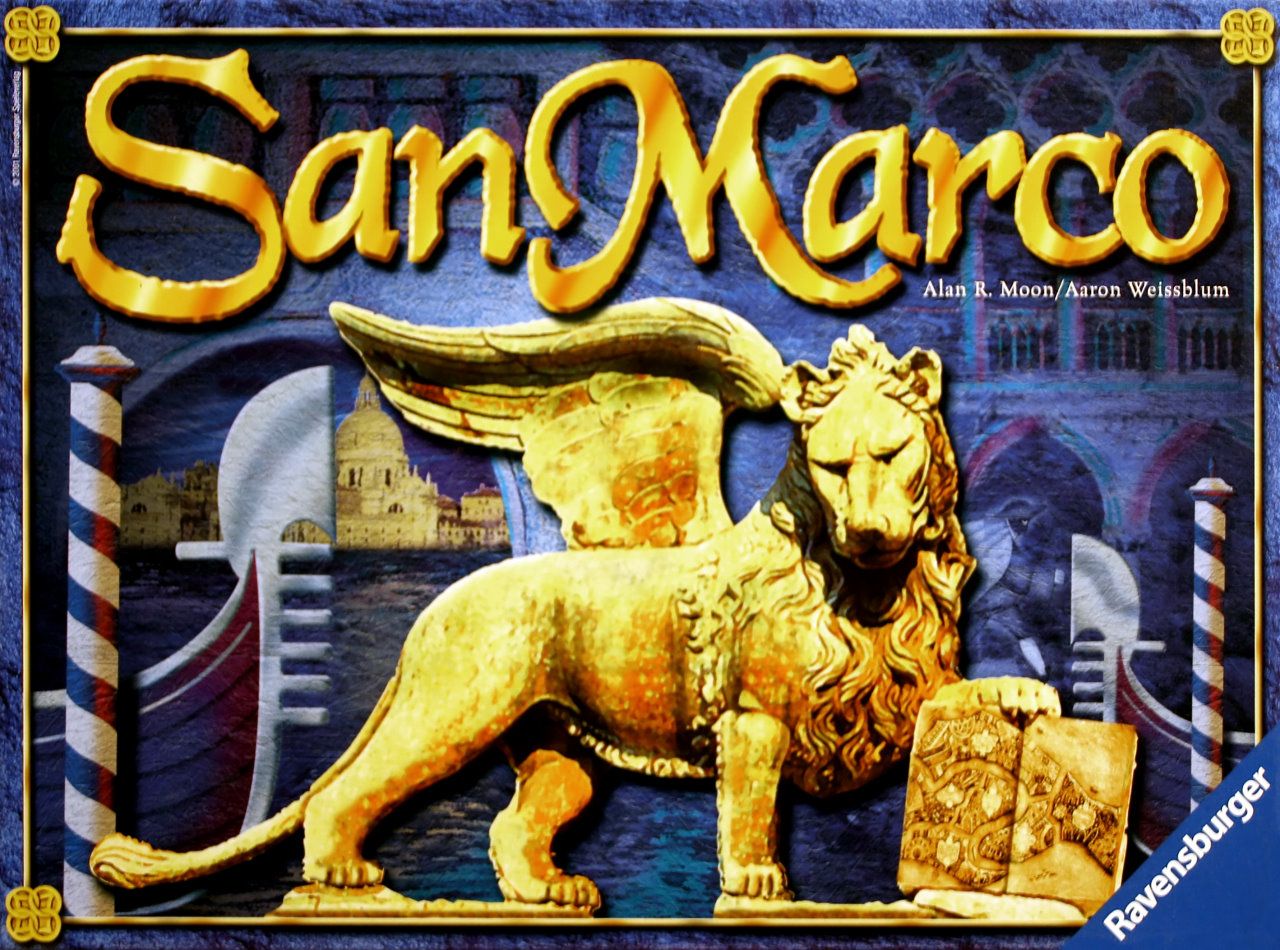
If you enjoy a political game with area control and a resource-splitting mechanic that generates a lot of 'take that' (in a good way!), San Marco is a solid choice. It's an elegant classic that rewards strategy and bluffing.
- Tense area control
- I cut, you choose mechanic
- Deep political strategy
- Accessible rules
- Limited direct interaction
- Relies on splitting
- Theme can be dry
About the game
What you do in a play session
The game shines with a super cool card distribution mechanic, the 'I cut, you choose' style. Imagine this: in a four-player game, two players divide the cards into piles, and the other two players pick which pile they want. Then, the ones who divided get what's left. This direct interaction in dividing and choosing resources adds a special touch to the game.
The action cards are the game's engine: they allow you to place and remove aristocrats, build and move bridges (essential for accessing districts!), and, of course, score in specific regions. The game is divided into three 'Passages,' and each can have several turns. With 62 different action cards, including District, Bridge, Transfer, Doge (the Venetian leader!), and Banishment cards, there's a wide variety of plays.
San Marco is a game that demands planning and a good dose of bluffing. You need to keep an eye on opponents' influence, manage your cards well, and anticipate their moves. The competition for areas is fierce, and the way cards are distributed ensures no one is completely satisfied – which is great for tension! If you enjoy games with little luck and a lot of political strategy, this one is for you. It's an elegant game with straightforward rules, but it offers enough strategic depth to please the most experienced players.
Gallery
Box and component photos
Tap any photo to open fullscreen. Photos submitted by the community or publisher.
Rules videos
Learn by watching before you open the box

Best player count
BGG community vote
Soundtrack
Ambience suggested by Melodice
Where to Buy
Prices monitored daily
Price history — last 6 months (lowest new offer)
As an Amazon Associate I earn from qualifying purchases. Prices and availability subject to change.
Alert enabled!
Join the BoardGamesBot deals group
Get the best board game deals every day — without message spam.
Join the WhatsApp groupGame details
Mechanics, categories, families and credits
Mechanics
Categories
Families
Community
Data from BoardGameGeek
Frequently Asked Questions
Quick answers before you buy
How many players can participate in San Marco?
How long does a game typically last?
Is the game very complicated to learn?
Is there a lot of luck involved?
Who would you recommend San Marco for?
Does the game have a lot of 'take that' or direct interaction?
Other Games You'll Like
Based on mechanics and theme