Sequence — Price & soundtrack
Jax, Ltd., (Unknown), asmodee · Board game · 1982
2–12 · best 4
10–30 min
Weight 1.3/5
Buy · from US$ 34.99
7.9
rating
Ludopedia
6.2
rating
BGG
Our Verdict
RECOMMENDED
If you love a card-and-board hybrid that’s quick, fun, and team‑oriented, Sequence will win you over.
Highlights
- Easy rules
- Team fun
- High replayability
- Classic mechanics
- Accessible
Keep in mind
- Needs full deck
- Can get competitive
- Fast game may feel rushed
Rules manual not indexed yet
Upload the PDF rulebook to ask questions about this game with AI.
About the game
What you do in a play session
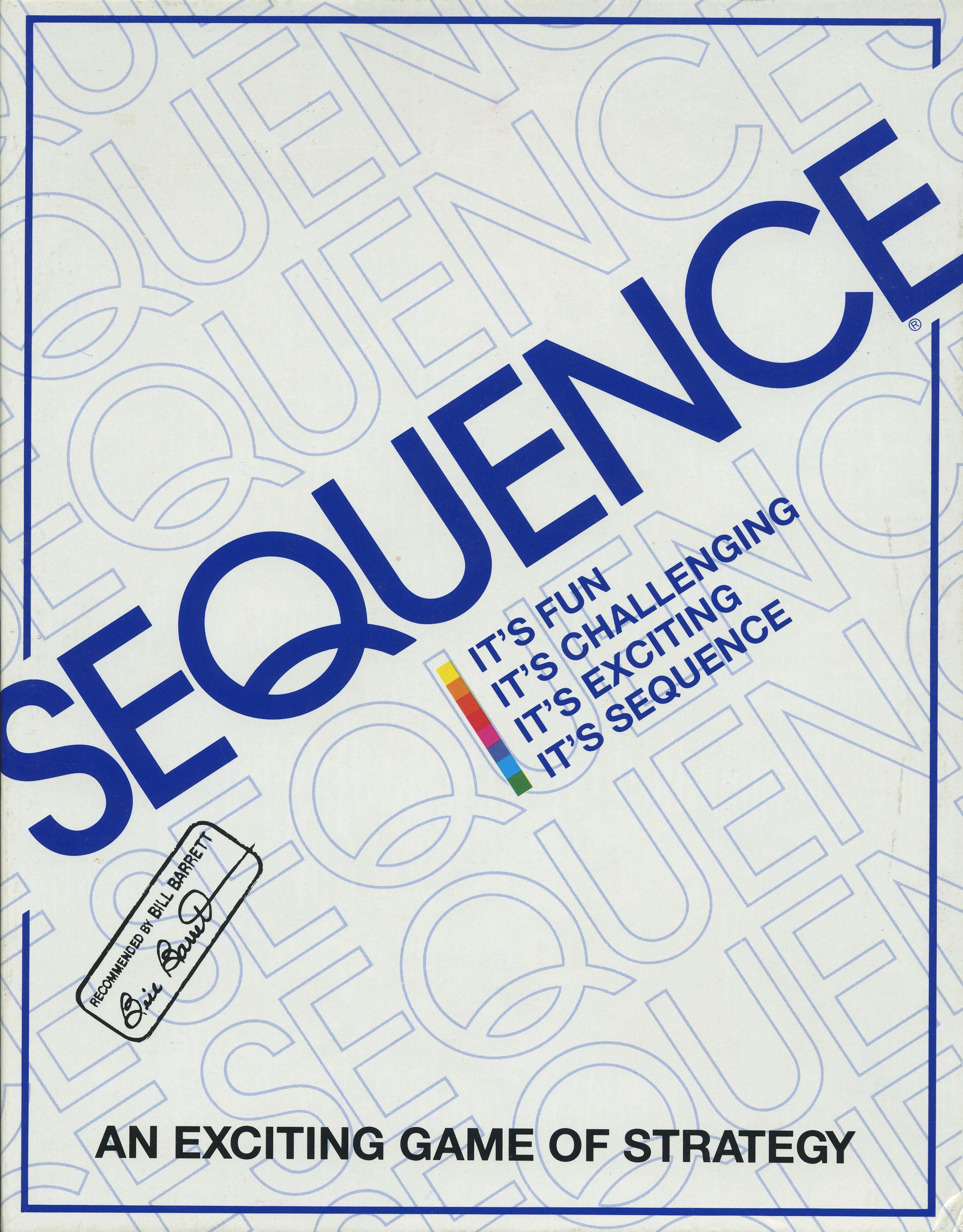
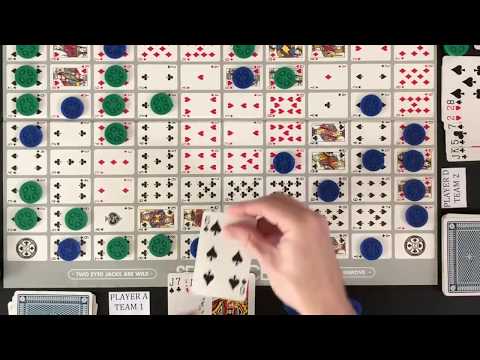
Sequence is that classic hybrid that blends cards and a board into a light strategy game that can turn into a real duel when the match gets tight. The board features a 10x10 layout with every card from two standard decks, minus the jacks, and the four corners are free spaces that count for everyone. Each player starts with a hand of cards and, on each turn, discards a card and places a token on the corresponding space, building sequences of five connected tokens horizontally, vertically, or diagonally. The jacks are the game’s tricks: the two‑eye jack acts as a wild card, letting you place a token on any free space, while the one‑eye jack lets you remove an opponent’s token, as long as it isn’t part of a completed sequence. The goal is to complete the set number of sequences decided at the start, which can vary with the number of players. The “Take That” mechanic adds tension, as you can sabotage the opponent’s progress. The blend of hand management, pattern building, and direct interaction makes Sequence a game that grows in depth as players learn to use the jacks strategically. It’s quick, accessible, and can be played with family or friends, making it a solid pick for those who want fun without fuss.
The gameplay experience is smooth: the rules are easy to learn and the game usually lasts between 10 and 30 minutes, depending on the group. The token‑placing dynamic keeps everyone engaged, while the ability to remove an opponent’s token creates moments of tension and twist. If you enjoy games that require quick thinking and short‑term strategy, Sequence will delight you. For those who prefer deeper games with a lot of theory, it might feel a bit shallow, but the team fun and high replayability make up for it.
In short, Sequence is a game that mixes simplicity, healthy competition, and a dash of strategy—perfect for anyone who wants something light, but still keeps the adrenaline high.
The gameplay experience is smooth: the rules are easy to learn and the game usually lasts between 10 and 30 minutes, depending on the group. The token‑placing dynamic keeps everyone engaged, while the ability to remove an opponent’s token creates moments of tension and twist. If you enjoy games that require quick thinking and short‑term strategy, Sequence will delight you. For those who prefer deeper games with a lot of theory, it might feel a bit shallow, but the team fun and high replayability make up for it.
In short, Sequence is a game that mixes simplicity, healthy competition, and a dash of strategy—perfect for anyone who wants something light, but still keeps the adrenaline high.
Gallery
Box and component photos
Tap any photo to open fullscreen. Photos submitted by the community or publisher.
Rules videos
Learn by watching before you open the box
In English
-
 How to Play: Sequence
-
 How to Play Sequence in 2 Minutes - The Rules Girl
-
 How To Play Sequence
-
 Quick and Complete: Sequence!
-
 DGA Teaches - Sequence (Episode 135)
-
 Sequence Board Game #8002, 1995 Jax Games - An Exciting Game Of Strategy
-
 How to Play Sequence
-
 How to play SEQUNCE Board Game
-
 How to play Sequence (2024 Rules)
-
 Sequence - How to Play + Playthrough - Skytiger Gaming
Best player count
BGG community vote
2
REC
3
BEST
4
BEST
5
OK
6
REC
7
OK
8
OK
9
OK
10
OK
11
OK
12
OK
Soundtrack
Ambience suggested by Melodice
Loading playlist...
Where to Buy
Prices monitored daily
Finding best prices...
Prices unavailable at this time.
Price history — last 6 months (lowest new offer)
As an Amazon Associate I earn from qualifying purchases. Prices and availability subject to change.
Alert enabled!
Join the BoardGamesBot deals group
Get the best board game deals every day — without message spam.
Join the WhatsApp groupGame details
Mechanics, categories, families and credits
Mechanics
Categories
Families
Publisher
Jax, Ltd., (Unknown), asmodee, Broadway Toys LTD, Copag Cards (Copag), Dino Toys s. r. o., Enigma (Bergsala Enigma), Eskifell hf., Goliath Games, Happy Baobab, Hasbro, I on U, Mar Lúdico, Milton Bradley, Nordic Games ehf, Parker Brothers, Parker Spiele, Pressman Toy Corp., Ventura Games, Winning Moves France, Winning Moves Germany, Winning Moves UK Ltd.
Designer
Doug Reuter
Artist
Zetor
Community
Data from BoardGameGeek
30,407owners
512wishlist
25want to play
Frequently Asked Questions
Quick answers before you buy
How many players can play?
2 to 12 players. In larger games, it’s usually played in teams of 2 to 4 players each.
What is the typical game duration?
Between 10 and 30 minutes, depending on player count and group experience.
What is the complexity level?
Low to medium. Rules are easy to learn, but mastering the use of jacks takes some practice.
What components are included?
10x10 board, two 52‑card decks, two sets of tokens, and a set of jacks (two‑eye and one‑eye).
Who is this game for?
For those who enjoy quick, competitive play that can be enjoyed with family or friends.
How does victory work?
The first player or team to complete the set number of sequences defined at the start wins.
What about the jacks?
The two‑eye jack acts as a wild card, letting you place a token on any free space; the one‑eye jack lets you remove an opponent’s token, as long as it isn’t part of a completed sequence.
Other Games You'll Like
Based on mechanics and theme