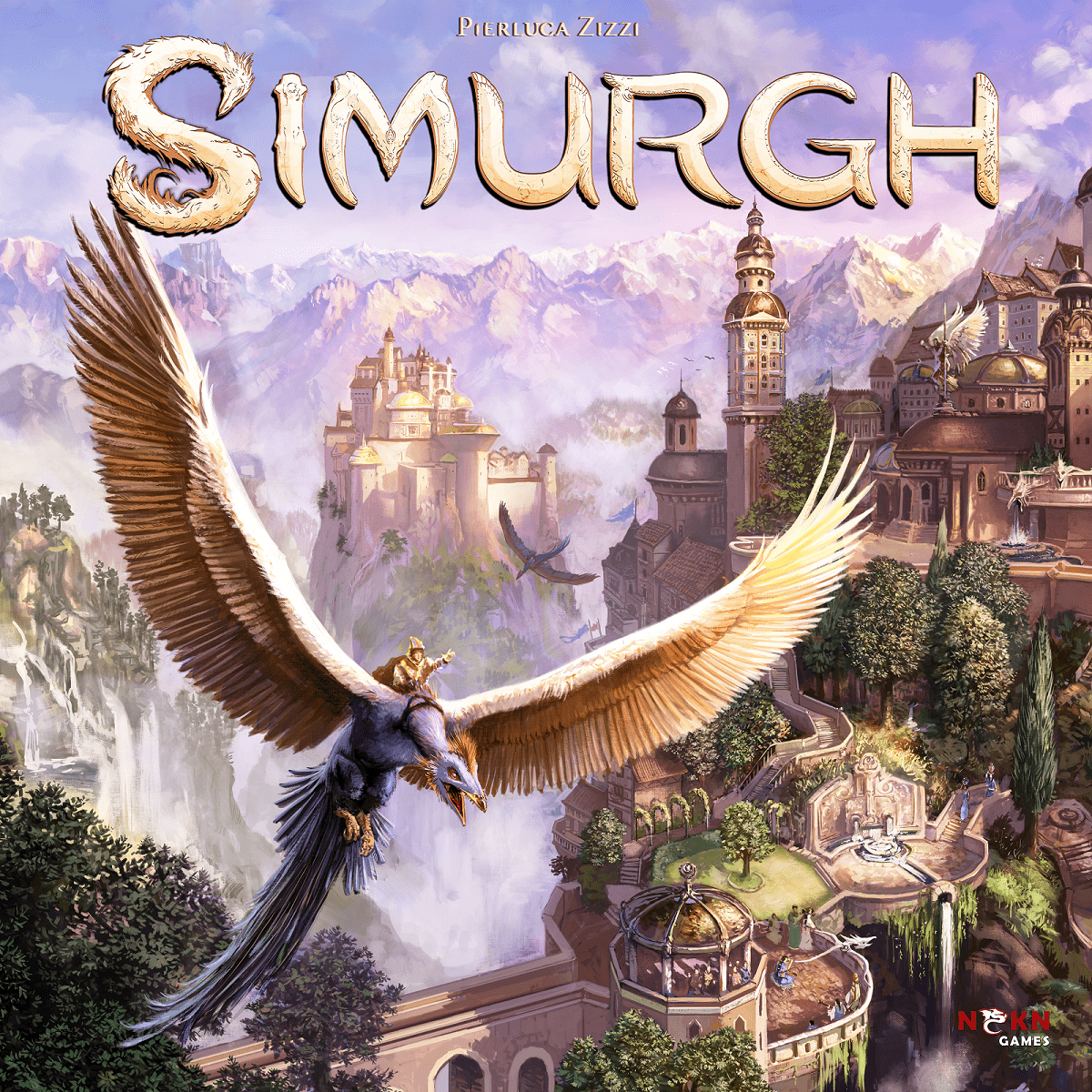
Simurgh
NSKN Games, Baldar, Heidelberger Spieleverlag · Board game · 2015
2–5 · best 4
45–90 min
Weight 3.0/5
Buy · from US$ 48.17
7.1
rating
Ludopedia
6.6
rating
BGG
Our Verdict
FOR GENRE FANS
Enjoy fantasy with dragons and board building? Simurgh might be your jam!
Highlights
- Engaging fantasy theme
- Dynamic board construction
- Worker placement with dragons
- Good replayability with tiles
Keep in mind
- Rules can be confusing
- Art may divide opinions
Rules manual not indexed yet
Upload the PDF rulebook to ask questions about this game with AI.
About the game
What you do in a play session
In Simurgh, you take on the role of a clan leader in a fantasy world where humans and dragons coexist, hunt, and even wage war together. The goal is clear: make your clan the most powerful by accumulating Power Points. To achieve this, you'll breed and care for incredible dragons, utilize their special abilities, gather resources, and expand your influence.
The game unfolds in turns, with each player performing one Main Action and as many Free Actions as they wish. The Main Action typically involves placing one of your 'vassals' – whether the young 'Spearmen' warriors or the noble 'Dragonriders' mounted on their dragons – onto an available action space. These spaces allow you to gain resources, trade items for Power Points, recruit more vassals, or even breed new types of Simurgh.
A really cool aspect is that the board is built by the players themselves! Throughout the game, you'll draw and place action tiles. Some of these tiles open up new action spaces (some for any vassal, others exclusively for Dragonriders), while others offer bonus points for having specific combinations of dragons. The game concludes when all scoring spaces are filled, and then the final tally of Power Points determines the winning clan. It's a game that blends strategy with dynamic map construction, perfect for those who enjoy fantasy themes with a touch of worker placement.
The game unfolds in turns, with each player performing one Main Action and as many Free Actions as they wish. The Main Action typically involves placing one of your 'vassals' – whether the young 'Spearmen' warriors or the noble 'Dragonriders' mounted on their dragons – onto an available action space. These spaces allow you to gain resources, trade items for Power Points, recruit more vassals, or even breed new types of Simurgh.
A really cool aspect is that the board is built by the players themselves! Throughout the game, you'll draw and place action tiles. Some of these tiles open up new action spaces (some for any vassal, others exclusively for Dragonriders), while others offer bonus points for having specific combinations of dragons. The game concludes when all scoring spaces are filled, and then the final tally of Power Points determines the winning clan. It's a game that blends strategy with dynamic map construction, perfect for those who enjoy fantasy themes with a touch of worker placement.
Gallery
Box and component photos
Tap any photo to open fullscreen. Photos submitted by the community or publisher.
Rules videos
Learn by watching before you open the box


Best player count
BGG community vote
2
REC
3
BEST
4
BEST
5
REC
Soundtrack
Ambience suggested by Melodice
Loading playlist...
Where to Buy
Prices monitored daily
Finding best prices...
Prices unavailable at this time.
Price history — last 6 months (lowest new offer)
As an Amazon Associate I earn from qualifying purchases. Prices and availability subject to change.
Alert enabled!
Join the BoardGamesBot deals group
Get the best board game deals every day — without message spam.
Join the WhatsApp groupGame details
Mechanics, categories, families and credits
Mechanics
Categories
Families
Publisher
NSKN Games, Baldar, Heidelberger Spieleverlag
Designer
Pierluca Zizzi
Artist
Agnieszka Kopera, Enggar Adirasa, Odysseas Stamoglou
Community
Data from BoardGameGeek
2,051owners
292wishlist
35want to play
Frequently Asked Questions
Quick answers before you buy
How many players does Simurgh support?
Simurgh is designed for 2 to 5 players, so it works well for both smaller and larger groups.
How long does a game of Simurgh typically take?
Games usually last between 45 and 90 minutes, depending on the player count and familiarity with the rules.
Is Simurgh a difficult game to learn?
The estimated weight is around 3/5, indicating moderate complexity. The rules might require some attention on the first playthrough, but the worker placement mechanic is quite familiar.
What are the main components of the game?
You'll find modular board tiles, vassal meeples (Spearmen and Dragonriders), cards, resources, and score markers.
Who would you recommend Simurgh to?
It's a great choice for those who enjoy games with a fantasy theme, dragons, and mechanics like worker placement and tile-laying/board building. If you like games with a strategic element and replayability, it's worth checking out.
Does the game have a lot of player interaction?
Interaction is primarily indirect, through competition for action spaces and the board construction that affects everyone. Don't expect constant direct confrontation, but the competition for resources and spots is definitely there.
Other Games You'll Like
Based on mechanics and theme