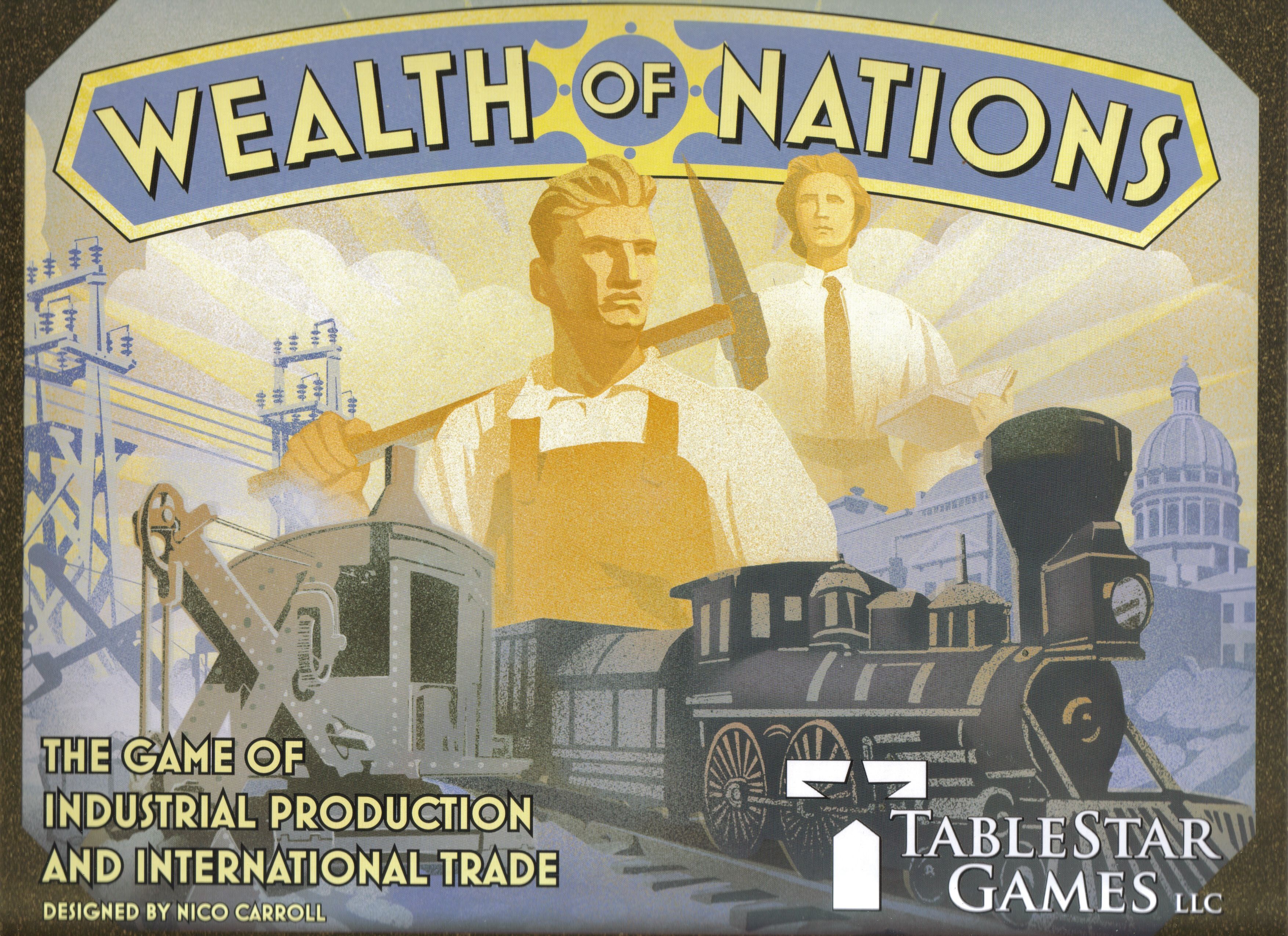
Wealth of Nations
TableStar Games, JJ Board Game · Board game · 2008
3–6 · best 4
120 min
Weight 3.6/5
Buy · from US$ 31.95
6.4
rating
Ludopedia
6.9
rating
BGG
Our Verdict
RECOMMENDED
If you love economics and solid negotiations, Wealth of Nations serves up a deep, tasty experience.
Highlights
- Industrial bloc strategy
- Dynamic market pricing
- Intense trading
Keep in mind
- Long play time
- Moderate learning curve
Rules manual not indexed yet
Upload the PDF rulebook to ask questions about this game with AI.
About the game
What you do in a play session
Wealth of Nations puts each player in charge of a developing nation, tasked with turning it into a global economic powerhouse. You do this by building industries – farms, generators, academies, mines, factories, and banks – that produce commodities such as Food, Energy, Labor, Ore, and Capital. Each commodity has a purpose: Food feeds your factories, Capital funds advanced builds, and so on. As your industries cluster into larger blocs, production yields increase, rewarding strategic expansion.
The core of the game is trade. Not every resource can be produced internally, so you negotiate with opponents or turn to the Market. Each commodity type has its own market, with prices rising when you buy and falling when you sell, mirroring supply and demand. This creates speculation opportunities: buy cheap, sell high when demand spikes.
Beyond trade, the game features loans for quick cash at a cost, and investment choices that affect your final score. At game end, the player with the most victory points – a mix of industry value, cash, and market holdings – wins the title of superpower.
Wealth of Nations blends tile placement, resource management, and negotiation in 2‑3 hour sessions, perfect for groups that enjoy economics without overwhelming complexity. If you like building industrial blocs, watching price fluctuations, and sealing deals, this title will keep you hooked from start to finish.
The core of the game is trade. Not every resource can be produced internally, so you negotiate with opponents or turn to the Market. Each commodity type has its own market, with prices rising when you buy and falling when you sell, mirroring supply and demand. This creates speculation opportunities: buy cheap, sell high when demand spikes.
Beyond trade, the game features loans for quick cash at a cost, and investment choices that affect your final score. At game end, the player with the most victory points – a mix of industry value, cash, and market holdings – wins the title of superpower.
Wealth of Nations blends tile placement, resource management, and negotiation in 2‑3 hour sessions, perfect for groups that enjoy economics without overwhelming complexity. If you like building industrial blocs, watching price fluctuations, and sealing deals, this title will keep you hooked from start to finish.
Gallery
Box and component photos
Tap any photo to open fullscreen. Photos submitted by the community or publisher.
Rules videos
Learn by watching before you open the box
In English

Best player count
BGG community vote
3
REC
4
BEST
5
REC
6
OK
Soundtrack
Ambience suggested by Melodice
Loading playlist...
Where to Buy
Prices monitored daily
Finding best prices...
Prices unavailable at this time.
Price history — last 6 months (lowest new offer)
As an Amazon Associate I earn from qualifying purchases. Prices and availability subject to change.
Alert enabled!
Join the BoardGamesBot deals group
Get the best board game deals every day — without message spam.
Join the WhatsApp groupGame details
Mechanics, categories, families and credits
Mechanics
Categories
Publisher
TableStar Games, JJ Board Game
Designer
Nico Carroll
Artist
Gregor Benedetti
Community
Data from BoardGameGeek
1,851owners
556wishlist
112want to play
Frequently Asked Questions
Quick answers before you buy
How long does a game take?
Typically 2 to 3 hours, depending on player count and experience.
What age range is recommended?
12 and up, though younger teens can join with some guidance.
Do I need prior economics knowledge?
Not required, but basic understanding of supply, demand, and investment certainly helps.
How many players can join?
3 to 6 players; the feel changes slightly with fewer or more participants.
What are the main components?
Industry tiles, bloc tiles, commodity tokens, market cards, money, and victory point markers.
Is there a lot of luck involved?
Most outcomes are strategic; luck only shows up in market price fluctuations.
Is it suitable for beginners?
Better for those with some experience in management games; newcomers may find the learning curve a bit steep.
Other Games You'll Like
Based on mechanics and theme