Bao — Soundtrack
(Public Domain), Creative Crafthouse, Gerhards Spiel und Design · Board game
2 · best 2
40 min
Weight 3.4/5
Buy
7.2
rating
Ludopedia
6.7
rating
BGG
Our Verdict
FOR GENRE FANS
Perfect for those who love intense mental challenges and want to step away from the mainstream. The tactical depth is unreal!
Highlights
- Chess-level strategic depth
- Fast-paced reversal dynamics
- Fascinating cultural experience
- Zero reliance on luck
Keep in mind
- Very steep learning curve
- Two-player only
Rules manual not indexed yet
Upload the PDF rulebook to ask questions about this game with AI.
About the game
What you do in a play session
If you think Chess is the pinnacle of strategy, you need to meet Bao. Hailing from East Africa, specifically Zanzibar and mainland Tanzania, this game is widely regarded as the 'final boss' of the Mancala family. While many Mancala games are relaxing, Bao is pure tactic and complexity.
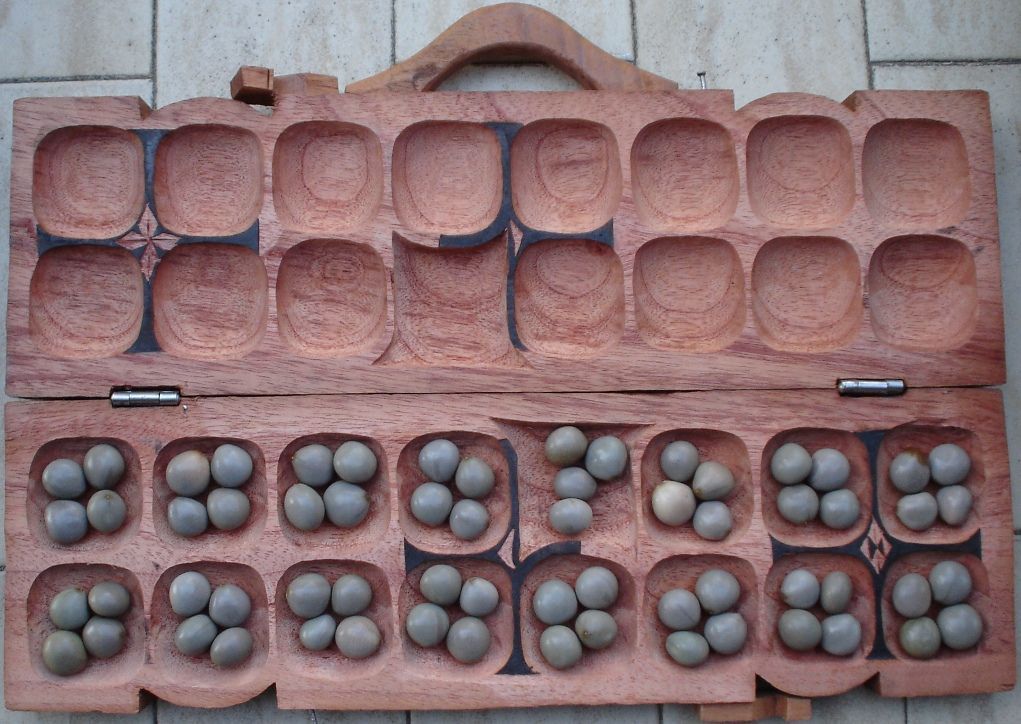
The board consists of two rows of eight holes for each player. The goal? Simple on paper, but brutal in practice: you must empty your opponent's front row of seeds or leave them with no possible moves. The dynamic revolves around the act of 'sowing'. You pick up a handful of seeds and distribute them across the holes. Depending on where the last seed lands, you can continue your turn, creating combos that can clear your opponent's board in the blink of an eye.
What makes Bao fascinating is its volatility. A single well-thought-out move can completely flip the game, turning an imminent defeat into a crushing victory. This requires an immense amount of forward planning, as you must predict not only your own move but how the opponent will react to the new seed distribution. It is a game of patience, calculation, and spatial awareness, where the simplicity of the components hides an immense strategic depth. If you enjoy games where luck has no place and everything depends on your analytical ability, Bao is for you. Get ready to burn some brain cells in a millennial battle that proves pure strategy never goes out of style.
The board consists of two rows of eight holes for each player. The goal? Simple on paper, but brutal in practice: you must empty your opponent's front row of seeds or leave them with no possible moves. The dynamic revolves around the act of 'sowing'. You pick up a handful of seeds and distribute them across the holes. Depending on where the last seed lands, you can continue your turn, creating combos that can clear your opponent's board in the blink of an eye.
What makes Bao fascinating is its volatility. A single well-thought-out move can completely flip the game, turning an imminent defeat into a crushing victory. This requires an immense amount of forward planning, as you must predict not only your own move but how the opponent will react to the new seed distribution. It is a game of patience, calculation, and spatial awareness, where the simplicity of the components hides an immense strategic depth. If you enjoy games where luck has no place and everything depends on your analytical ability, Bao is for you. Get ready to burn some brain cells in a millennial battle that proves pure strategy never goes out of style.
Gallery
Box and component photos
Tap any photo to open fullscreen. Photos submitted by the community or publisher.
Rules videos
Learn by watching before you open the box


Best player count
BGG community vote
2
BEST
Soundtrack
Ambience suggested by Melodice
Loading playlist...
Where to Buy
Prices monitored daily
Finding best prices...
Prices unavailable at this time.
Price history — last 6 months (lowest new offer)
Alert enabled!
Join the BoardGamesBot deals group
Get the best board game deals every day — without message spam.
Join the WhatsApp groupGame details
Mechanics, categories, families and credits
Mechanics
Categories
Families
Publisher
(Public Domain), Creative Crafthouse, Gerhards Spiel und Design, Mitra, Oficina do Aprendiz, ROMBOL, Woodstock Spiele
Designer
(Uncredited)
Community
Data from BoardGameGeek
391owners
60wishlist
8want to play
Frequently Asked Questions
Quick answers before you buy
Is Bao hard to learn?
Yes, it's known as the most complex Mancala game. It's not as intuitive as simpler versions, so be ready to study the rules.
How many people can play?
The game is strictly for 2 players. It's a direct and strategic duel.
How long does a game last?
On average, games last about 40 minutes, though this depends on the players' experience.
Is there any luck involved?
None. It is a pure abstract strategy game; the one who plans better and predicts more moves wins.
Who do you recommend Bao for?
Fans of Chess, Go, and anyone who loves heavy strategy games and logical puzzles.
Other Games You'll Like
Based on mechanics and theme