Oware
(Public Domain), (Unknown), Bibelot Games · Board game · 550
2 · best 2
20 min
Weight 2.0/5
Buy
7.3
rating
Ludopedia
6.6
rating
BGG
Our Verdict
Fun for lovers of pure strategy and African heritage.
Highlights
- Intense strategic challenge
- Rich traditional history
- Quality components
Keep in mind
- Rules can be complex
- No luck elements
Rules manual not indexed yet
Upload the PDF rulebook to ask questions about this game with AI.
About the game
What you do in a play session
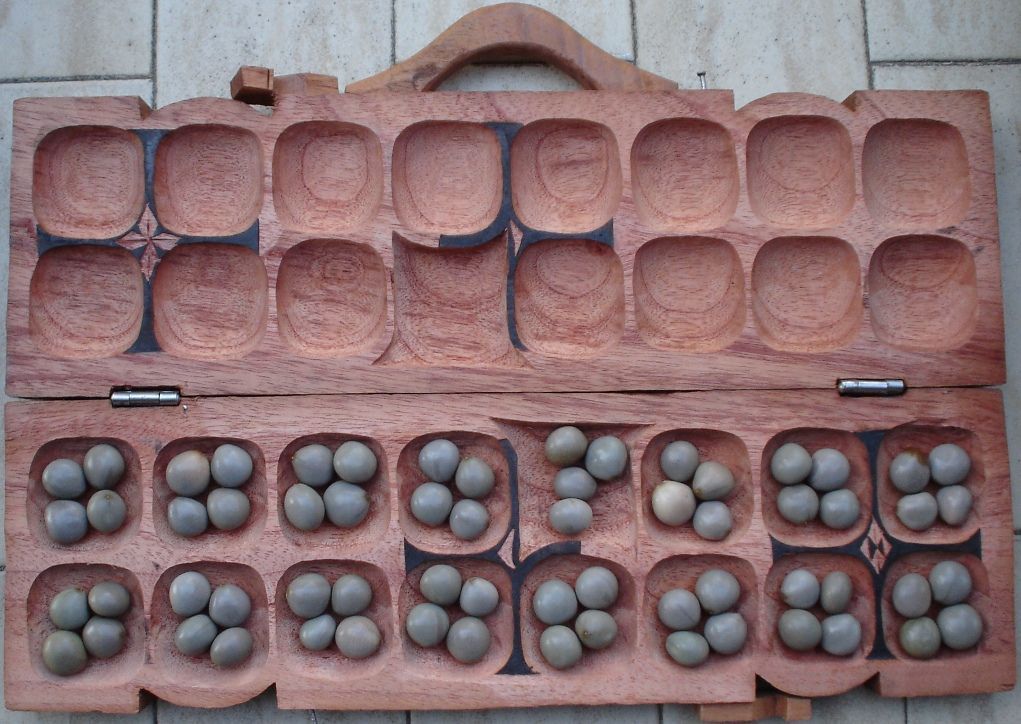
Oware, also known as Awari, Awale or Awele, is a classic mancala game with a history of over 7,000 years, played worldwide. Originating from Africa, it’s the most popular second‑generation mancala, featuring six pits per row and four seeds (or stones) in each pit at the start. The goal is simple: capture more seeds than your opponent, but doing so requires strategic thinking, patience, and good timing. Each turn involves picking a pit from your side, sowing the seeds clockwise, and if the last seed lands in an opponent’s pit that already contains one or two seeds, you capture all seeds from that pit (and possibly the previous ones). Captures can chain, but cannot exceed the opponent’s available seeds. When no more legal moves exist, the game ends and the player with the most seeds wins. Oware is more than just fun: in Ghanaian communities and African schools it’s used as an educational tool for math, logic, and social skills. The game is often played in public spaces with lively banter, and components are typically wood or cloth boards with Bonduc seeds or recycled stones. An international standard set of rules exists, ensuring consistent play worldwide. In short, Oware is a pure strategy duel that blends tradition, culture, and a mental challenge that will keep you coming back.
Gallery
Box and component photos
Tap any photo to open fullscreen. Photos submitted by the community or publisher.
Rules videos
Learn by watching before you open the box


Best player count
BGG community vote
2
BEST
Soundtrack
Ambience suggested by Melodice
Loading playlist...
Where to Buy
Prices monitored daily
Finding best prices...
Prices unavailable at this time.
Price history — last 6 months (lowest new offer)
As an Amazon Associate I earn from qualifying purchases. Prices and availability subject to change.
Alert enabled!
Join the BoardGamesBot deals group
Get the best board game deals every day — without message spam.
Join the WhatsApp groupGame details
Mechanics, categories, families and credits
Mechanics
Categories
Families
Publisher
(Public Domain), (Unknown), Bibelot Games, Dujardin, Grubbe Media GmbH, Krealudik, L. P. Septímio, Lemery Games, Ludens Planet, LuduScience, Mitra, Oficina do Aprendiz, Okoïa-Addendo, Whale Toys, WOSI "Wspólna Sprawa"
Designer
(Uncredited)
Artist
Lívia Varga, Mariela Arratia, Tímea Kőszegi
Community
Data from BoardGameGeek
1,014owners
75wishlist
3want to play
Frequently Asked Questions
Quick answers before you buy
How long does an Oware game usually last?
Typically a game lasts between 15 and 25 minutes, depending on player experience and decision speed.
What components are needed?
You need a mancala board (usually cloth or wood), 48 seeds or stones, and optionally a drawstring bag for transport.
Is the game suitable for kids?
Yes, it can be simplified for children by reducing seed count or easing capture rules, making it great for developing logic and math.
What are the main rules?
Pick a pit, sow seeds clockwise, capture when the last seed lands in an opponent’s pit with 1 or 2 seeds, and avoid sowing into empty pits.
How to avoid stalemates?
If no legal moves remain, the game ends. Some groups use mandatory capture or re‑evaluation rules to prevent deadlock.
Are there digital versions?
Yes, there are versions on Tabletopia, Yucata, PlayStrategy and Abstract Play, letting you play online with friends or AI.
Can it be played in larger groups?
The classic Oware is for two players, but other mancala variants support more participants. For the traditional version, keep it to 2x2 duels.
Other Games You'll Like
Based on mechanics and theme